Global Consulting AlixPartners: "Rapid EV Transition to Cost 400,000 Jobs in EU"
"Need for Carbon Neutral Policy Slowdown Consensus...Urgent Infrastructure Development"
Equal Subsidies for Imported and Domestic Cars to Promote Carbon Neutrality in Transport
"Hybrid and Hydrogen EVs Should Follow Powertrain Technology Neutrality"
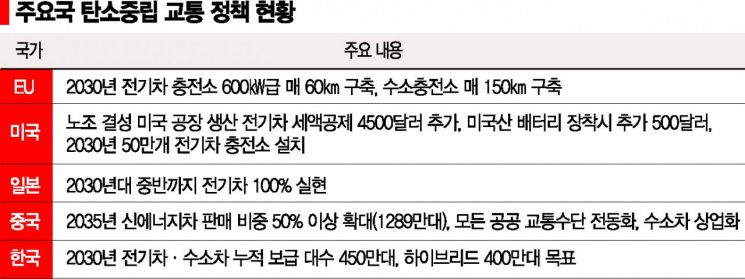
[Napoli, Italy = Asia Economy Reporter Kim Hyewon] As the carbon neutrality issue, centered on the phasing out of internal combustion engine vehicles and the transition to electric vehicles, sweeps the global automotive industry, there is a growing consensus on the need to slow down the overly ambitious targets. It is expected that at least $300 billion (approximately 357 trillion KRW) will be invested worldwide by 2030 solely in building electric vehicle charging infrastructure. However, with insufficient preparation in many countries, there are concerns that the rapid ecosystem shift toward electric vehicles will cause numerous side effects. There were also fairness issues raised regarding eco-friendly vehicle incentives, targeting countries operating subsidy systems favorable to domestic companies such as the United States and China.
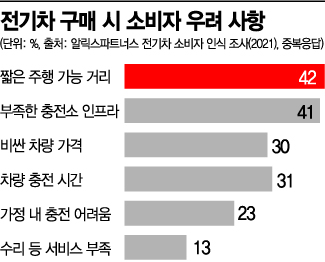
The World Automobile Industry Federation (OICA) General Assembly held in Napoli, Italy on the 18th and 19th (local time) was a forum criticizing the global carbon neutrality policy rush. Stefano Abersa, Managing Director of global consulting firm AlixPartners, stated, "In Europe, $330 billion (approximately 392 trillion KRW) will be invested in electric vehicles over the next five years," adding, "The transition to electric vehicles will increase the use of high-cost components such as batteries and e-powertrains, resulting in production costs up to 59% higher compared to internal combustion engine vehicles." According to the consulting firm, these factors could lead to higher vehicle prices, reduced consumer purchasing power, market contraction, and ultimately decreased profits for automakers. A survey conducted by AlixPartners this year on the biggest concerns when purchasing electric vehicles revealed that consumers cited short driving range (42%), insufficient charging infrastructure (41%), and high vehicle prices (30%).
At this meeting, OICA member countries including South Korea, the United States, Germany, the United Kingdom, France, Japan, and China agreed that while they are expanding electric vehicle investments for decarbonization, there are significant negative aspects such as powertrain technology neutrality issues, lack of charging infrastructure, and job reductions. As major advanced countries, led by Europe, officially announced the complete phase-out of internal combustion engine vehicles around 2035 to 2040 and proposed electric vehicles as an alternative, there is growing criticism even domestically about the lack of realism. The EU estimates that the rapid shift to electric vehicles will eliminate about 400,000 jobs, including approximately 250,000 among automakers and first-tier suppliers and 150,000 in lower-tier suppliers.
This public sentiment was similar at the pre-roundtable conference hosted by the UK Society of Motor Manufacturers and Traders (SMMT) related to the 26th United Nations Climate Change Conference of the Parties (COP26) held earlier in the UK. Michael Hawes, Chairman of SMMT, emphasized during the OICA General Assembly discussions, "Policymakers in each country repeatedly make carbon neutrality claims as slogans without a sober diagnosis of the feasibility of zero-emission vehicle transitions and industry conditions. There is a need for industry-level responses to slow down excessive targets and address pledges with low feasibility."
Jung Manki, Chairman of the Korea Automobile Manufacturers Association (KAMA), who attended as the Korean representative, urged for equal incentive policies for domestic and imported vehicles, targeting countries like the United States and China. Chairman Jung stated, "The rise of imported vehicles in the Korean electric vehicle market owes much to the non-discriminatory preferential policies between domestic and imported vehicles, such as providing 34.4% of subsidies to imported vehicles last year."
There was also a shared opinion that carbon neutrality should not suppress specific technologies like banning internal combustion engine vehicle sales but should move toward powertrain technology neutrality. This means allowing sales of hybrid vehicles even after 2035, reflecting caution against the rushed, electric vehicle-biased carbon neutrality. Hydrogen fuel cell vehicles powered by hydrogen fuel cells were also proposed as alternatives.
Based on the results of this discussion, OICA member countries plan to issue a statement within 2 to 3 weeks outlining their position on slowing down the pace of decarbonization in the transportation sector. At this General Assembly, John Bozzella, who leads the Alliance for Automotive Innovation in the United States, was elected as the new chairman.
© The Asia Business Daily(www.asiae.co.kr). All rights reserved.


















