Increased Asia Production and Logistics Movement... Labor Shortage Limits Supply Shortage Resolution
[Asia Economy Reporter Yujin Cho] There are assessments that the global supply chain crisis, which has engulfed the world, has entered a phase of easing. Production and logistics movement are increasing at Asian factories, the epicenter of the supply chain crisis, and congestion at U.S. ports is showing signs of relief, leading to a breath of fresh air. However, factors such as labor shortages that limit the resolution of the crisis still remain, so a complete solution is expected to be possible only after next year.
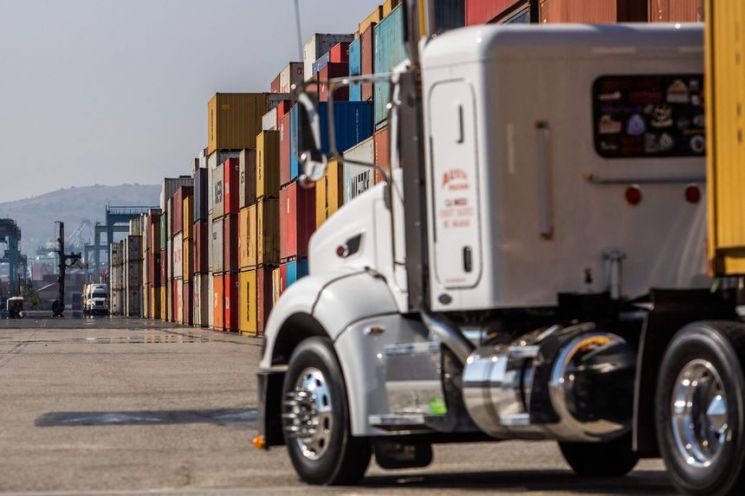
On the 21st (local time), the Wall Street Journal (WSJ) reported that production in Asian countries such as Malaysia and Vietnam, the epicenters of the global supply chain crisis, is rebounding, and power shortages in China, which had impacted global manufacturers' supply lines, are showing improvement, signaling some easing of pressure on the global supply chain.
Small and medium-sized enterprises in Vietnam producing export furniture with 200 to 500 employees have currently recovered 80% of their production capacity. Some manufacturers in Guangdong Province, a representative industrial area in China contacted by WSJ, reported significant improvements in production capacity since last month. Thomas Broerches, Executive Director of Foshan Openg Furniture in Guangdong Province, said, "In September, we could not secure a single container, but the situation has been improving since last month."
Logistics difficulties are also showing signs of improvement. Christine Humphries, co-founder of the UK beverage company Mind Drink Company, said, "The delivery time from Germany to the UK, which used to take two weeks, has been reduced to six days." Due to the improvement in logistics, container freight rates crossing the Pacific dropped by more than a quarter in mid-month, marking the largest decline in the past two years. Lewis Kuijs, Head of Asia Regional Economics at global economic analysis firm Oxford Economics, evaluated, "The global supply chain crisis has passed its worst phase."
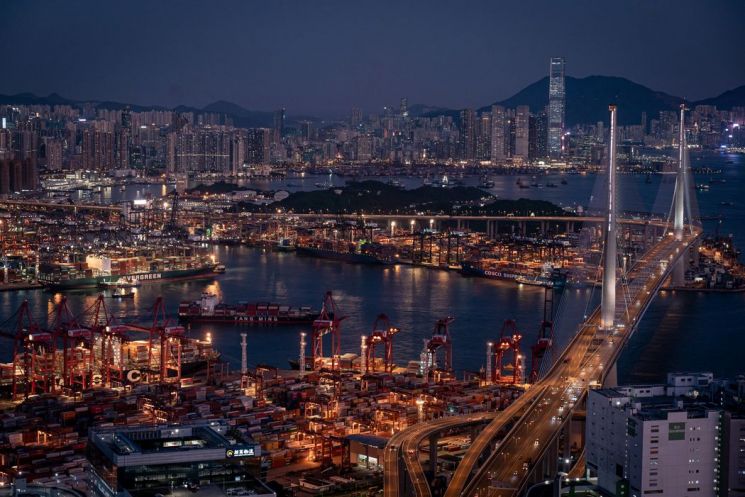
However, it is expected to take time for the logistics congestion at U.S. ports, the destination of products produced in Asian factories, to be completely resolved. The number of ships waiting to enter the Los Angeles (LA) Long Beach port, the largest port on the U.S. West Coast, decreased from 86 on the 16th to 71 on the 19th, but considering that waiting to enter was rare before the pandemic, the problem remains. Major U.S. manufacturers and the shipping industry expect the port congestion to be resolved only by early next year.
Labor shortages are also cited as a factor delaying the resolution of supply difficulties. For example, a large Vietnamese furniture company with more than 3,000 employees has only recovered 65% of its operating rate due to difficulties in securing labor. In the UK, the logistics crisis continues due to a shortage of truck drivers caused by Brexit (the UK's withdrawal from the European Union) and the impact of COVID-19. Jang Held, owner of Hold Verederungs shipping company located in Haren, a northern German city, said, "Port congestion in the Asian region is improving," but added, "It will take time for the global logistics system to fully normalize."
© The Asia Business Daily(www.asiae.co.kr). All rights reserved.
![Clutching a Stolen Dior Bag, Saying "I Hate Being Poor but Real"... The Grotesque Con of a "Human Knockoff" [Slate]](https://cwcontent.asiae.co.kr/asiaresize/183/2026021902243444107_1771435474.jpg)

















