Paid Broadcasting Industry Urges Change in Viewership Metrics
Data-Driven Advertising Including Addressable Ads
Claims of Maximizing Ad Efficiency Upon Introduction
[Asia Economy Reporter Cha Min-young] "The target viewing demographic for broadcasts is the '2049 (ages 20-49)' group, but who these days sits around the TV with family at home? I don't do that either." (Representative of a major wired broadcasting operator (SO))
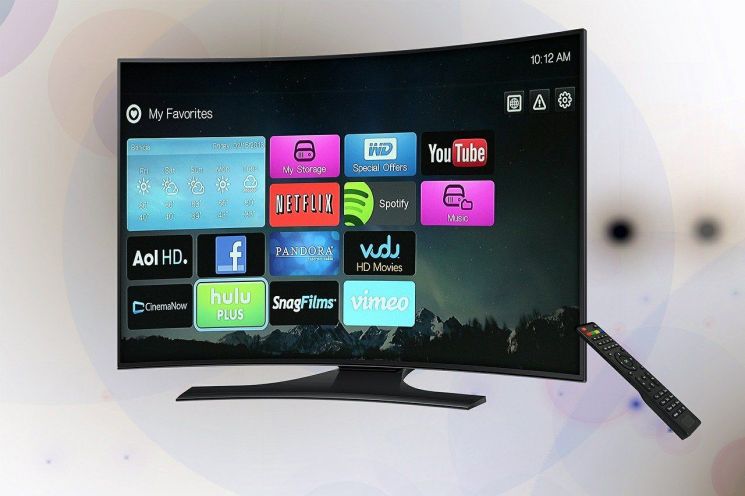
The credibility of 'viewership ratings,' which used to be the benchmark for the popularity of broadcast programs such as dramas and variety shows, is declining. This is because the rise of online video services (OTT) like Netflix has expanded media consumption methods beyond the living room TV to smart TVs, smartphones, tablets, and more. Not only has the number of single-person households increased rapidly, but it has also become common for members of the same household to enjoy different programs individually.
According to the industry on the 21st, Nielsen Research Korea uses sample surveys for viewership rating investigations. The process includes preliminary surveys → selection of domestic household panels → installation of People Meter devices → collection of viewing records → calculation of minute-by-minute viewing data → monitoring of TV programs and advertisements → data merging → final viewership rating calculation. At this time, if household members autonomously indicate who is controlling the remote, this information is used to analyze the viewer demographics.
The paid broadcasting industry argues that Nielsen Research Korea, which accounts for about 95% of the TV viewership rating survey market across terrestrial, comprehensive programming, and cable markets, should change its method of aggregating ratings. This is because the current system does not sufficiently reflect the realities of the paid broadcasting industry, even though viewership ratings directly translate into revenue.
The Korea IPTV Broadcasting Association has also newly proposed creating an independent viewership rating standard using the complete set-top box data of 18.25 million households from the three IPTV companies (KT, SK Broadband, LG Uplus) as of the second half of 2020. Professor Park Hyun-soo of Dankook University's Department of Communication calculated integrated viewership ratings based on IPTV set-top box data from the three companies. He stated, "The correlation between IPTV integrated ratings and Nielsen ratings is over 90%, with an adjustment coefficient of about 97%. It can be used at the same level as the traditionally accepted sample survey-based ratings."
In this case, some dissatisfaction among small and medium-sized broadcasting channel operators (PPs) regarding viewership ratings could also be partially alleviated. According to the PP Council, Nielsen Research Korea calculated the ratings for cable TV children's specialized channels as 0% in May, which sparked backlash from small PPs. They criticized the distortion of actual customer viewing records. Professor Park pointed out, "When program ratings are below 0.5%, the reliability of the IPTV three-company integrated ratings is higher."
The fact that Nielsen Research Korea does not accept industry opinions and abuses its market dominance has also fueled this discussion. A paid broadcasting industry official hinted, "There have been significant side effects and backlash as Nielsen operates the business as a monopoly."

Discussions on developing viewership rating indicators are more active overseas. The U.S. Ratings Verification Committee, a private organization, halted certification of Nielsen's U.S. headquarters' viewership survey results due to concerns that smooth rating surveys were not possible during the COVID-19 pandemic. In response, NBCUniversal announced in August that it would launch a content rating system including new media and smart TVs. Comscore also developed rating analysis technology in September using data from 35 million households extracted via smart TVs and 7 million broadcast program data points.
Claims that sophisticated viewing pattern analysis is necessary for the advancement of addressable advertising, a new trend in the IPTV industry, are also supporting these discussions. Addressable advertising is customized advertising based on viewers' interests and preferred channels. SK Broadband first introduced it in 2016.
Professor Park, through case studies, estimated that applying addressable advertising using IPTV integrated data could reduce costs by 35% to reach 5 million target customers. For example, in advertising 'Purina' pet food, the eCPM (effective cost per thousand impressions) is $100 for general TV ads, but the same effect can be achieved with only $65 using addressable advertising.
However, changing the viewership rating indicators requires social consensus among stakeholders, from broadcasters to the paid broadcasting industry, as well as the relevant government ministries such as the Ministry of Science and ICT and the Korea Communications Commission. Yoo Jung-ah, president of the IPTV Association, said, "Since this is an issue that individual companies cannot solve, the association plans to take the lead in creating new indicators. We intend to enhance completeness by collaborating with research companies like Nielsen and continuously raise industry interest, rather than acting alone."
© The Asia Business Daily(www.asiae.co.kr). All rights reserved.


















