Under 30, Pfizer Vaccine Recommended Instead of Moderna
Moderna First Dose Recipients Should Get Pfizer for Second Dose
Citizens Express Concerns: "Is Cross-Vaccination Allowed?", "Everyone Who Wants the Vaccine Has Already Been Vaccinated"
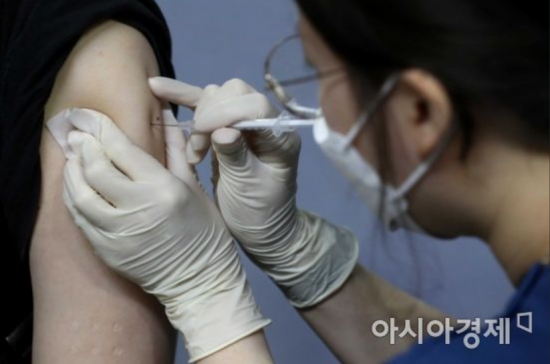 A citizen is receiving a vaccine at the vaccination center set up in Sadang Sports Complex, Dongjak-gu, Seoul. The photo is unrelated to specific expressions in the article. Photo by Asia Economy DB.
[Asia Economy Reporter Heo Midam] "I have already received the Moderna vaccine, but I feel anxious."
The government has recommended that people under 30 receive the Pfizer vaccine instead of Moderna for COVID-19 vaccination going forward. However, this measure has sparked dissatisfaction, especially among people in their 20s who have already completed the Moderna vaccination. Given that many young people have already been vaccinated with Moderna, this decision is seen as a belated response that rather increases the anxiety of the young population who have completed vaccination.
There are also many voices criticizing the allowance of heterologous vaccination with the Moderna vaccine. Initially, Moderna did not permit heterologous vaccination, but under this new measure, those who received the first dose of Moderna will receive Pfizer for their second dose. Regarding this, the government stated that the decision was made considering overseas adverse effect research results and the domestic vaccine supply situation.
On the 17th, the COVID-19 Vaccination Response Promotion Team held a vaccination expert committee meeting and decided to restrict the use of the Moderna vaccine for people under 30. This measure was based on overseas cases. Previously, some European countries limited Moderna vaccination for those under 30 due to a higher incidence of myocarditis and pericarditis compared to the Pfizer vaccine.
However, unlike other countries, Korea has no significant difference in the reported rates of myocarditis and pericarditis between Moderna and Pfizer vaccines, but decided on this measure for safety reasons.
This decision has drawn complaints from citizens. Kim (25), an office worker who completed the second Moderna dose three weeks ago, criticized, "What’s the point of stopping vaccination for people in their 20s now? Many people have already been vaccinated. Stopping Moderna vaccination at this point feels like a very delayed response."
He added, "Countries like Finland and Sweden stopped vaccination early last month. I had doubts about whether it was okay to get Moderna back then, but I got vaccinated for herd immunity, so I feel empty now."
Some countries such as Sweden, Finland, and Germany temporarily suspended Moderna vaccination for young people last month due to concerns about increased risk of cardiovascular diseases during vaccination. Although the occurrence of these diseases is rare, Moderna use was temporarily halted as a preventive measure.
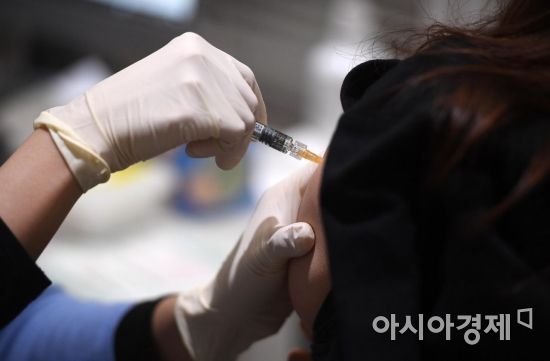 A citizen is receiving a COVID-19 vaccination. The photo is unrelated to specific expressions in the article. Photo by Asia Economy DB.
However, in Korea, a considerable number of young people have already completed Moderna vaccination. As of the 6th, a total of 12.41 million Moderna vaccine doses (6.6 million first doses and 5.81 million second doses) have been administered, with 2.87 million doses (1.55 million first doses and 1.32 million second doses) given to those under 30.
Among these, the recent allowance of heterologous vaccination with Moderna, which was initially not permitted, has increased public anxiety. The health authorities recommend that those under 30 who received the first Moderna dose get the second dose with Pfizer vaccine.
Choi (28), an office worker who completed the first Moderna dose, said, "Many of my acquaintances received the Pfizer vaccine, so I originally wanted to get Pfizer for the first dose as well. But since we couldn’t choose the vaccine, I reluctantly got Moderna. Now suddenly being told to get Pfizer for the second dose is confusing. Since heterologous vaccination wasn’t originally allowed and now it suddenly is, I’m worried about possible side effects."
Critical voices are also emerging on online communities. One netizen said, "The government clearly said before that heterologous vaccination between Moderna and Pfizer was not allowed. There’s no data yet, and we don’t know what side effects might occur. I got the first Moderna dose and am preparing for the second, but I’m really scared."
Meanwhile, the government maintains that restricting Moderna vaccination for those under 30 is a proactive measure. Choi Eunhwa, chair of the Vaccination Expert Committee, said at a regular COVID-19 briefing, "Unlike other countries, Korea did not see a significant difference in myocarditis and pericarditis incidence between Moderna and Pfizer vaccines. However, considering the higher risk of myocarditis and pericarditis after Moderna vaccination reported in Germany and France, as well as the domestic vaccine supply situation, we decided to limit the age for Moderna vaccination as a precautionary measure for safer vaccination."
However, for booster shots, Moderna vaccine doses are administered at half the usual amount, so Moderna vaccination is possible for those aged 18 and older.
Chair Choi added, "The Moderna booster vaccine contains half the amount of mRNA (messenger ribonucleic acid) compared to the primary vaccination, similar to Pfizer, and there is no evidence that the risk of myocarditis or pericarditis increases with booster doses."
© The Asia Business Daily(www.asiae.co.kr). All rights reserved.


















