PLU Stickers Containing Crop Cultivation Method Information
Occasionally Eating Them by Mistake Is Harmless to the Human Body
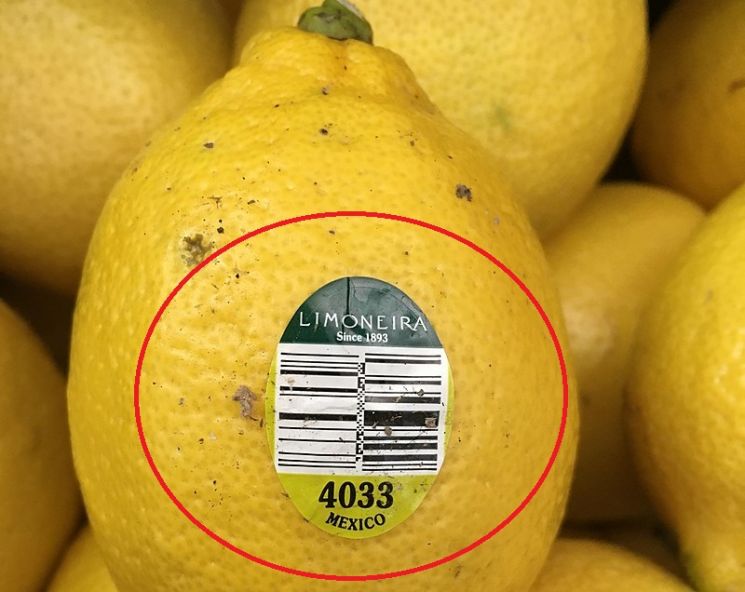
[Asia Economy Reporter Lim Juhyung] Stickers commonly seen on the skins of imported fruits or vegetables. It’s fine to remove them before eating, but sometimes the residue or sticky parts left behind can look unpleasant. Is it okay if you accidentally swallow these stickers? Or should you remove them all?
According to the U.S. Food and Drug Administration (FDA), stickers attached to food are harmless to the human body even if chewed or swallowed. Since they are originally made to be attached to edible food, the harmful substances to the human body are minimized.
◆"Stickers on fruits are harmless to the human body even if eaten"
On the 16th (local time), the U.S. media outlet 'The New York Times' (NYT) quoted an FDA official in an article titled "Is it okay to eat stickers on fruits and vegetables?" saying, "The attached stickers are safe for food hygiene."
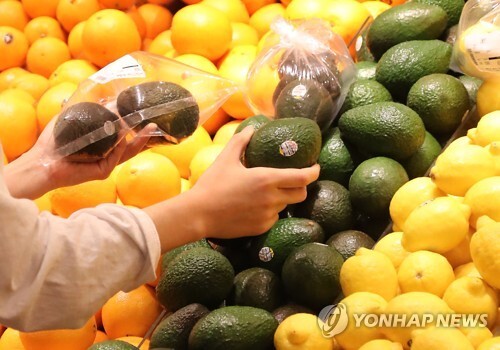
According to the media, stickers attached to food consist of three essential materials: ink used for printing text, plastic or paper used to make the sticker itself, and adhesive components. All three substances are made from materials safe for the human body.
Regarding this, an FDA official explained, "These stickers are designed with the assumption that they will be removed before eating the food, so the FDA has not reviewed whether regular ingestion of stickers is safe for the human body," but added, "Since the stickers have low toxicity, even if you occasionally unintentionally consume sticker components, there is no concern about adverse health effects."
◆Why are stickers attached? 'PLU' helps supermarket operations
The official name of these stickers commonly found on imported fruits or vegetables is the 'PLU code.' PLU stands for 'price look-up.' Therefore, the PLU code refers to a code containing price-related information.
If you look closely at the sticker, you can find four- or five-digit numbers. These numbers provide detailed information about the cultivation method of the crop. For example, a five-digit code starting with 9 indicates the crop was grown organically, while others indicate conventionally grown crops.
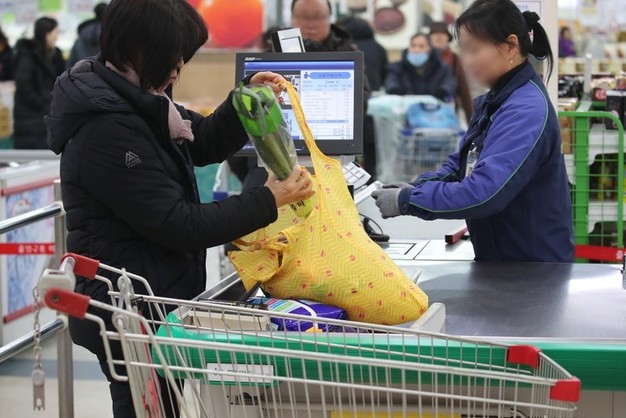 An employee is scanning items at the checkout counter of a large supermarket in Seoul / Photo by Yonhap News
PLU codes have been used since 1990 and are directly managed by the International Federation for Produce Standards (IFPS). These codes were created to facilitate the work of supermarket employees who sell fruits and vegetables in bulk. Through the codes, they can quickly handle various tasks such as inventory and product characteristics management.
◆Edible but not biodegradable... be careful not to mix with compost
Although occasionally eating stickers is harmless to the human body, deliberately eating them or using them as compost is not recommended. They have no taste or nutritional value, and since they are essentially made of plastic, they do not decompose.
Regarding this, NYT pointed out, "Stickers are not biodegradable and therefore do not compost. If stickers are put into compost bins along with other food waste, it is essentially like spreading microplastics into the soil," adding, "This actually harms the environment."
© The Asia Business Daily(www.asiae.co.kr). All rights reserved.



















