Concerns Conveyed Regarding the CBAM Legislation Proposal
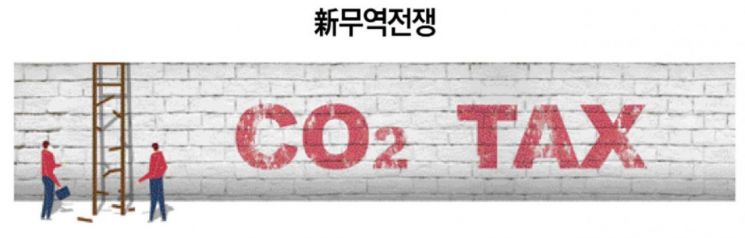
[Asia Economy Reporter Kim Heung-soon] The Korea International Trade Association (KITA) and the European Korean Business Association submitted a statement of concerns from our export companies regarding the European Union's (EU) introduction of the Carbon Border Adjustment Mechanism (CBAM) to the EU Commission on the 16th (Korean time).
In the statement, KITA emphasized, "The CBAM legislative proposal is highly likely to be inconsistent with World Trade Organization (WTO) rules and will impose excessive economic and administrative burdens on our export companies." They added, "There is great concern about the EU introducing a discriminatory and trade-distorting CBAM, and we hope to avoid unilateral measures and seek global cooperation methods to address climate change together."
KITA also pointed out, "CBAM linked to the EU Emissions Trading System (EU-ETS) is likely to violate the WTO principles of Most-Favored-Nation treatment and National Treatment, and it will be difficult to apply general exceptions for environmental purposes." This judgment is based on the fact that EU domestic companies can benefit from emission allowance sales according to carbon reduction capabilities, exemptions under the system, and subsidies, whereas third-country exporters are unlikely to enjoy such benefits, leading to relative discrimination.
They also mentioned the excessive economic and administrative burdens companies will face. With the introduction of CBAM, third-country exporters will be required to regularly submit information such as carbon emissions during the product manufacturing process to EU authorities, which KITA emphasized will be an excessive burden for companies. In particular, Korean companies must report and prove environmental costs already paid domestically under the domestic Emissions Trading System (ETS), raising concerns about a double burden on companies.
Earlier, on July 14, the EU announced the legislative package 'Fit for 55' to address climate change, along with the CBAM legislative proposal. Fit for 55 aims to reduce the EU's average carbon emissions to 55% of 1990 levels by 2030. To achieve this, the CBAM proposal intends to impose tariffs on products imported into the EU that are produced in countries with higher carbon emissions than domestic products.
Park Cheon-il, Director of the International Trade and Commerce Research Institute at KITA, said, "There are particularly strong concerns about the introduction of CBAM in the steel and aluminum industries, which have high carbon emissions," adding, "We plan to closely monitor the EU's legislative process and actively represent our industry's opinions whenever detailed implementation rules are announced."
Meanwhile, the EU Commission is collecting stakeholders' opinions on the CBAM legislative proposal until the 18th of this month. The collected opinions will be reported to the European Parliament and the Council during the subsequent legislative process.
© The Asia Business Daily(www.asiae.co.kr). All rights reserved.

















