UN Climate Change Convention COP26 Agreement
Japan's 2050 Goal: '20% Nuclear + Coal Power Option'... Our Goal: '6% Nuclear + Coal Power Out'

[Sejong=Asia Economy Reporter Kwon Haeyoung] As the international community agreed on a phased reduction rather than a complete phase-out of coal power, concerns are emerging that only South Korea is pressing the accelerator on coal phase-out. South Korea signed a declaration to abolish coal power by the 2040s, but developing countries like China and India, as well as developed countries such as the United States, Japan, and Australia, chose 'pragmatism' over 'principle' and did not sign. In particular, while Japan plans to maintain a nuclear power share of about 20% by 2050 and keeps the coal power option open, our government decided to reduce the nuclear power share to a maximum of the 6% range and declared the phase-out of coal power, which has been criticized for narrowing its own room for maneuver.
At the 26th United Nations Climate Change Conference of the Parties (COP26), which concluded on the 13th (local time), the 'Glasgow Climate Pact' adopted included language to accelerate efforts to phase down coal power without carbon capture devices and to phase out fossil fuel subsidies. Regarding the contentious coal phase-out plan at this meeting, it was initially expected that countries would agree to abolish coal power, but due to strong opposition from India at the last minute, the wording was changed from 'abolish' to 'reduce' in the agreement.
Differences over the abolition of coal power were exposed in various places. Earlier, a coal phase-out declaration, which mainly called for the phased abolition of coal power by the 2040s, was signed by 46 countries including South Korea. However, China, the United States, India, Japan, and Australia, which have high dependence on coal-fired power generation, did not participate. The share of coal power in the United States was 30.8% as of 2017, and Japan's was 32.9%. The total share of thermal power generation, including liquefied natural gas (LNG) and oil, reached 62.8% and 76.7% in the United States and Japan, respectively. In South Korea, coal power facilities account for 30% of the total, and coal power generation accounts for about 40% of the total (as of 2019).
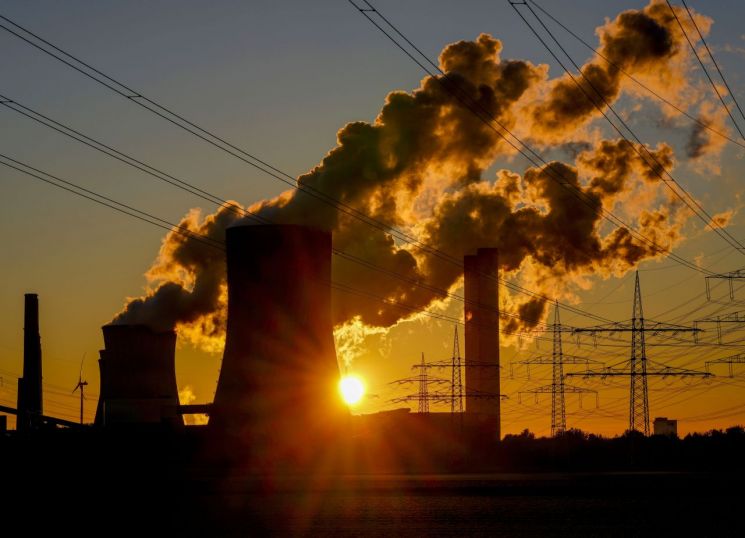
There is no disagreement on the need for the phased abolition of coal power to respond to climate change, but the issue is the speed. Coal, along with nuclear power, is considered a low-cost and stable power source. South Korea, setting a carbon neutrality goal for 2050, plans to reduce the nuclear power share from 29% in 2020 to 6.1?7.2% by 2050 and completely phase out coal power, which currently accounts for about 30%. This contrasts with Japan, which plans to maintain a nuclear power share of about 20% by 2050 and will decide on the abolition of coal power through future discussions.
The external promise of coal phase-out could also become a trigger that politically pressures the early retirement of coal power domestically. The government plans to retire 30 coal power plants by 2034, but some political circles are pressing to advance the schedule to 2030. The rapid phase-out of coal power also raises concerns about job losses.
Professor Jeong Dongwook of the Department of Energy Systems Engineering at Chung-Ang University said, "In Japan's case, they are pursuing a flexible energy policy by maintaining a high share of nuclear power while keeping coal power as an additional option," adding, "Carbon neutrality is a battle between principle and pragmatism, and it is acceptable to adjust the speed by observing the situation of neighboring countries, but our government is somewhat hasty."
© The Asia Business Daily(www.asiae.co.kr). All rights reserved.
![Clutching a Stolen Dior Bag, Saying "I Hate Being Poor but Real"... The Grotesque Con of a "Human Knockoff" [Slate]](https://cwcontent.asiae.co.kr/asiaresize/183/2026021902243444107_1771435474.jpg)

















