[Seoul District News] Jungnang-gu Residents to Improve Housing Environment by Managing Old Houses Themselves with 'Home Repair Education' Enrollment from 16th to 18th... Seocho-gu Selected as 'Best Autonomous District' in Financial Analysis... Seongbuk-gu Expands U-Library (Unmanned Reservation and Loan Service) Implementation
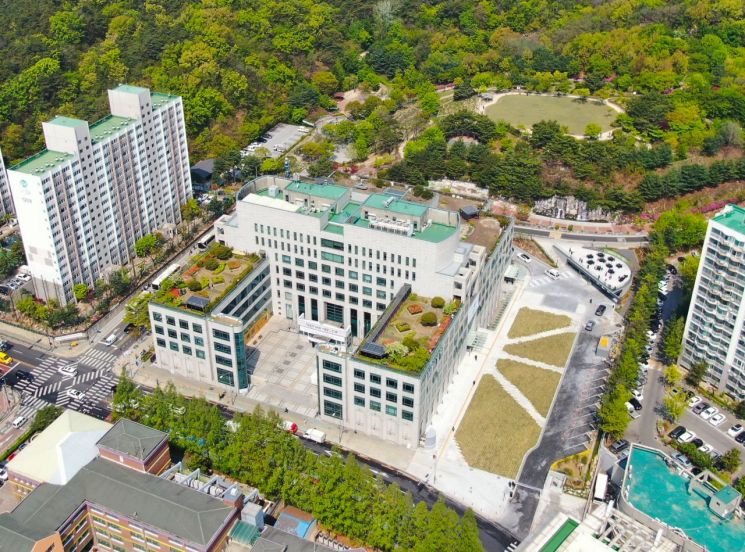
[Asia Economy Reporter Park Jong-il] Jungnang-gu (Mayor Ryu Gyeong-gi) is recruiting students for the ‘Life Home Repair Education’ course from the 16th to the 18th to enable residents to manage aging houses themselves and improve their living environment.
The district will conduct practice-oriented lectures that can be immediately applied in daily life, helping residents to handle simple home repairs on their own.
This life home repair education will be held free of charge every Tuesday from 7 p.m. to 9 p.m. for three weeks starting November 23 at the Mangwoo-bon-dong Urban Regeneration Support Center (473 Mangwoo-ro). Any Jungnang-gu resident interested in home repair can participate.
The education focuses on practical training, giving participants time to directly replace necessary items such as toilet and washbasin parts and insect screens.
In particular, the Jungnang Home Repair Support Center will assist throughout the practical course, and necessary tools will be provided so that students do not feel burdened during practice.
Residents wishing to participate can download the application form from the district office website, fill it out, and submit it via email (cha012@jn.go.kr). On-site lectures will be held for up to 10 people, but excess participants can attend classes through real-time online lectures.
Ryu Gyeong-gi, Mayor of Jungnang-gu, said, “I hope this education will be an opportunity for residents to take care of their aging houses themselves and actively improve their living environment,” adding, “We will strive to expand home repair education composed of various practical trainings so that people can repair their homes as they wish.”
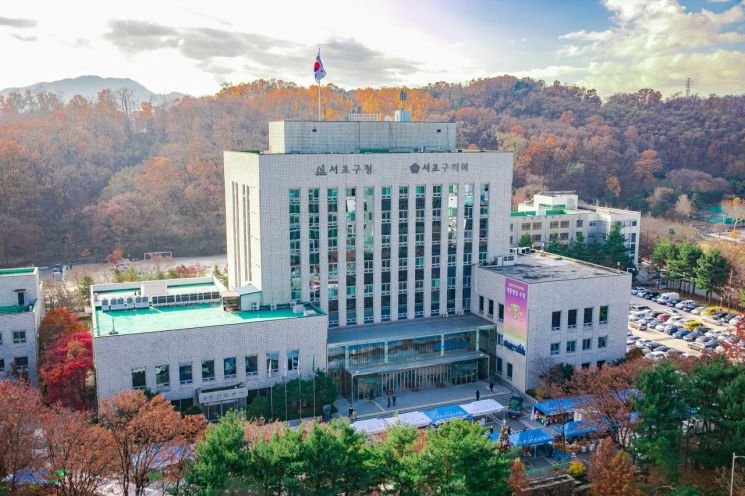
Seocho-gu was selected as the ‘Best Local Government’ in the ‘2021 (Fiscal Year 2020) Local Government Financial Analysis’ hosted by the Ministry of the Interior and Safety. Accordingly, the district secured a commendation from the Minister of the Interior and Safety along with a special grant of 90 million won.
The local government financial analysis is a local finance monitoring system that evaluates the financial status and performance of 243 local governments nationwide based on three areas?financial soundness, financial efficiency, and financial planning?and 13 key financial indicators.
As a result of the financial analysis, the district was rated ‘excellent’ in all indicators of financial soundness, financial efficiency, and financial planning, and was selected as the best local government in financial management.
Specifically, the district has a ‘0’ management debt ratio and a low integrated current liabilities ratio, demonstrating excellent financial soundness. It also received high marks for financial efficiency due to a high proportion of local taxes and non-tax revenues in income and a low proportion of self-funded expenses.
In the financial planning area, the district was highly rated for a low error rate in reflecting the mid-term financial plan. Additionally, the ratios of job project expenditure, future generation burden, and debt compared to liquid assets were evaluated as superior compared to other local governments.
Park Woo-man, Head of the Planning and Budget Division, said, “This financial analysis evaluation is the result of 1,500 Seocho-gu employees working together to increase revenue and reduce expenditure,” adding, “We will continue to improve financial management efficiency by consolidating similar and overlapping projects and eliminating unnecessary wasteful budgets, prioritizing resident life administration.”
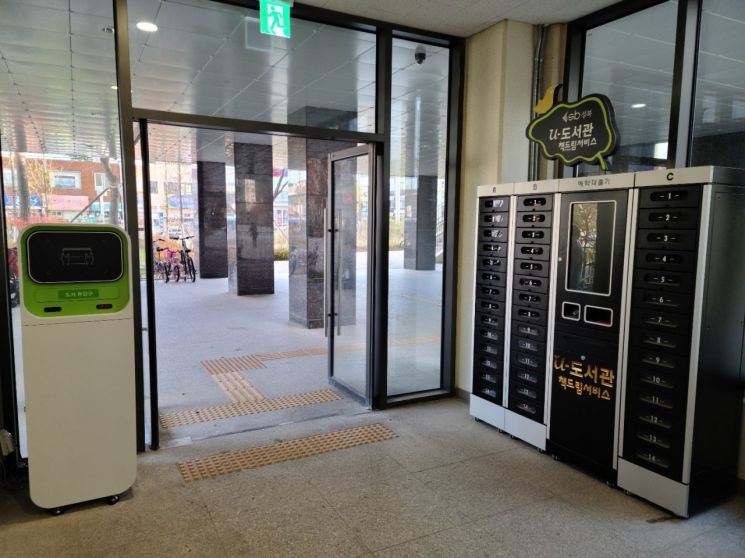
Seongbuk-gu (Mayor Lee Seung-ro) announced that it will add and operate an unmanned reservation lending and return machine for U-Library books at the building housing the Seongbuk-gu Volunteer Center (1st floor, Building 716, Jangwi Kkumui Sup I-Park Apartment) starting from the 16th.
Seongbuk-gu has created an environment where people can easily read books anytime and anywhere by operating a total of 13 U-Library unmanned reservation lending systems, starting from Seongbuk-gu Office, Sungshin Women’s University Station, and Wolgok Station in 2012, including the newly added Seongbuk-gu Volunteer Center. This is the largest number among the 25 districts in Seoul.
The U-Library system allows residents to borrow and return necessary books through devices at subway stations during commuting hours. Users can reserve books available for loan from the 15 Seongbuk public libraries via the Seongbuk Integrated Library website or the Seongbuk U-Library mobile app and pick them up at their preferred unmanned reservation lending and return machine. When the reserved book arrives at the machine, the applicant receives a text message with the loan date and can pick up the book from the unmanned machine, a method called ‘unmanned reservation lending.’
Anyone with a membership card for the Seongbuk public library’s external loan service can use this service. Those without a membership card can easily register through the ‘Seoul Citizen Card’ app to use the service.
Users can borrow up to two books per person for a maximum of 14 days through the unmanned reservation lending service and can extend the loan period once for seven days via the Seongbuk Integrated Library website or mobile app. However, users cannot use the service if they exceed the loan limit (five books per person) or have overdue books. More detailed information such as location and usage hours can be found on the Seongbuk Integrated Library website or Seongbuk Information Library.
Lee Seung-ro, Mayor of Seongbuk-gu, said, “In line with the With-Corona era, it is necessary to expand various services at Seongbuk public libraries,” adding, “We will continue to strive to promote the reading culture of Seongbuk residents.”
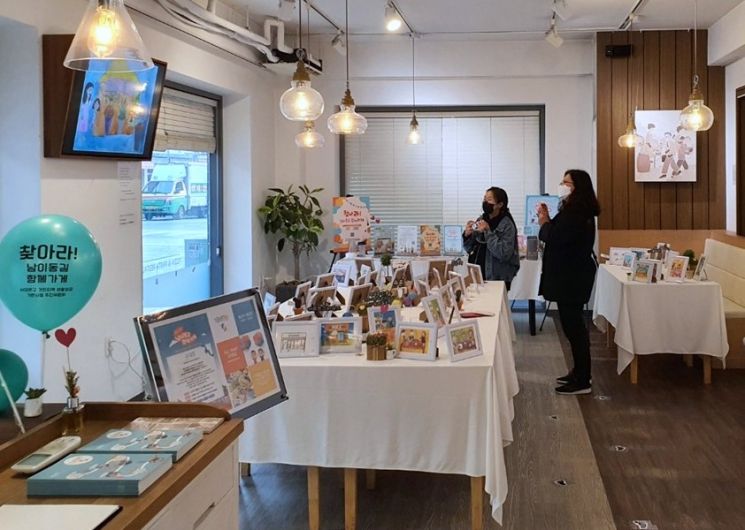
Seodaemun-gu (Mayor Moon Seok-jin) announced on the 12th that the Gajwa area (around Namgajwa 2-dong) was selected as the target site for the ‘2nd Phase Living Commercial Area Development Project’ hosted by Seoul City, and will promote the creation of ‘Nami-dong Street, a cultural street where residents want to stay.’
Previously, in November last year, the ‘Seodaemun-gu Gajwa Area Living Commercial Area Foundation Project Promotion Committee,’ composed of local residents and merchants, was launched.
Over the past year, the committee has promoted activities to revitalize alley-type living commercial areas, including recruiting community stores, hosting shared cup experience events, installing storage boxes for secondhand goods, conducting a ‘Nami-dong Street Together Store’ sticker tour, and holding the All That Nami-dong Street Children’s Drawing Exhibition.
The second phase of the Gajwa area living commercial area development project, which will begin in January next year, will receive a budget of up to 2 billion won by 2024, including up to 350 million won in the first year, expected to revitalize the local economy, which has been depressed due to COVID-19.
Going forward, the promotion committee will carefully identify resident needs through surveys and meetings, then actively create neighborhood stores (community stores) that provide living convenience services and discover and support trustworthy local master stores (handmade stores).
Additionally, the committee will promote marketing study groups to strengthen merchant capabilities, publish the resident newsletter ‘Our Neighborhood People,’ and foster the ‘Together Store’ collaborative model between local organizations and merchants to solve residents’ living issues.
Lee Young-hee, Chairperson of the Promotion Committee, expressed her ambition, saying, “We will create ‘Nami-dong Street,’ where over 50-year-old long-established stores and new shops coexist, and university and residential areas blend, allowing residents to enjoy both living convenience and local culture.”
Moon Seok-jin, Mayor of Seodaemun-gu, said, “We will actively cooperate with the local community to develop the project site into a ‘cultural street where people want to stay.’”
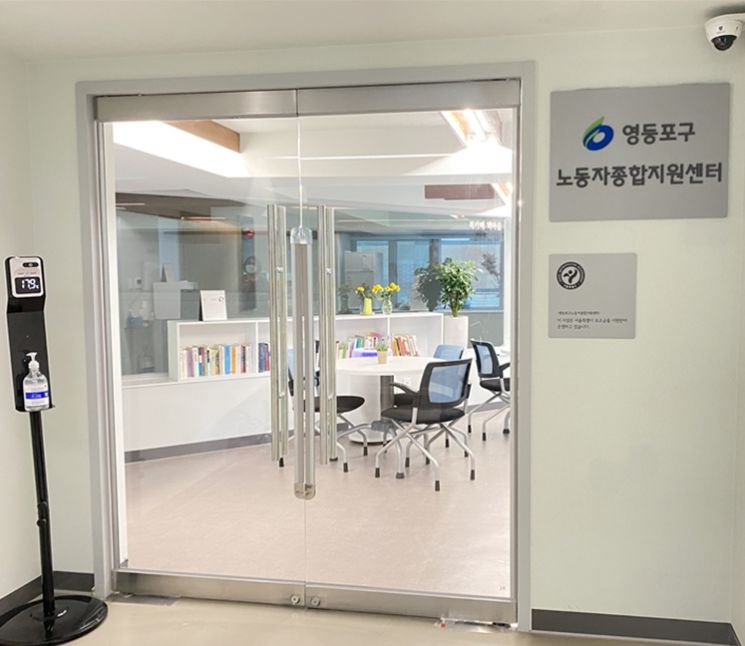
The Yeongdeungpo-gu (Mayor Chae Hyun-il) Labor Comprehensive Support Center, dedicated to the autonomous activities, rights protection, and rights enhancement of workers, began full operation on the 11th.
The Yeongdeungpo Labor Comprehensive Support Center started construction in February this year at 24, Beodnaruro 23-gil, Yeongdeungpo-gu, in the building of the Yeongdeungpo Industrial Mission Society, and after focusing on early completion within the year, completed construction in October and held an opening ceremony on November 11 to mark the start of operations.
The building housing the support center is a historically significant space that preserves the footprints of labor human rights movements and democratization struggles of Yeongdeungpo’s workers, a major light industry hub in Korea during the 1970s and 1980s.
In 2019, Yeongdeungpo-gu and the Yeongdeungpo Industrial Mission Society signed a memorandum of understanding to facilitate the smooth establishment and operation of the Labor Comprehensive Support Center, agreeing to free use of the 3rd and 4th floors of the building for 10 years and to cooperate on remodeling and facility management.
Through this agreement, the Labor Comprehensive Support Center, with a total area of 408.27㎡ spanning from the basement first floor to the 4th floor, was opened.
The center’s basement first floor and first floor house the ‘Yeongdeungpo Industrial Mission Society History Hall,’ showcasing the labor movement history at a glance; the third floor serves as a multipurpose complex space including an education room and counseling rooms; and the fourth floor contains offices, counseling rooms, and a book caf?.
Specifically, the center will provide free labor law consultations, labor-management relations consulting, labor environment improvement, labor-related legal education, customized labor education such as labor human rights sensitivity training, cultural and leisure support projects for workers, and will serve as a space for researching and promoting labor policies based on workers’ needs.
Residents wishing to consult on labor issues such as minimum wage, working hours, discrimination against irregular workers, or unilateral dismissal notices, as well as workers employed in Yeongdeungpo, can visit for consultations, and telephone consultations are also available through the center.
Additionally, various welfare services for workers’ rights enhancement, including legal support, labor education, employment support, and cultural and welfare programs, are provided.
Labor consultations are provided free of charge and are available during the center’s operating hours from 9 a.m. to 6 p.m. on weekdays.
Chae Hyun-il, Mayor of Yeongdeungpo-gu, said, “I hope the Yeongdeungpo Labor Comprehensive Support Center will become a versatile problem solver for workers suffering from unfair treatment and human rights violations in the workplace,” adding, “We will do our best to create a society where the value of labor is respected and workers are treated well.”
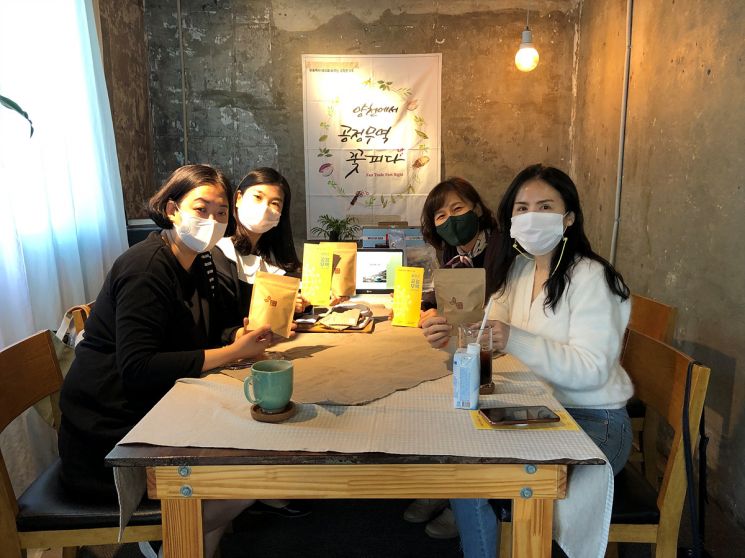
Yangcheon-gu (Mayor Kim Soo-young) announced that the 14-day fair trade festival ‘Yangcheon Fair Trade Fortnight’ held from October 22 to November 5 concluded successfully.
Hosted by Seoul City and Yangcheon-gu and organized by the Yangcheon Fair Trade Council and Yangcheon Economic and Social Cooperative, this event was held for the second time following last year, featuring abundant events promoting fair trade throughout Yangcheon-gu for two weeks.
The first corner to get familiar with fair trade was a quiz event that taught the concept of fair trade in an easy way. Customers who visited fair trade product sales locations and answered related quizzes correctly received candies made from muscovado sugar.
‘Indramang Cooperative’ and ‘Hansalim’ gave out cocoa waffles and muscovado sugar to cooperative members who purchased fair trade goods worth more than 20,000 won, creating a win-win event where customers enjoyed ethical consumption and received gifts, bringing smiles to their faces.
Four cafes in the region hosted a ‘Make Fair Trade by Hand’ corner. Notably, the event was meaningful as the ‘Victoria Cooperative’ from Grecia City, Costa Rica, Yangcheon-gu’s sister city, sent fair trade coffee to celebrate the fortnight, which was used to make drip bags. Participants were reportedly amazed by the fresh aroma reminiscent of coffee freshly brought from the coffee-producing region as soon as the coffee bag was opened.
There was also an event where participants made fair trade coasters from threads dyed and woven on looms by Laotian women. Participants said they felt proud to get closer to fair trade by making products themselves, a concept that was previously unfamiliar.
On October 27, the ‘Visiting Fair Truck’ supported by the Korea Fair Trade Association met residents in front of Haenuri Town Square. The fair truck, decorated with various fair trade products, provided opportunities for 120 residents to encounter fair trade products in daily life through a quiz lottery event for household goods.
Additionally, Seoul Energy Corporation, a fair trade practice institution in the region, held a fair trade awareness event using internal SNS comments for its employees. Furthermore, Dasom, Eunhasu, and Mok 2-dong Public Daycare Centers held fun sessions where children learned the concept of fair trade through pop-up books and market play.
After successfully concluding the two-week fair trade festival, Yangcheon-gu plans to continue various activities with the Yangcheon Fair Trade Council, including creating a fair trade street.
Kim Soo-young, Mayor of Yangcheon-gu, said, “Fair trade, which overcomes unfairness and protects the environment through ethical consumption that safeguards producers’ livelihoods, is the direction our society should take,” adding, “As the first certified fair trade city among Seoul’s autonomous districts, we will continue to support fair trade to ensure sustainable development in Yangcheon-gu.”
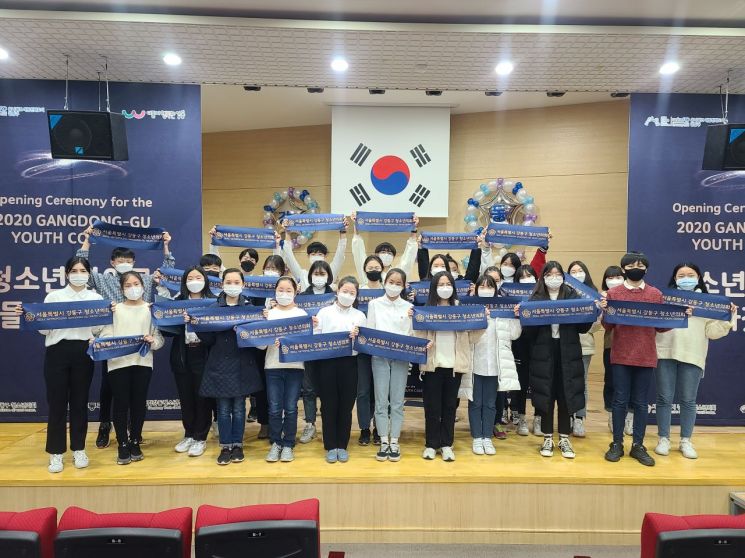
Gangdong-gu (Mayor Lee Jeong-hoon) announced that it will hold the opening ceremony of the 6th Gangdong-gu Youth Council on the 13th at the 2nd floor of the Gangdong Youth Center.
Earlier, from August, the district publicly recruited 32 candidates aged 9 to 18 who reside in Gangdong-gu or attend schools in the area.
From October 1 to 22, an online voting booth was set up through Seoul’s M-Voting and the Gangdong-gu Office website for three weeks. After counting votes on the 23rd, 25 members were elected through ‘direct elections.’ Six proportional representatives were selected through recommendations from institutions such as Gangdong Dream Village and the Healthy Family Multicultural Family Support Center, forming a total of 31 members.
The 31 members of the 6th Youth Council will begin their council activities from the opening ceremony day and serve a one-year term until November 12 of the following year.
The Youth Council will form standing committees on operation and promotion, education and culture, human rights and rights, and safety and welfare. During the one-year term, they will participate in various activities representing Gangdong-gu youth, including youth research projects, open council policy proposals, youth participation budget deliberation and resolution activities, and planning and operating youth democracy festivals.
Before the opening ceremony, an orientation will be held to introduce the annual council schedule, elect the chairperson and vice-chairperson who will lead the council, and organize standing committees.
The opening ceremony will proceed with the issuance of certificates of election and council member badges for the 6th Youth Council members, awarding certificates of commendation to outstanding members of the 5th council, appointing advisory support groups for the 6th Youth Council, and conducting the general meeting. The advisory support group, composed of youth-related experts and university students, will provide advice and support for youth council activities such as policy proposals and committee meetings.
Lee Jeong-hoon, Mayor of Gangdong-gu, said, “It will be an opportunity for youth to act as policy agents and learn democratic decision-making processes,” adding, “We expect the Gangdong-gu Youth Council to represent youth and contribute to their rights and welfare, and we will do our best together.”
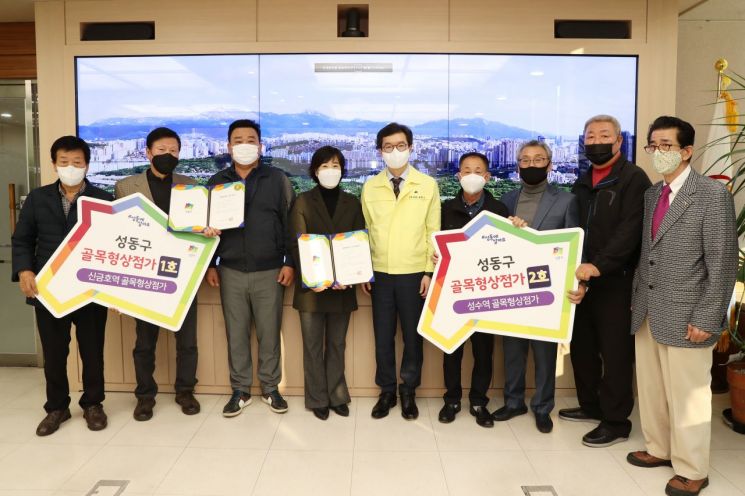
Seongdong-gu (Mayor Jung Won-oh) held a certificate presentation ceremony on the 1st for the designation of two alley-type shopping districts.
The district selected Shingumho Station Shopping District and Seongsu Station Shopping District as the first and second alley-type shopping districts, respectively, after receiving applications from merchant organizations wishing to be designated and meeting registration criteria, aiming to revitalize the local commercial area.
An alley-type shopping district can be designated in an area within 2,000㎡ where 30 or more small business operators’ stores are concentrated, through applications from merchant organizations. Designated alley-type shopping districts can register as Onnuri gift certificate affiliated stores, receive support for business environment improvement and marketing projects, and participate in national and city government grant projects.
Previously, to be designated as a shopping district, retail and wholesale stores had to account for more than 50%, which excluded alley commercial areas like food alleyways from various market support systems compared to traditional markets or general shopping districts.
In response, the district amended the ordinance for fostering traditional markets and shopping districts in May to include procedures for designating alley-type shopping districts, laying the foundation for revitalizing alley commercial areas.
Although both Shingumho Station and Seongsu Station alley-type shopping districts suffered from a sharp decline in sales due to COVID-19, their locations near subway exits 5 and 1, respectively, attract floating populations and young customers frequenting cafes and restaurants, making the designation expected to inject new vitality into the local commercial area, according to district officials.
Jung Won-oh, Mayor of Seongdong-gu, said, “We will actively support the designated alley-type shopping districts to be revitalized,” adding, “We will do our best to prepare practical measures to help small business owners, including alley commercial areas, to revitalize the local economy.”
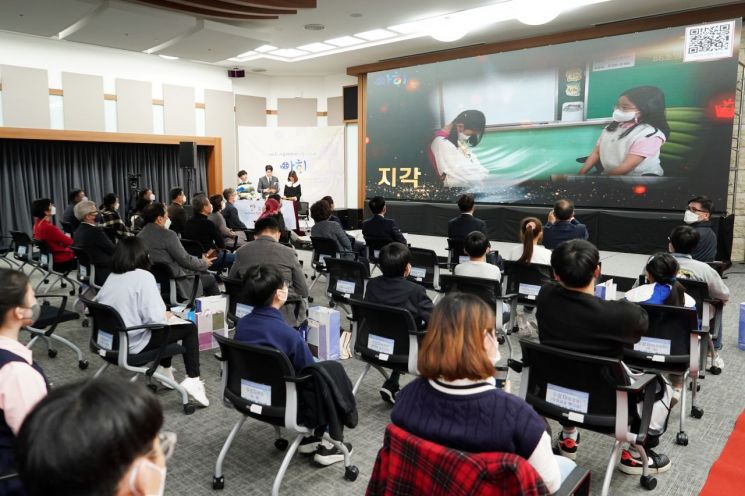
Dongdaemun-gu (Mayor Yoo Deok-yeol) is accelerating efforts to create a children’s film special zone (tentative name) to nurture future talents in the film industry in Dongdaemun-gu, which led the golden age of Korean cinema in the 1960s.
The district is remodeling the Dongdaemun-gu Cultural Center, located at Dapsimni Filming Studio Hill, aiming to open the ‘Dapsimni Film Media Art Center’ in the first half of next year.
In particular, the district plans to create spaces on the basement first floor and second floor for children to receive education and practical training in film and media, running various programs to lay the foundation for producing the second and third Bong Joon-ho directors and establishing K-movie.
At the media education center on the basement first floor, programs will teach scenario writing, use of equipment such as cameras, filming methods, and editing techniques. The film studio on the second floor will shoot broadcasts and short films in front of actual cameras according to various scenarios.
Additionally, the editing room and recording studio on the basement first floor will be used to complete works, and the cinema on the first floor will allow participants to watch the films they made themselves.
The district also provides budget support to help children continue to nurture their dreams of film production.
Since 2016, the district has supported the Seoul Children’s Creative Film Festival held at Dongdap Elementary School in Dongdaemun-gu, providing a budget for each event. This year, it supported 30 million won to assist children’s creative activities. In recognition of these efforts, Yoo Deok-yeol, Mayor of Dongdaemun-gu, received a special merit plaque at the 6th Seoul Children’s Creative Film Festival held at the Global Knowledge Cooperation Complex on the 3rd.
The Seoul Children’s Creative Film Festival started in 2016, reflecting the local community’s desire to restore the film village, with Dongdap Elementary School built on the site of the Korean Film Studio. Children and youth from Korea and abroad submit their self-produced works to the festival, nurturing their dreams. This year, 187 works were submitted, increasing in popularity year by year.
Yoo Deok-yeol, Mayor of Dongdaemun-gu, said, “We will actively support the passion and talent of young filmmakers so that Dongdaemun-gu, which led the golden age of Korean cinema in the 1960s, can become a sacred place for films again,” adding, “We will do our best to create the Dapsimni Film Media Art Center with comprehensive functions such as filming, screening, exhibition, and education, and firmly support children’s film education and production programs in the region.”
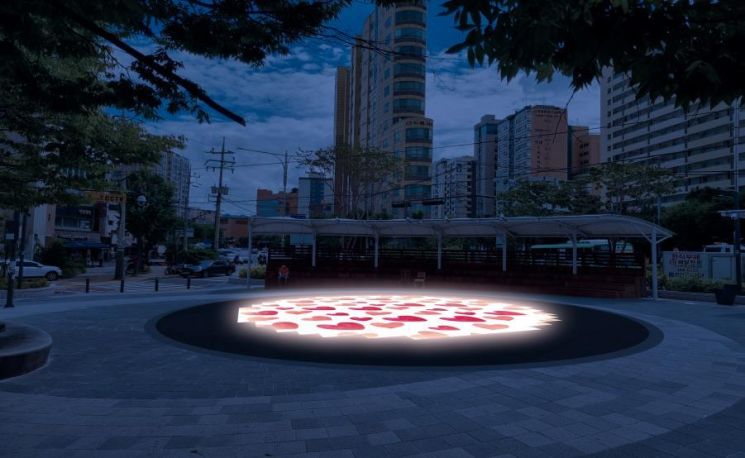
Eunpyeong-gu (Mayor Kim Mi-kyung) announced that it will open ‘Solar Island,’ which can be used as an experiential learning center and gallery, starting from the 15th.
‘Solar Island’ features a prototype road surface block-type solar power generation facility made by combining high-strength solar modules with paving blocks that function as sidewalks and solar power generation. It consists of 364 solar panels and 468 LEDs, totaling 832 panels, with an 11-meter length and 94.5㎡ circular media facade.
This facility is a second-generation model that passed KS test standards, excelling in waterproofing, freeze resistance, impact strength, and other safety aspects, allowing residents to walk and use the facility with confidence.
Additionally, the materials used are made from eco-friendly materials such as waste, broadly reflecting the meaning of renewable energy.
Through the solar blocks installed on ‘Solar Island,’ it is expected to produce 20.5 kW of electricity based on 3 hours and 20 minutes per day and 7,475 kW annually, reducing 3.9 tons of carbon emissions, according to the district.
Kim Mi-kyung, Mayor of Eunpyeong-gu, said, “At night, music and videos will be broadcast to provide unique attractions to nearby residents, and it will be operated as an experiential learning center for citizens in the future,” adding, “It will be used to promote renewable energy and build an eco-friendly image through media facades and outdoor performance venues.”

Songpa-gu (Mayor Park Seong-su) will hold the ‘Songsong Papa Night Market’ at Seokchon Market on the 13th and Pungnap Market on the 19th, creating a space for coexistence between local residents and merchants.
Traditional markets have suffered considerable damage due to the prolonged COVID-19 pandemic. In response, the district is revitalizing the local economy by setting up festival-style night markets where residents, merchants, and customers can enjoy and heal together.
On November 13, ‘Seokchon Night Market Under the Moonlight’ will be held at Seokchon Market, and on November 19, ‘Pungnap Night Market Under the Starlight’ will be held at Pungnap Market.
The Songsong Papa Night Market offers various attractions and entertainment such as ‘Songsong Lounge,’ ‘Our Neighborhood Flea Market,’ and ‘Nostalgic Store,’ along with abundant events like ‘Photo Certification Event’ and ‘Our Store Bonus Giveaways’ to encourage resident participation.
‘Songsong Lounge’ features special performances by local stars from 5 p.m. to 8 p.m., including resident performances, busking, and magic shows. ‘Our Neighborhood Flea Market’ runs from 3 p.m. to 8 p.m., showcasing handmade crafts and jewelry made by young entrepreneurs, as well as a flea market selling cherished items from nearby residents.
‘Nostalgic Store’ offers various events from 3 p.m. to 8 p.m. throughout the market, including dalgona candy picking, nostalgic snack sales, king card flipping, and glow-in-the-dark top kicking.
Residents wishing to participate in the ‘Photo Certification Event’ can take photos at traditional market photo zones or with certification shots of completing the Songpa Dullegil trail, purchase items at the market, and receive Onnuri gift certificates at exchange points within the market.
Additionally, the ‘Our Store Bonus Giveaway’ event is a ‘3+1’ promotional event expected to involve many merchants.
Park Seong-su, Mayor of Songpa-gu, said, “We hope the night market will increase merchants’ sales and provide enjoyable time for local residents in the afternoon as we enter the With-Corona era after a long period of stagnation in traditional markets.”
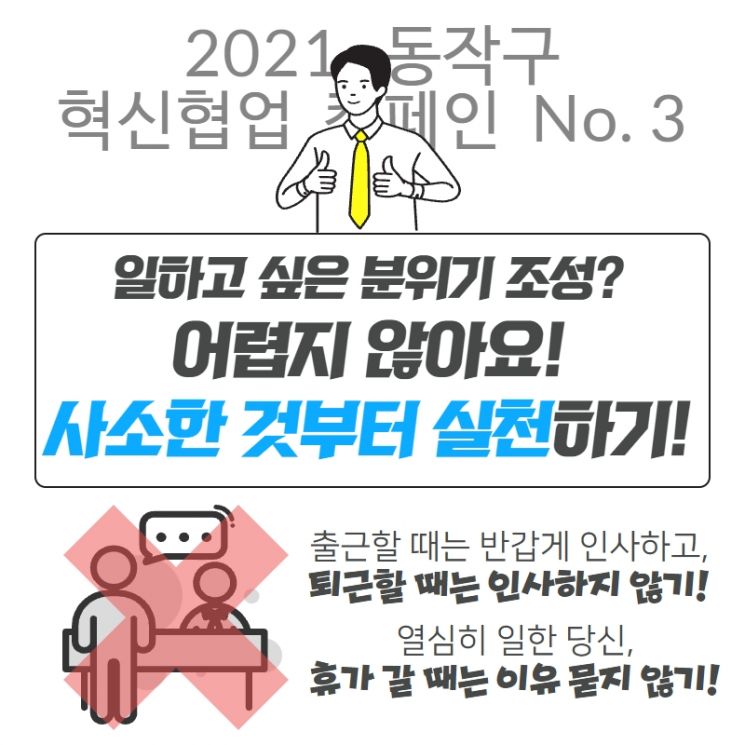
Dongjak-gu (Mayor Lee Chang-woo) is promoting the ‘2021 Organizational Culture Improvement Plan Using MZ Generation Junior Board’ to create a vibrant workplace culture by strengthening intergenerational communication within the organization.
With the influx of the new generation represented by the MZ generation in public service, where people in their 20s to 50s coexist, this plan was prepared to spread a horizontal and creative organizational culture based on mutual understanding and empathy among members.
The district will pilot operate a junior board composed of 101 MZ generation members in November, drawing various ideas for a flexible organizational culture and promoting awareness improvement activities such as meetings and campaigns.
On the 12th, Yang Nae-yoon, director of the Emotional Management Research Institute, was invited to conduct an online training titled ‘Generational Empathy: The Art of Pleasant Communication!’ for the junior board and other employees.
The training aims to increase understanding and empathy toward older generations, provide time for collecting opinions to resolve conflicts, and after the training, conduct a ‘Generational Honest Note Meeting’ where senior public officials give feedback via notes on anonymous honest opinions from MZ generation employees regarding organizational culture.
Additionally, campaigns such as ‘Greet warmly when coming to work, but no need to greet when leaving!’ and ‘Don’t ask reasons when you take a well-deserved vacation!’ will be promoted to foster an autonomous and flexible organizational culture.
Kim Hyun-ho, Head of the Planning and Coordination Division, said, “It is important to understand each other’s differences without dividing generations,” adding, “We will take the lead in creating a healthy and vibrant organizational culture with good communication and collaboration.”
The district is also making various efforts to spread an innovative culture within the organization, including participating as an excellent local government in the ‘2021 Korea Innovation Expo’ and promoting ‘One Department, One Innovation Task,’ which turns diverse ideas from employees and residents into policies.
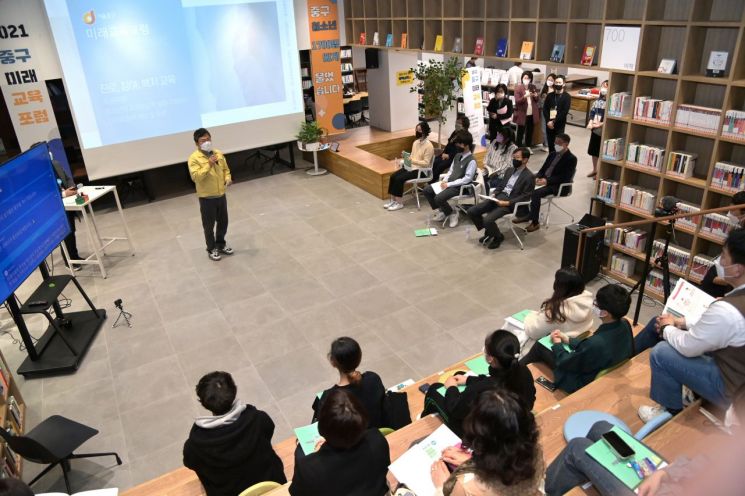
Jung-gu, Seoul (Mayor Seo Yang-ho) held the ‘3rd Jung-gu Future Education Forum’ on the 11th in collaboration with the Jung-gu Youth Center, Jung-gu Career Experience Support Center, Jung-gu Education Welfare Center, and Jung-gu Education Support Center.
The forum, held at the Edu Library inside the Jung-gu Education Support Center ‘Iro-um,’ was organized as a discussion platform on the role of local governments in supporting youth’s self-directed lives.
Based on the results of the ‘Jung-gu Youth Survey’ conducted in June with 1,700 local youths, teachers, students, representatives of village education and care organizations, and youths proposed policies from their respective perspectives.
The forum began with a keynote speech by Kim Hyun-chul, President of the Korea Youth Policy Institute, titled ‘Youth Policy Directions and Proposals for Self-Directed Life.’
Four panelists then presented on topics in the fields of career, participation, welfare, and education.
First, Kim Won-bae, Career Department Head at Jangchung Middle School, spoke on ‘New Imagination and Practice for Career Activities,’ emphasizing the need for career experiences linked with local small libraries, parent-only education to change parents’ perceptions, role model matching, and protection programs for out-of-school youth.
Following, high school seniors Kim Se-jun and Kwon Seong-ah from Seongdong Global Management High School proposed specific local government support measures to activate youth participation in community activities, including recognition of volunteer hours, provision of activity spaces and transportation expenses, expert mentoring support, and external publicity.
Yoon Ho-soon, Director of the local social cooperative ‘Path of Mind Healing,’ established by psychological healing experts, spoke on ‘Learning and Growing in School and Village Without Leaving Anyone Behind,’ addressing practical community interventions to improve school adaptability, social support and village community for youth, and policies to nurture youth as autonomous individuals.
Finally, Lee Kyung-jin, representative of the Jungnang-gu village community ‘Snail Village School,’ presented the direction and role of local government village education policies and introduced best practices, concluding the forum.
This forum is significant as it reflects the voices of local youths at a time when the landscape of life and education is changing with the start of phased daily recovery and preparations for a new year, exploring the role of local governments for better future education.
The policies and projects proposed at the forum will be actively reflected in the district’s policies and educational institution operation plans. Seo Yang-ho, Mayor of Jung-gu, said, “Education has a profound impact on a child’s life. This is why the public role is emphasized in care, education, and welfare. For the future youth of Jung-gu, we will continue to listen to the opinions of children, parents, teachers, and experts in related fields and reflect them in policies.”
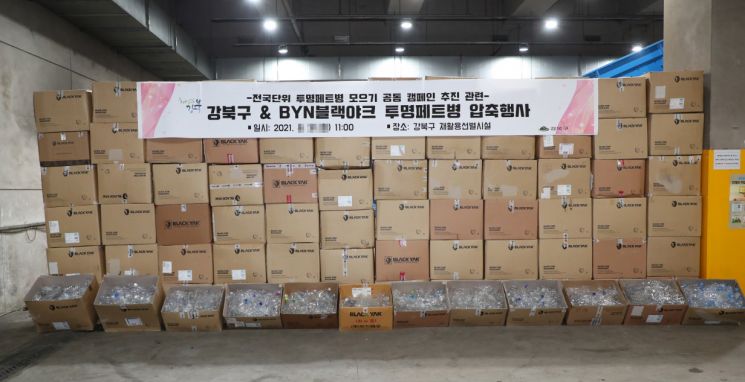
Gangbuk-gu (Mayor Park Gyeom-su) is collaborating with BY Black Yak to promote a joint event collecting transparent PET bottles until the 30th.
This event, planned as the second joint event following the first half of the year, aims to inform consumers about proper recycling methods and encourage voluntary participation. Consumers selected online in advance who properly dispose of 15 PET bottles can visit one of over 260 Black Yak stores nationwide to receive a reward.
The collected transparent PET bottles are shipped via courier to the Gangbuk-gu recycling sorting facility. During the first joint event (June 7 to July 31, 35 days), 0.9 tons of transparent PET bottles were collected, compressed using a large compactor prepared by the district, and sold to intermediate recycling product manufacturers. This event will follow the same process and the bottles will be reborn as eco-friendly clothing products.
Since signing a memorandum of understanding with private partner companies in December last year for ‘Transparent PET Bottle Recycling and Expansion of Recycling Product Demand,’ Gangbuk-gu has been leading national policies for high value-added resource circulation of transparent PET bottles among local governments nationwide. It has established a one-stop system connecting separate collection, sorting, product manufacturing, and consumption of transparent PET bottles.
Park Gyeom-su, Mayor of Gangbuk-gu, said, “Given the current situation of soaring raw material prices and waste crises in local governments, the domestic PET bottle resource circulation industry is expected to become a future-leading core industry contributing to national economic development,” adding, “I hope many people will properly separate and dispose of waste and play a leading role in securing high-quality recyclable resources.”
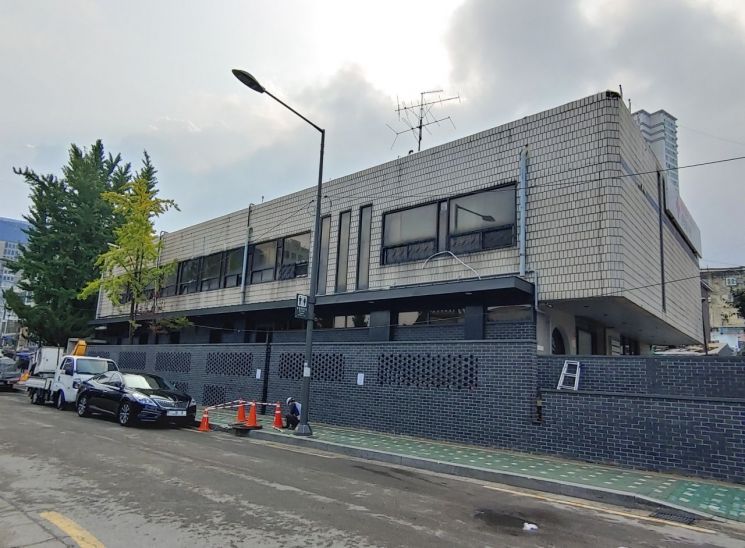
Jongno-gu opened the ‘Dongmyo Market Public Restroom’ (236-2 Sungin-dong), whose construction began in December 2020, on the 1st of this month after completing the construction last month to improve convenience for residents and tourists.
Dongmyo Market, which took its current form after merchants from Hwanghak-dong Goblin Market moved in during the Cheonggyecheon restoration project in the early 2000s, is one of Seoul’s tourist attractions loved by domestic and foreign tourists. However, the large crowds have always posed restroom issues. Residents and tourists mainly used restrooms inside Dongmyo, but even those became overcrowded.
After consultations with the Cultural Heritage Administration and the Korean Red Cross, it was decided to remodel offices inside the Central Volunteer Center and approved for free use of some spaces within the building to carry out restroom construction.
Notably, the restroom was created by remodeling part of the first floor of the Korean Red Cross Central Volunteer Center building without budget expenditure for land or building compensation, saving about 1.3 billion won in precious budget.
Additionally, Jongno-gu installed ‘safe emergency bells’ linked to 112 in each stall of the women’s restroom, diaper changing tables in both men’s and women’s restrooms, and decorated the exterior in dark colors to harmonize with Dongmyo’s cultural heritage, adding a classic charm.
On the 1st, Jongno-gu held a completion ceremony for the Dongmyo Market Public Restroom opposite the main gate of Dongmyo, celebrating the establishment of convenience facilities. The event was attended by local merchants, district office officials, and Korean Red Cross representatives, proceeding with progress reports, commemorative speeches, ribbon cutting, and photo sessions.
A district official said, “We are glad to provide a pleasant environment for many visitors to this area through the installation of this public restroom,” adding, “We will continue to seek ways to save budgets and improve convenience for citizens through consultations with related organizations.”
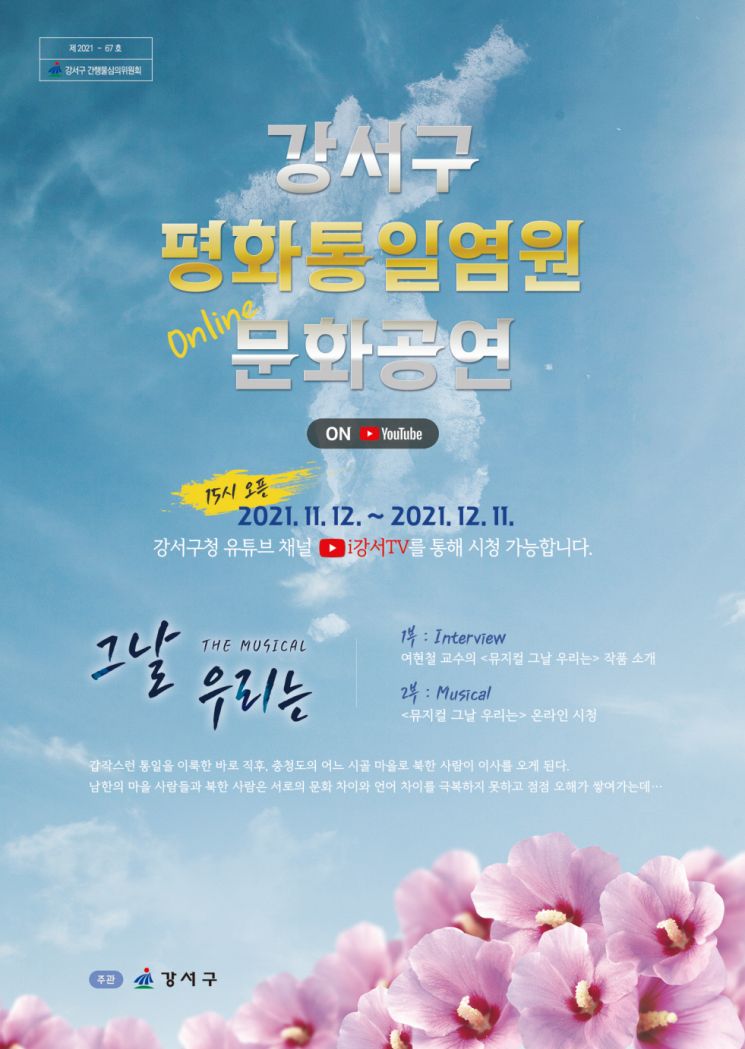
A musical performance that humorously helps understand cultural differences between North and South Korea is coming.
Gangseo-gu, Seoul (Mayor Noh Hyun-song) announced that it will present the peace and unification musical ‘That Day, We’ online for a month starting from the 12th.
This performance was prepared to spread public consensus on peaceful unification by helping residents understand cultural differences between North and South Korea through an easy and enjoyable musical.
‘That Day, We’ tells the story of a North Korean person who moved to Chungcheong Province in a future unified Korea and experiences conflicts due to cultural differences.
Co-produced by the Seoul Unification Education Center and Kookmin University, the work features six active actors, including North Korean defectors.
The content is based on actual cases of North Korean defectors and helps understand cultural differences between North and South Korea through situations that might occur in a unified country.
Before the performance, an interview with the producer is also provided, where the producer introduces the planning intent and background episodes to enhance understanding and enjoyment.
The performance will be screened from 3 p.m. on November 12 to December 11 for one month and can be viewed by anyone on Gangseo-gu Office’s YouTube channel iGangseoTV.
A district official said, “It will be a meaningful time to enjoy and feel the joy and emotion by facing a future unified situation in advance,” adding, “We hope this performance will serve as an opportunity to further spread empathy and hope for peaceful unification.”

Gwangjin-gu (Mayor Kim Seon-gap) will hold the lifelong learning festival to share the operation status of lifelong learning projects this year and the vision for 2022.
The event, titled ‘2021 Gwangjin-gu Lifelong Learning Touch On,’ will be held on the 18th at 2 p.m. at the Naru Art Center Small Theater and will be available for replay on the Gwangjin-gu Office YouTube channel.
Through this festival, lifelong learning participants and related institutions will showcase the skills they have honed over the year in various ways.
The event will start with a congratulatory tenor performance by Kim Eun-gyo from the Daily Learning Center and videos explaining the Learning Naru Center, Daily Learning Center, and university-linked lifelong education.
Following will be the 2021 lifelong learning merit award ceremony, a lifelong learning special lecture sharing Gwangjin-gu’s lifelong learning vision, a TOUCH ON talk show featuring vivid voices from field participants, and a club acoustic guitar performance.
There will also be abundant side events such as an adult literacy poetry exhibition and exhibitions of works from the Learning Naru Center and Daily Learning Center.
Considering the inability to operate experience booths due to the first phase of daily recovery, the first 120 survey respondents among participants will receive an experience kit (LED acrylic light making) to try at home.
Applications for participation are open until the 17th. For details, contact the Gwangjin-gu Lifelong Learning Portal or the Education Support Division of Gwangjin-gu Office.
Kim Seon-gap, Mayor of Gwangjin-gu, said, “I hope this lifelong learning festival will be an opportunity for many to share and envision lifelong learning,” adding, “We will do our best to realize a city of lifelong learning and daily recovery where all residents can enjoy the joy of learning and grow.”
© The Asia Business Daily(www.asiae.co.kr). All rights reserved.



















