Approval to Allow Compensation for Dedicated Clothing Besides Helmets
Push to Amend Standard Automobile Insurance Terms
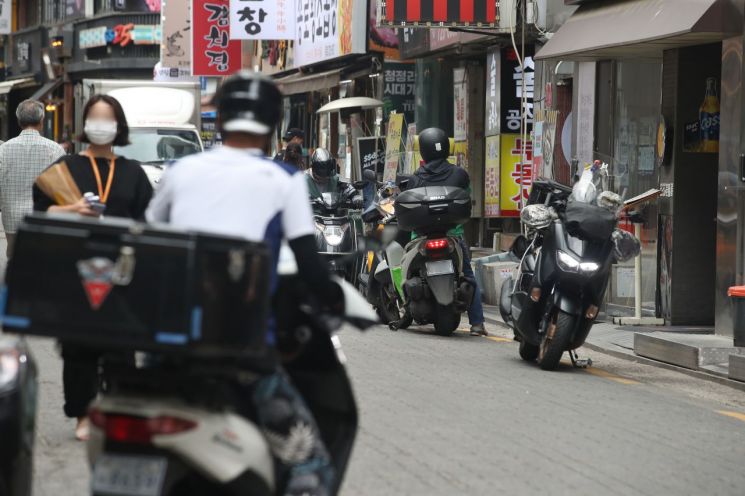
[Asia Economy Reporter Oh Hyung-gil] Jo Eun-sang (33), who rides a bike as a hobby, recently had a collision with a car that suddenly cut in while driving a motorcycle near Gapyeong. Although the motorcycle had to be declared a total loss, Jo was fortunately only bruised.
This was thanks to the protective gear attached to the 1.4 million won race suit he purchased this year. However, when he requested compensation for the torn and damaged jacket and protective gear, the opposing party's auto insurance company responded that they could not compensate for clothing except for the helmet. He expressed frustration, saying, "I was spared from serious injury thanks to the expensive clothes and protective gear, so I don't understand why they are excluded from compensation," adding, "Isn't this basically saying you have to be seriously injured to get compensation?"
A plan is being prepared to compensate motorcycle-specific clothing damaged in motorcycle accidents through automobile insurance. While compensation for helmets, which are protective equipment, has been provided, this is the first time a compensation plan for clothing is being introduced.
According to financial authorities and the insurance industry on the 9th, the Financial Supervisory Service recently announced a preliminary notice of a revision to the insurance supervision enforcement rules that reflect these changes by amending the standard automobile insurance terms and conditions. According to the revision, in the event of a two-wheeled vehicle accident, if the driver proves the purchase price of the damaged two-wheeled vehicle-specific clothing, property damage compensation will be possible.
Automobile insurance is fundamentally intended to compensate for damages caused by accidents. However, there have been frequent disputes over whether compensation should be provided for damaged items during the accident damage assessment process.
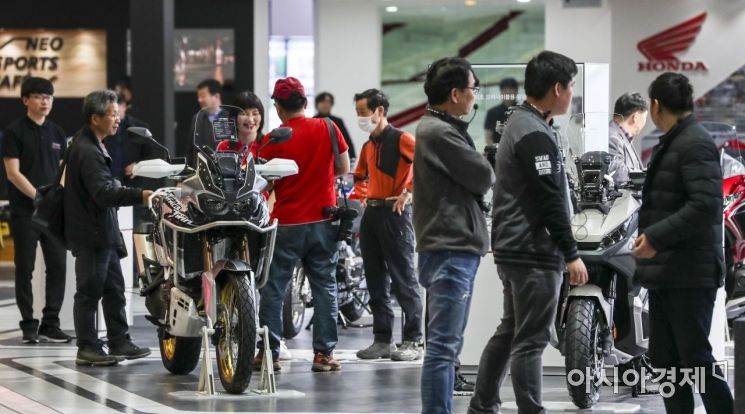 At the '2019 Seoul Motor Show Press Day' held on the 28th at Kintex in Goyang, Gyeonggi Province, a Honda bike is being unveiled. Photo by Jinhyung Kang, Goyang aymsdream@
In personal automobile insurance terms, damage to 'passengers' and companions' personal belongings' is excluded from compensation. However, damaged personal items are compensated on an actual expense basis up to 2 million won per person.
At this time, a separate standard distinguishes between personal belongings and portable items. Portable items generally refer to items carried in pockets or on the body, such as cash, securities, wallets, fountain pens, lighters, wristwatches, jewelry, and similar items. Clothing has also been treated as included in this category.
On the other hand, personal belongings refer to items excluding portable items, including mobile phones, laptops, cameras, handbags, briefcases, golf clubs, and so on. Compensation was only available for these personal belongings.
In particular, portable items include items for which it is objectively difficult to calculate damage amounts or prevent moral hazard, aiming to prevent claims for items already broken before the accident or to fraudulently claim insurance money using the accident as an excuse.
However, it has become an open secret in the insurance industry that if a broken golf club is carried in the car trunk and an accident occurs, compensation can be received, making the purpose of preventing moral hazard ambiguous. Additionally, the distinction between personal belongings and portable items has been criticized as unclear.
An official from a non-life insurance company said, "Protective equipment that must be worn by law, like helmets, can be compensated, but most clothing and gloves have not been compensated," adding, "From the perspective of protecting the driver, compensation is reasonable, but various factors such as purchase timing and depreciation must be considered."
© The Asia Business Daily(www.asiae.co.kr). All rights reserved.
![Clutching a Stolen Dior Bag, Saying "I Hate Being Poor but Real"... The Grotesque Con of a "Human Knockoff" [Slate]](https://cwcontent.asiae.co.kr/asiaresize/183/2026021902243444107_1771435474.jpg)

















