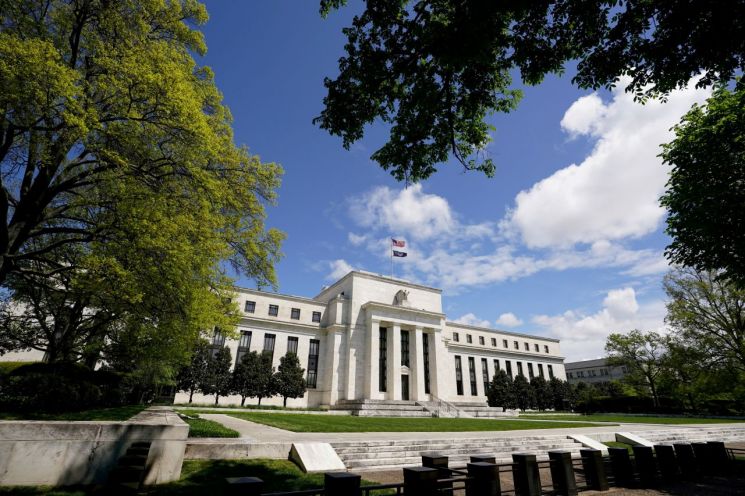
[Asia Economy Reporter Kim Suhwan] The U.S. Federal Reserve (Fed) announced the official start of tapering (reduction of asset purchases) in the statement released after the Federal Open Market Committee (FOMC) meeting on the 3rd (local time). Nevertheless, the Fed stated that it is not yet time to worry about inflation and that there will be no interest rate hikes, but the market is showing a cautious stance, saying it is gradually time to reduce investment risks.
Earlier, the Fed announced in its statement that it would begin reducing net asset purchases by $10 billion in Treasury securities and $5 billion in mortgage-backed securities (MBS) per month, aiming to end this by July next year.
This is interpreted as effectively ending the unlimited quantitative easing policy that began after the COVID-19 pandemic.
Along with this, the Fed added that it would maintain the federal funds (FF) rate target at 0 to 0.25%. In other words, it intends to keep the zero interest rate policy.
The Fed emphasized that inflation will remain a "temporary phenomenon" and that there will be no rapid interest rate hikes. In particular, it stressed that there will be no rate hikes until average inflation reaches 2% and full employment recovery is achieved. This was a signal to reassure the market, which was worried about rate hikes ahead of tapering.
Following this announcement by the Fed, the U.S. stock market broke through record highs again, showing that market concerns about rate hikes were greatly alleviated. However, voices among investors warn that risks should be carefully considered from a long-term perspective.
Ron Erickson, portfolio manager at asset management firm Sornberg, said, "If the current inflation continues, people will gradually start to become tense," recommending increasing investments in short-term products to prepare for market volatility.
Experts also point out concerns that the funds released into the market through the Fed's quantitative easing policy have driven the stock market rally, which has led to asset overvaluation and is now under adjustment pressure.
Troy Gayeski, chief market strategist at FS Investment, said, "Operating monetary policy used in crisis situations amid a booming economy with high inflation pressure is a dangerous game," advising investment in assets that can be used as defensive means against inflation, such as U.S. Treasury bonds.
Major central banks have already signaled interest rate hikes due to inflation concerns. Both the central banks of Canada and Australia have indicated that they will raise rates sooner than expected.
Chris Zaccarelli, chief investment officer at investment advisory firm Independent Advisor Alliance, said, "Considering the uncertainty surrounding inflation over the next 12 months, asset portfolios should be adjusted focusing on companies with more stable financial statements."
There is also analysis that the stock market direction could change depending on corporate earnings. Todd Sandoz, head of asset division at Barclays, said, "If inflation expectations outpace corporate earnings growth, a very bad scenario will occur in the market."
However, some view the Fed's gradual tapering plan positively, saying it has helped ease market anxiety.
This is analyzed to be different from the so-called "taper tantrum" in 2013, when the Fed's tapering caused global stock markets to suffer. At that time, the Fed announced sudden tapering without prior notice, but this time, tapering was implemented after several months of advance notice, allowing the market to prepare in advance.
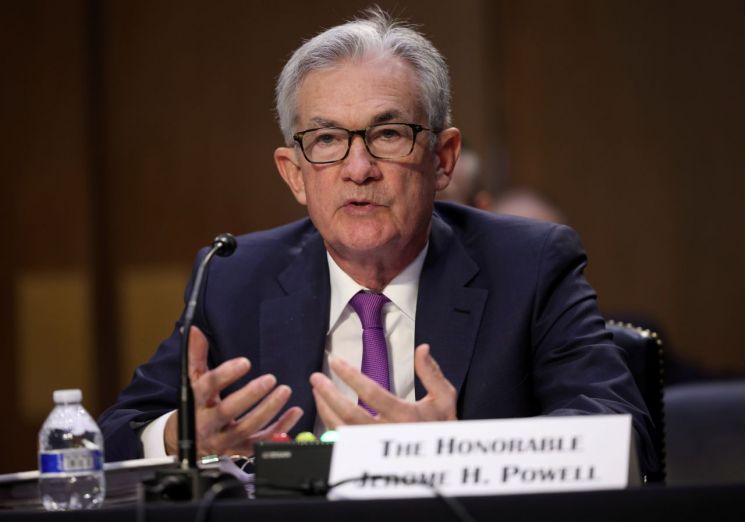
Jack Abelin, chief investment officer at asset management firm Cresset Wealth Advisors, analyzed, "The current economic situation can withstand changes in the Fed's policy stance," and that Fed Chair Jerome Powell's remarks that prolonged inflation will not occur were sufficient to reassure the market.
© The Asia Business Daily(www.asiae.co.kr). All rights reserved.


















