[Seoul District News] Gangnam-gu Online Road Occupancy Permit Approaches 60% Online Application Rate in 4 Months... Jung-gu Implements Phased Comprehensive Daily Recovery Measures... Gangseo-gu Senior Officials Discuss and Share Thoughts on Integrity... Eunpyeong-gu Expanded Executive Meeting Includes 16 Dong Resident Autonomy Chairpersons
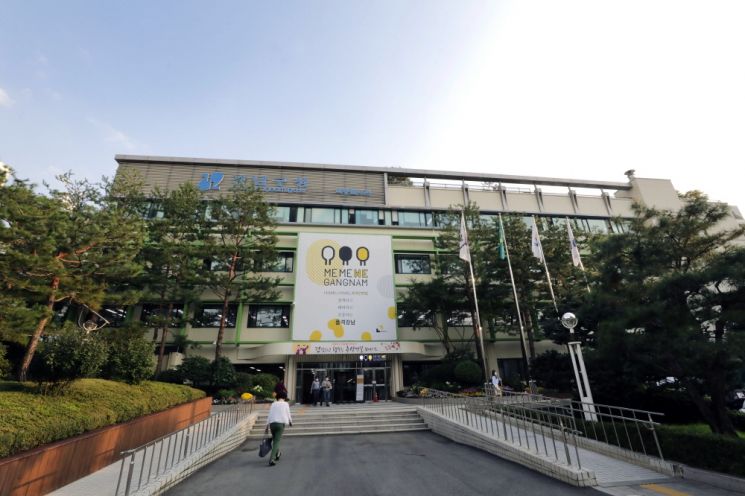
[Asia Economy Reporter Park Jong-il] Gangnam-gu (District Mayor Jung Soon-gyun) has successfully established the online road occupancy permit system, introduced nationwide for the first time in July this year, with the system accounting for 57% of all applications within just four months of operation.
The district linked the online road occupancy permit system to its official website and the ‘The Gangnam’ app in January and officially launched the system in July. The usage rate of the online road occupancy permit system has rapidly increased within four months of operation. As of November, there have been 1,648 road occupancy reports, with 942 applications submitted through the online system, accounting for 57% of all applications, demonstrating high user satisfaction among residents.
The online road occupancy permit system allows users to complete the entire process?from application to fee payment and permit issuance?in one go. It resolves the inconvenience of citizens having to visit the district office at least twice for road occupancy permits and provides a differentiated innovative administrative service system that supports non-face-to-face administrative services in response to the COVID-19 pandemic.
Citizen Kim**, who previously had to visit Gangnam-gu in person for road occupancy permits, said, “Compared to before when I had to visit two departments twice, now I can apply for the road occupancy permit with just a few clicks from my seat, and I can check the permit via email or the The Gangnam app. It is very convenient and saves time and costs, so I plan to continue using it.”
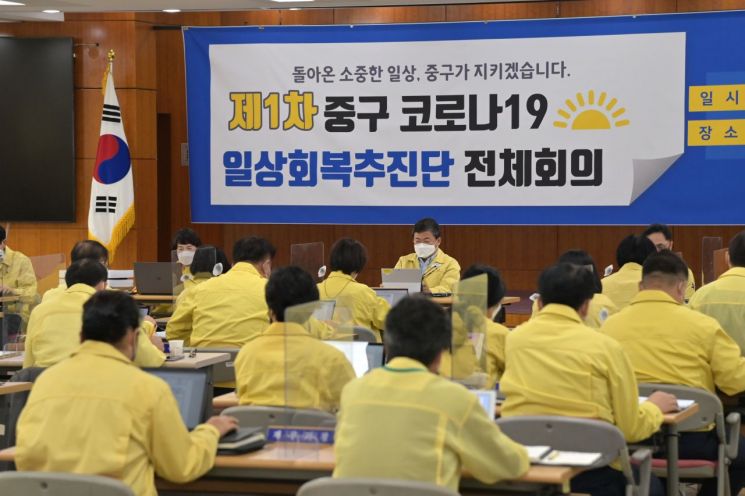
Jung-gu, Seoul (District Mayor Seo Yang-ho) swiftly took steps to prepare comprehensive measures in various sectors by holding the first meeting of the ‘Jung-gu COVID-19 Daily Recovery Promotion Team’ on the 1st, in line with the transition to a ‘phased daily recovery’ quarantine system.
Launched on the 21st of last month, the ‘Jung-gu COVID-19 Daily Recovery Promotion Team’ is led by the district mayor and consists of five divisions (▲Citizens ▲Welfare ▲Living and Urban ▲Economy ▲Health) and 18 response departments, which have prepared a phased daily recovery roadmap.
◆ Citizens Division
The Citizens Division focuses on normalizing daily recovery in social and cultural activities, resident autonomy, and community sports, which are closely related to residents’ daily lives.
First, the ‘Public Facility Operation Efficiency Project’ will be normalized by opening idle spaces in public facilities such as community centers, welfare centers, and sports facilities to residents as multipurpose shared spaces. Operating hours for 47 public facilities and 123 spaces will be extended to 9 a.m. to 9 p.m. on weekdays and 10 a.m. to 6 p.m. on weekends and holidays, with additional quarantine personnel deployed accordingly.
Programs at community centers and community sports events, which were suspended due to COVID-19, will resume under government quarantine guidelines. Cultural tourism commentary programs, halted after the elevation to social distancing level 4, will also be reinstated.
The Lifelong Learning Integrated Support Center, opened to provide lifelong learning program information for digitally vulnerable groups, will begin operations on the 1st.
Following the easing of quarantine measures for multi-use facilities in the first phase of daily recovery, the inspection approach will shift from comprehensive checks to focused inspections on businesses with prior quarantine violations. Additionally, autonomous quarantine standards for multi-use facilities will be established by collecting opinions from facility operators.
◆ Welfare Division
The Welfare Division focuses on normalizing education and supporting vulnerable groups.
Before the full-scale daily recovery in schools on November 22, the district will conduct a three-week preparatory period to thoroughly inspect school quarantine systems and gradually promote daily recovery in educational facilities such as education support centers, youth centers, and job experience centers.
Currently non-face-to-face external instructor programs at care centers will gradually transition to face-to-face, and after-school programs will add various sports activities reflecting parental demand. A close cooperation system with health centers will be established for immediate response to confirmed cases.
Face-to-face support services will be expanded to actively identify vulnerable groups facing livelihood difficulties or needing care due to COVID-19-related unemployment, providing livelihood expenses, medical costs, and essential goods.
◆ Living and Urban Division
To prevent COVID-19 resurgence due to reduced quarantine vigilance, the district will continuously monitor and educate on compliance with basic quarantine rules such as indoor mask-wearing and promote voluntary quarantine awareness among residents through various media campaigns.
For large-scale local festivals, the Safety Management Working Committee will review event plans, appropriateness of side events, safety management measures, infection prevention, and accident response, followed by on-site inspections with related agencies.
Operations of indoor sports facilities and community facilities within apartment complexes, currently suspended, will be resumed through resident representative meetings.
◆ Economy Division
For densely located high-risk industries such as printing and sewing, inspections will be gradually eased focusing on relatively vulnerable facilities, considering vaccination rates and voluntary compliance with quarantine rules. The district will continuously seek support and improvement measures by collecting field difficulties.
To revitalize the stagnant local economy, support for small business loss compensation and issuance of local gift certificates (Jung-gu Love Gift Certificates) will invigorate traditional markets and alleyway businesses.
For residents who have closed or suspended businesses or lost jobs due to COVID-19, a ‘Visiting Job Counseling Office’ will be established, providing one-on-one job counseling at each neighborhood community center and operating education programs to strengthen employment and entrepreneurship capabilities. The Seoul Startup Cafe Chungmuro branch within the Chungmu Startup Cube, which supports startup education and mentoring, will reopen.
◆ Health Division
As quarantine standards for food service and public hygiene businesses are relaxed, the district will expand support for the 080 Safe Call service to help businesses voluntarily comply with quarantine rules and encourage vaccination among workers.
With the shift in daily recovery response from ‘suppressing confirmed cases’ to ‘reducing disease burden,’ a response system focusing on severe and critical patients will be established.
To prepare for increased screening tests, specimen collection counters will be expanded and mobile screening teams will operate regularly.
The district has opened dedicated counters at health centers and community centers for convenient issuance of vaccination certificates. Psychological support programs including depression prevention education, psychiatric specialist counseling, meditation, healing talks, and stress management are also being operated to support residents’ mental health amid prolonged COVID-19.
District Mayor Seo Yang-ho said, “We will continue to collect opinions from all sectors of residents and reflect them in policies to ensure the successful settlement of phased daily recovery. We also urge residents to comply with personal quarantine rules in daily life for stable recovery.”
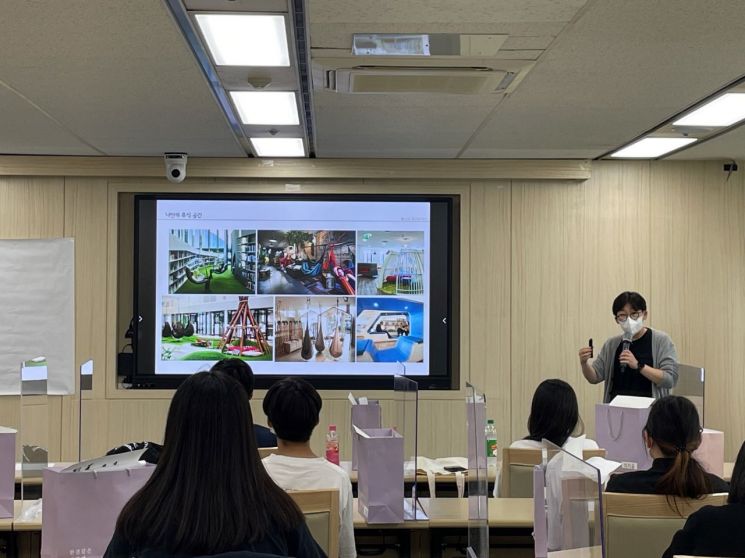
Jungnang-gu (District Mayor Ryu Kyung-gi) is recruiting a space creation team to reflect the opinions of youth users in creating ‘Dingadong,’ a dedicated space where local youth can freely engage in activities.
‘Dingadong,’ a youth community space in Jungnang-gu, is a place where young people can enjoy rest, play, and hobbies. It consists of multipurpose play areas, rest spaces, and video production rooms, receiving high praise from local youth using the first and second branches.
Now entering its fourth term, the youth space creation team will participate in the overall composition and design of the upcoming ‘Dingadong 4th Branch (Myeonmok-dong)’ and ‘Dingadong 5th Branch (Mangu-dong),’ scheduled to open next year.
The team will recruit 30 local youths aged 11 to 18 on a first-come, first-served basis, with preference given to those living near the sites. Interested youths can submit applications by November 19 via email (starain7@jn.go.kr) or in person at the Jungnang-gu Office’s Sports and Youth Division. Application forms are available on the Jungnang-gu website under the citizen participation section.
The 4th space creation team will hold an inauguration ceremony on November 27 and conduct four workshops every Saturday. Working with space design experts, participants will express their imagined spaces and gather opinions to be reflected in the design.
District Mayor Ryu Kyung-gi said, “Operating the space creation team composed of youths allows us to create spaces reflecting their opinions, which is very meaningful. We will continue to strive to create environments where youths can actively participate.”
‘Dingadong’ is a youth-only space created in response to demands from local youths and residents for dedicated youth spaces. The district has operated space creation teams for each Dingadong branch to gather opinions and design spaces that youths want. The first branches opened last year in Sinnae-dong and Myeonmok-dong followed the same approach.
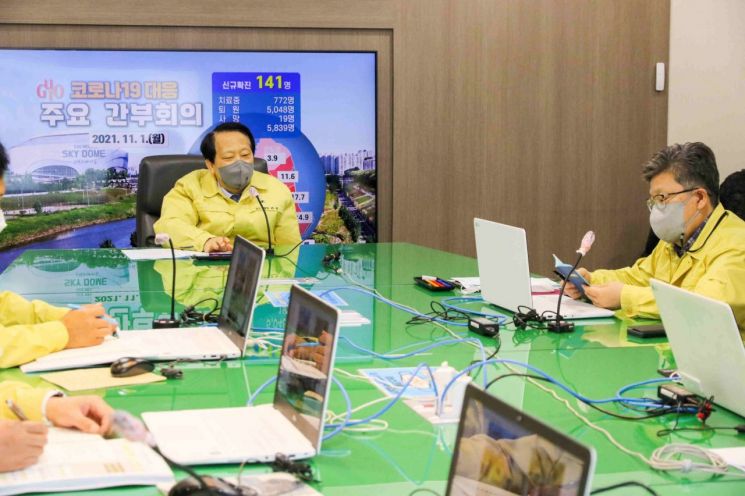
Guro-gu (District Mayor Lee Sung) is making every effort to ensure residents’ safe ‘phased daily recovery (With COVID-19).’
First, Guro-gu formed the COVID-19 Daily Recovery Promotion Team, consisting of the General Team, COVID Response Team, Economy and Livelihood Team, Social and Cultural Team, Autonomy and Safety Team, and Quarantine and Medical Team, to successfully promote phased daily recovery.
The team serves as a communication channel for discovering and proposing policies for stable daily recovery, preparing response plans for COVID-19 situations such as increases in confirmed cases, discovering and fostering leading daily recovery projects, and executing and managing phased daily recovery roadmaps.
Guro-gu prioritizes confirmed case management and increasing COVID-19 vaccination rates. The district established a home treatment management team in preparation for expanded home treatment. The Guro-gu Health Center and two cooperative hospitals manage patients. A 24-hour emergency system is also in place for immediate response to sudden health deterioration.
Efforts are also made to promote COVID-19 vaccination for successful daily recovery. Since vaccinations are conducted at private consignment hospitals, the district plans to intensively promote vaccination through its website and social media to increase vaccination rates.
The Oryu Culture Center, previously operated as a COVID-19 vaccination center, will resume its function as a cultural facility. A gratitude concert wishing for overcoming COVID-19 and daily recovery will be held at the Oryu Culture Center on the 26th. The event will maintain appropriate attendance through advance reservations (Nov. 5?15) and a lottery system.
Support measures to revitalize the stagnant local economy are also prepared. A job fair to discover small and medium-sized enterprises and provide a meeting place for job seekers and employers will be held on the 23rd of this month. The district will set up booths for on-site interviews and recruitment and provide opportunities to promote excellent local companies such as G-Valley enterprises through institutional promotion booths. Participation is limited to selected applicants who pre-register via the district website (companies by Nov. 5, job seekers by Nov. 15).
Additionally, Guro Love Gift Certificates will be issued with an additional 10 billion KRW scale to stimulate consumption during the Korea Sale Festa, which runs until the 15th.
Psychological support services for residents exhausted by prolonged COVID-19 will also be expanded. The ‘Todak Todak Mind Counseling Center’ located at the G-Valley Health Branch (Digital-ro 243) currently provides customized face-to-face and non-face-to-face psychological counseling services, and participatory programs such as horticultural therapy, art and film therapy, and aroma therapy will be expanded.
Multi-use facilities for residents will gradually resume operations. Welfare facilities such as 15 community centers, 190 senior centers, comprehensive social welfare centers, and district libraries will gradually expand face-to-face services from operating hours, capacity, and non-contact/non-activity programs.
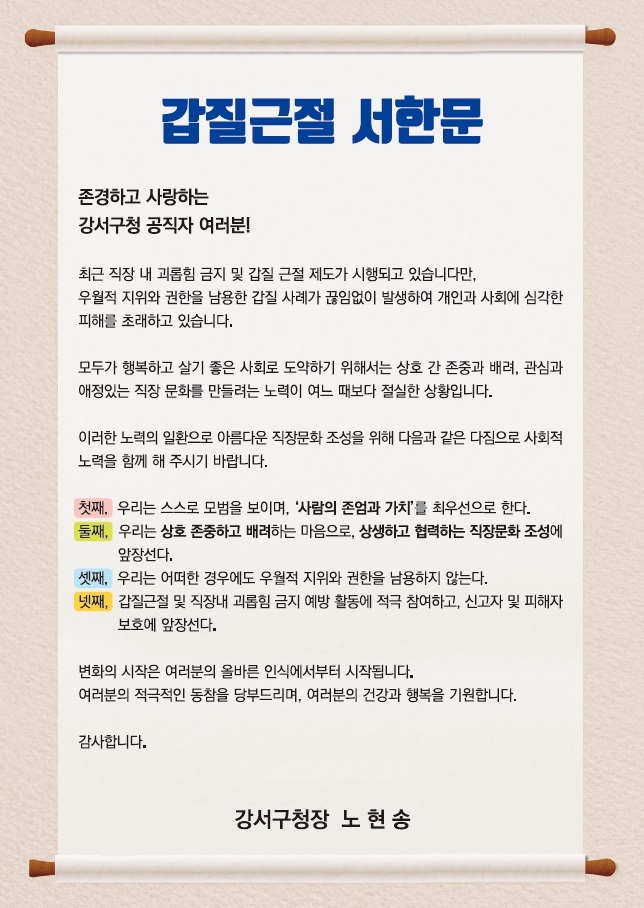
Gangseo-gu, Seoul (District Mayor Noh Hyun-song) is promoting the ‘Integrity Thought Sharing Relay’ for public officials at grade 5 and above to share and discuss their thoughts on integrity.
The initiative aims to establish integrity leadership among senior officials representing the institution and encourage leading by example, spreading a culture of integrity within the organization. Participating officials share their convictions and thoughts on integrity with all staff, reinforcing their commitment.
The relay is conducted by posting opinions on integrity or writings about virtuous historical figures on the administrative portal.
The relay was initiated by District Mayor Noh Hyun-song, who sent a letter to all staff emphasizing the eradication of ‘gapjil’ (abuse of power). He stated, “Cases of gapjil abusing superior status and authority are occurring throughout society. Let us create a healthy and happy workplace culture with mutual respect and consideration.”
Following Mayor Noh’s nomination, Deputy Mayor Jung Heon-jae took the second turn, sharing anecdotes about Jeju Governor Yi Yak-dong, who eradicated corruption and practiced benevolent governance. Through stories such as ‘Togabyeon (投甲淵),’ Deputy Mayor Jung introduced Yi’s virtuous life resisting bad customs and expressed that there are many lessons to learn.
The relay continues every 2 to 3 days until early next year. The district plans to disseminate the collected relay materials to the Seoul Gangseo Integrity Practice Council and the wider community to promote a culture of integrity.
District Mayor Noh Hyun-song said, “The foundation of stable district administration is trustworthy governance based on public officials’ integrity. We will continue to enhance interest and trust in district administration through integrity policies that meet residents’ expectations.”
In preparation for the enforcement of the ‘Public Officials Conflict of Interest Prevention Act’ in May next year, the district held a ‘Conflict of Interest Prevention Practice Pledge Ceremony’ last month with all staff participating to pledge fair job performance.
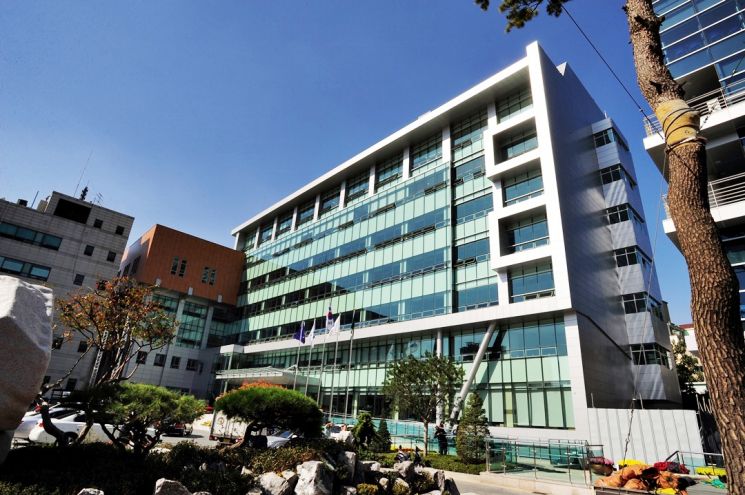
Eunpyeong-gu (District Mayor Kim Mi-kyung) regularly invites the heads of resident autonomy committees from 16 neighborhoods to participate in expanded executive meetings to share opinions on local issues.
At the expanded executive meeting held on the 1st, heads from Daejo-dong and Eungam 3-dong resident autonomy committees attended and discussed resident autonomy projects under the theme ‘Age-specific Customized Resident Autonomy Projects.’
Daejo-dong’s 2022 resident autonomy project, ‘Special Vacation Playground,’ plans to offer various courses during summer and winter vacations for children in Daejo-dong to have meaningful breaks. Courses include board games, cooking classes, museum visits, and traditional play experiences. In preparation for COVID-19, online courses and activity kits will be provided for non-face-to-face experiences. The Daejo-dong resident autonomy committee pursues customized projects tailored to various age groups.
The Eungam 3-dong resident autonomy committee will conduct the ‘Love Talent Sharing’ project and the ‘Chamdaerae Jangdokdae’ (traditional sauce jar platform) project as 2022 agendas. They will hold talent-sharing events such as wallpapering, beauty, and cooking volunteer services with students from the Eunpyeong Cultural Arts Information School, providing services to vulnerable elderly residents in the area.
Additionally, they will utilize the rooftop space of the Eungam 3-dong community center to hold traditional sauce-making experience events, with the finished sauces provided to vulnerable elderly residents. The committee seeks to implement both age-specific customized projects and inclusive events that engage residents of all ages.
Daejo-dong Resident Autonomy Committee Chair Kim Ik-nam said, “In the With COVID-19 era, next year’s resident autonomy projects will consider both face-to-face and non-face-to-face formats, striving to conduct projects that better meet residents’ needs.”
Eungam 3-dong Resident Autonomy Committee Chair Lee Dong-yeol explained, “By conducting age-specific customized projects, we created a sharing space where residents of all ages can participate in projects for the elderly, including local students.”
Eunpyeong-gu expects that having resident autonomy committee heads attend district meetings will enhance public-private communication and is working to establish various policies for Eunpyeong-gu based on resident autonomy.
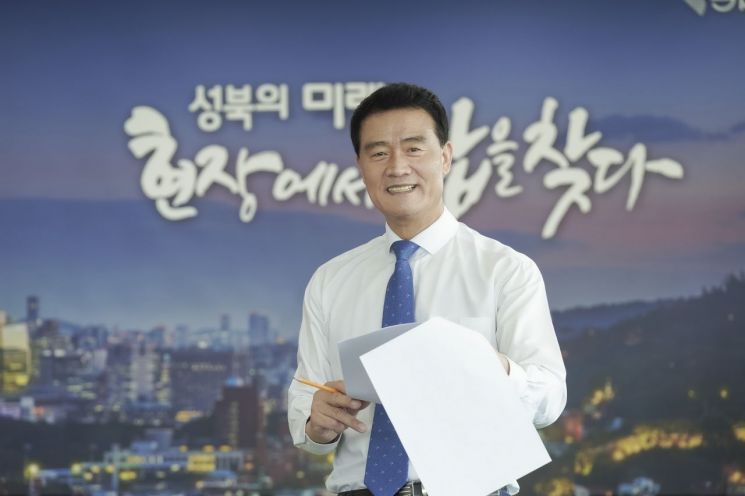
Seongbuk-gu (District Mayor Lee Seung-ro) conducted the ‘2021 Visiting Resident Leader Education’ to strengthen the capabilities of resident activists leading community revitalization in apartment complexes.
The visiting resident leader education was held six times every Wednesday and Friday from October 13, targeting representatives from apartment resident representative meetings, local organization members, and active residents in each complex.
Since 2011, the program has provided education focused on understanding apartment community revitalization through case studies such as excellent apartment management and community activation, neighbor dispute resolution, and community activation contest program operations.
This year’s education was particularly meaningful as it was conducted in small groups adhering to social distancing due to COVID-19, with customized content for participating complexes, including kiosk usage, recycling separation, and inter-floor noise conflict management.
Participant Kim Dae-ho (Dream Forest Kolon Skychae Apartment) said, “Through the ‘Inter-floor Noise Conflict Management’ special lecture, I learned that upstairs residents are often unaware of noise, noise travels in various directions, and conflicts can be efficiently prevented by mediation through the noise management committee with mutual consideration rather than direct phone calls. I also realized that many noise conflicts stem from a lack of communication between households, so creating programs that involve diverse generations to enhance understanding and communication is important.”
Another participant, Yoo Mi-duk (Wolgok Raemian Luna Valley Apartment), said, “In the ‘Recycling Separation’ special lecture, I learned that many habitual recycling methods were incorrect, especially that folding plastic film labels, which I used to do, actually hinders recycling. This education made me recognize the importance of resource circulation and recycling again, and I will share and practice proper separation habits with residents.”
District Mayor Lee Seung-ro personally participated in the education and said, “The district leads the creation of open apartments that coexist and communicate with neighbors. I hope the graduates will actively participate as leaders in apartment communities, sharing information and know-how through exchanges and cooperation to foster a warm and happy Seongbuk-gu community.”
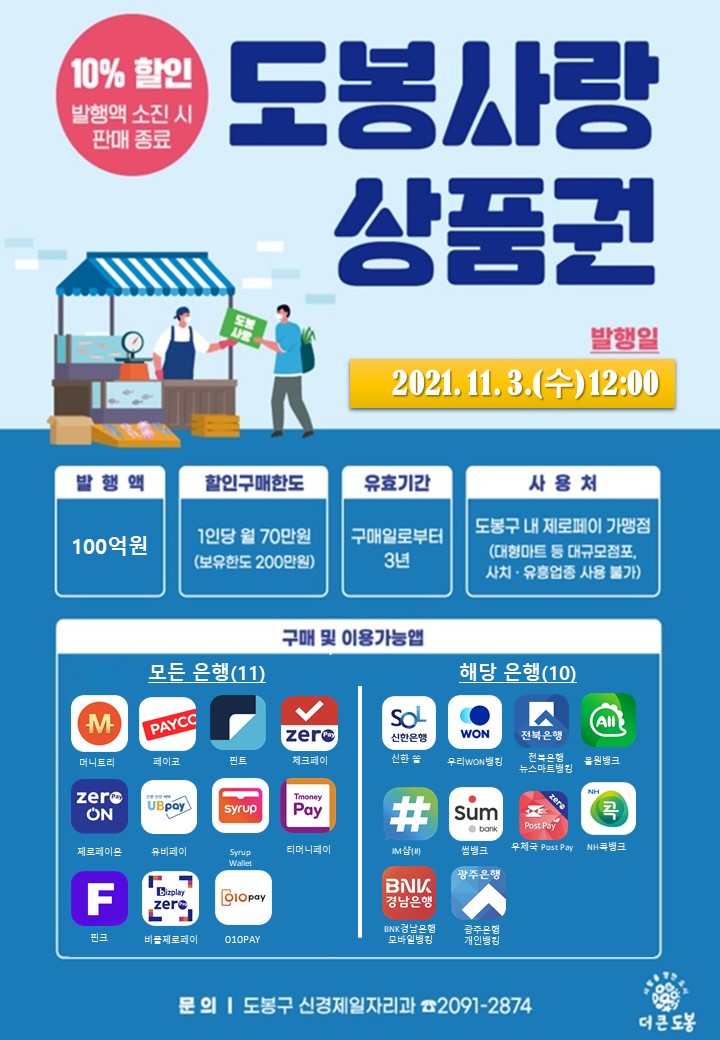
Dobong-gu (District Mayor Lee Dong-jin) will begin additional sales of ‘Dobong Love Gift Certificates’ worth 10 billion KRW from noon on the 3rd. This is the fourth issuance following 33.7 billion KRW issued this year, totaling 43.7 billion KRW.
In response to the increasing difficulties faced by self-employed small business owners, the district secured an additional budget in August and confirmed the additional issuance of Dobong Love Gift Certificates to revitalize local alleyway businesses.
Consumers can purchase the gift certificates at a 10% discount up to 700,000 KRW per month, receiving a maximum discount of 70,000 KRW, and enjoy a 30% year-end income deduction.
Purchases can be made through 21 mobile gift certificate payment apps (▲Biple Zero Pay ▲Check Pay ▲Money Tree ▲Fint ▲Payco ▲T-money Pay ▲Zero Pay On ▲010PAY ▲UB Pay ▲Fink ▲Syrup Wallet ▲Woori WON Banking ▲Shinhan SOL ▲Nonghyup All One Bank ▲Busan Bank ▲Daegu Bank ▲Gyeongnam Bank ▲Jeonbuk Bank ▲Gwangju Bank ▲Kok Bank ▲Post Office Post Pay). Individuals can hold up to 2 million KRW worth of gift certificates, valid for three years.
The gift certificates can be used at Zero Pay affiliated stores, excluding large marts, semi-large stores, gambling businesses, and franchise direct stores. Stores are automatically registered as Dobong Love Gift Certificate affiliates upon joining Zero Pay, and applications can be made on the Zero Pay website.
The Dobong Love Gift Certificates can also be used on ‘Wemakeprice O,’ a Dobong-type public-private cooperative delivery app launched recently. From November 3, a 5,000 KRW instant discount event will be held for orders placed via the ‘Wemakeprice O’ app.
To this end, the district signed a business agreement with ‘Wemakeprice O’ on October 22, which offers low 2% brokerage fees and gift certificate payment functions.
District Mayor Lee Dong-jin said, “We will do our best to recover the local economy and alleyway businesses in line with With COVID-19. We ask for active use of Dobong Love Gift Certificates and the public-private cooperative delivery app ‘Wemakeprice O’ to help local small business owners overcome these difficulties together.”
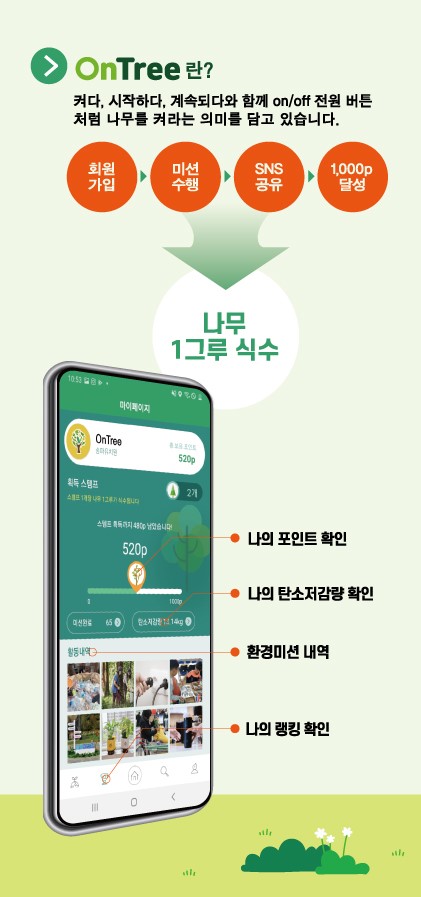
Songpa-gu (District Mayor Park Sung-soo)’s efforts to reduce carbon emissions culminate on the 3rd with the creation of the ‘OnTree Forest.’ This achievement comes just three months after the district developed the nation’s first tree-planting app ‘OnTree’ in August.
‘OnTree’ is an eco-friendly tree-planting app where users earn points by practicing various carbon reduction activities. Users complete 12 daily eco-friendly missions such as recycling and unplugging electrical devices. Each mission grants 20 points, and accumulating 1,000 points allows planting one tree.
The first ‘OnTree Forest’ will be established at Sori Park (361-3 Munjeong-dong), connected to the Songpa Dulle-gil trail and Munjeong Legal Complex.
At 10:30 a.m. on the 3rd, District Mayor Park Sung-soo and over 50 outstanding participants will plant 1,475 trees, including crape myrtle, abelia, small tree species, and shrubs such as Deolkkong tree.
The district expects the ‘OnTree Forest,’ created through environmental protection efforts, to absorb carbon emissions produced in the city and provide residents with a pleasant resting space, serving as a virtuous cycle example for the planet.
Following the first ‘OnTree Forest,’ the district plans to expand the project nationwide in cooperation with other local governments, private organizations, and companies.
Additionally, the district will set up photo zones, environmental promise art exhibitions, and eco-mileage promotion booths at Sori Park to conduct environmental campaigns for residents.
District Mayor Park Sung-soo said, “Our collective efforts toward carbon neutrality are crucial for sustainable coexistence between people and nature. Songpa-gu will lead the way so that OnTree spreads nationwide, enabling everyone to easily practice eco-friendliness in daily life and protect the Earth’s health.”
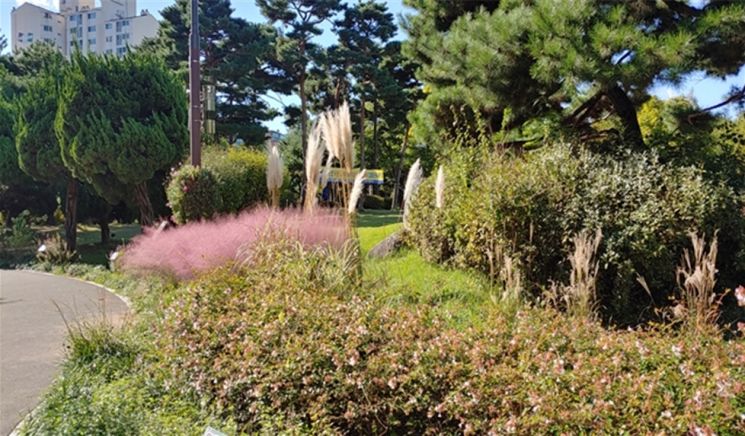
It is the perfect season for a walk; why not enjoy the autumn atmosphere by strolling through Yeongdeungpo Park, dyed in golden and pink hues?
Yeongdeungpo-gu (District Mayor Chae Hyun-il) has planted 17 varieties of flowers and grasses such as pampas grass and gaura along the park’s walking trails, creating a wildflower path.
Yeongdeungpo Park is a representative neighborhood park of the district, established on the site of the former OB Beer factory. Covering a total area of 61,000 square meters, the park features various trees and flowers, a circular plaza, lawn plaza, exercise facilities, and a children’s forest experience center, making it a beloved urban retreat for over 20 years.
To welcome autumn, the district focused on planting wildflowers along heavily trafficked walking paths to create a healing space for visitors. This not only enhances the park’s aesthetics and environment but also offers emotional comfort to residents weary from the prolonged COVID-19 situation by connecting them with nature.
The wildflower path is located in front of the Yeongdeungpo Park management office, allowing anyone to freely enjoy the park stroll and flower viewing. A photo zone with beautiful wildflowers as a backdrop is also set up along the path.
Visitors are captivated by the chance to take memorable photos with family and friends in front of the pampas grass, which adds to the autumn ambiance.
The district plans to continuously monitor visitor satisfaction and plant seasonally appropriate flowers to maintain a pleasant environment. It will also enhance park facility management.
Furthermore, the district intends to gradually expand wildflower path projects to other local parks, including children’s parks and small parks, providing new attractions for residents and visitors.
District Mayor Chae Hyun-il said, “I hope residents enjoy the deepening autumn by walking along the wildflower path in Yeongdeungpo Park. We will continue to strive to improve residents’ quality of life by promoting various park and green space projects to create a beautiful green city in Yeongdeungpo.”
© The Asia Business Daily(www.asiae.co.kr). All rights reserved.
![Clutching a Stolen Dior Bag, Saying "I Hate Being Poor but Real"... The Grotesque Con of a "Human Knockoff" [Slate]](https://cwcontent.asiae.co.kr/asiaresize/183/2026021902243444107_1771435474.jpg)


















