Seoul, Gyeonggi, Incheon Apartment Average Actual Transaction Price per ㎡ Falls Together for 7 Months
Seoul Down 2.1 Million KRW, Gyeonggi 650,000 KRW, Incheon 250,000 KRW
September Transaction Volume Also Plummets...Seoul Down 36.5%, Gyeonggi 26.7%, Incheon 29.3%
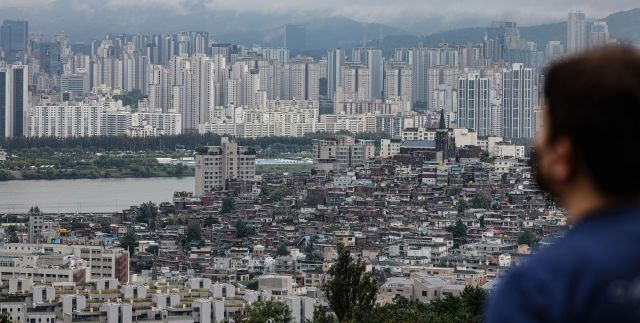
Multiple indicators suggest that the upward trend in apartment prices in the Seoul metropolitan area has come to a halt. While actual transaction prices have fallen and listings have increased, transactions have sharply declined, leading to analyses that a decline in housing prices will soon become a reality.
According to data on the "Average Actual Transaction Price per Unit Area (㎡) of Apartments in the Seoul Metropolitan Area" submitted by the Ministry of Land, Infrastructure and Transport to Kim Hoe-jae, a member of the Democratic Party of Korea (Yeosu-eul, Jeonnam) on the 31st, the average actual transaction price per square meter of apartments in Seoul, Gyeonggi, and Incheon fell simultaneously for the first time in seven months compared to the previous month.
In particular, the average actual transaction price per ㎡ of apartments in Seoul was 12.77 million KRW as of October, down 2.1 million KRW from the previous month. This corresponds to a drop of 6.93 million KRW per pyeong (3.3㎡). The decline in Seoul’s average actual transaction price per ㎡ is the first in four months since June (-840,000 KRW) and represents the largest drop among the metropolitan areas.
In Gyeonggi and Incheon, the actual transaction price per ㎡ also declined for two consecutive months.
The actual transaction price per ㎡ of apartments in Gyeonggi in October was 6.06 million KRW, down 649,000 KRW from the previous month. The price has fallen for two consecutive months with a significantly widened decline; in September, it had decreased by only 50,000 KRW compared to the previous month.
Similarly, Incheon’s apartment actual transaction price also saw an increased rate of decline. The October price per ㎡ was 5.16 million KRW, down 249,000 KRW from the previous month. The decline in September was 70,000 KRW.
While actual transaction prices continue to fall, transaction volumes have sharply decreased. As the 30-day reporting deadline for actual transactions nearly passed, the number of apartment transactions in Seoul in September was 2,658, down 36.5% from the previous month. Gyeonggi recorded 9,980 transactions, down 26.7%, and Incheon had 2,147 transactions, down 29.3%.
Although the reporting deadline has not yet passed, the transaction volume in October has not escaped the sharp decline trend. As of October 27, apartment transactions in Seoul totaled 838, in Gyeonggi 3,966, and in Incheon 838.
The number of apartment listings is gradually increasing. According to Asil, a real estate big data company, as of October 28, the number of apartment listings in Seoul was 43,575, up 12.8% from the previous month. Gyeonggi saw a 17.5% increase to 73,286 listings, and Incheon experienced a 25.2% rise to 14,932 listings.
Private statistics show that the sales supply-demand index has fallen below the baseline of 100. A sales supply-demand index below 100 indicates a buyer’s market, while above 100 indicates a seller’s market.
The sales supply-demand index for apartments in the Seoul metropolitan area, announced last week by KB Kookmin Bank’s Liv Real Estate, was 91.5, significantly down from 100.6 the previous week, forming a buyer’s market. This marks the first time in 19 weeks that the index has fallen below the baseline of 100.
In Seoul, the index dropped from 94.5 to 86.1, and in Gyeonggi from 101.9 to 90.8. Seoul recorded values below the baseline for three consecutive weeks, and Gyeonggi fell below 100 for the first time in 19 weeks.
Lawmaker Kim stated, “We are facing a critical turning point in real estate stabilization,” emphasizing, “To achieve complete stabilization of the real estate market, we must accelerate housing supply and thoroughly eradicate market-disturbing activities.”
© The Asia Business Daily(www.asiae.co.kr). All rights reserved.

















