[Asia Economy Reporter Lee Ji-eun] North Korea has presented unrealistic demands as preconditions for discussions on a declaration of the end of the war, putting these talks at risk of stalling without further progress. Earlier, the United States also showed a somewhat lukewarm response by mentioning the "order and timing." Despite these developments, our government is focusing on creating momentum for the declaration of the end of the war by promoting the Pope's visit to North Korea.
President Moon Jae-in, who is on a European tour to attend the G20 summit and other events, will visit the Vatican on the 29th (local time) to meet Pope Francis. At this meeting, President Moon is expected to once again request the Pope's visit to North Korea. Pope Francis had accepted the visit during President Moon's official visit in October 2018, but the visit did not materialize due to the deterioration of North Korea-U.S. relations following the Hanoi summit breakdown the following year.
Our government's decision to reinitiate the Pope's visit after three years stems from the belief that it could help revive the momentum of the Korean Peninsula peace process. Furthermore, the Pope's visit is likely to have a positive impact on the declaration of the end of the war, which is being promoted as one of the measures to bring North Korea back to dialogue. The unusual accompaniment of Minister of Unification Lee In-young with President Moon on this visit is for this reason.
However, unlike our government's strong push for the declaration of the end of the war, the United States shows a difference in stance. Jake Sullivan, the White House National Security Advisor and the chief of U.S. diplomatic security, unusually stated that "the two countries may have different views on the exact order, timing, and conditions." Following media reports on this, the Ministry of Foreign Affairs attempted to calm the situation by saying, "The declaration of the end of the war is progressing at a desirable pace in a mutually favorable direction," but the controversy has not subsided.
Shin Beom-chul, head of the Foreign Affairs and Security Center at the Korea Institute for Industrial Economics and Trade, explained, "The South Korean government sees the declaration of the end of the war as the gateway to denuclearization, but the U.S. believes that denuclearization must progress before the declaration can be made. Also, the mention of 'timing' implies that it is inappropriate to declare the end of the war while North Korea is provoking by firing missiles, and the 'conditions' demanded by North Korea are also seen as difficult to accept."
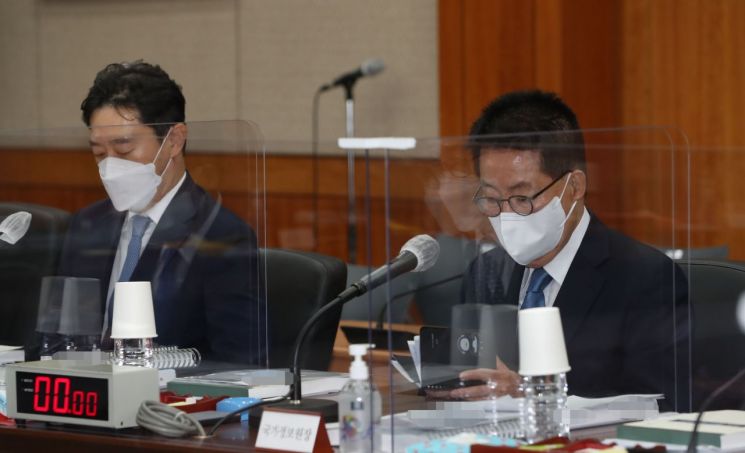
The conditions demanded by North Korea include the abolition of hostile policies against the North and the elimination of double standards. North Korea has also demanded these as preconditions for discussions on the declaration of the end of the war with our side. On the 28th, at the National Assembly Intelligence Committee hearing, Park Jie-won, Director of the National Intelligence Service, reported that North Korea demanded the lifting of sanctions such as mineral exports and refined oil imports, as well as the suspension of South Korea-U.S. joint military exercises as preconditions for the declaration of the end of the war talks.
Director Park, while stating that this was his personal opinion, said, "There is a possibility that North Korea may come to dialogue without preconditions," but experts point out that this is unrealistic. Professor Kim Dong-yeop of the Graduate School of North Korean Studies said, "The possibility of North Korea coming to dialogue without resolving preconditions is low, and even if they do, it will likely be insincere and merely formal talks."
© The Asia Business Daily(www.asiae.co.kr). All rights reserved.

















