"Creditor Side Seeks Information on Construction Projects, Liquidity, and Asset Values"
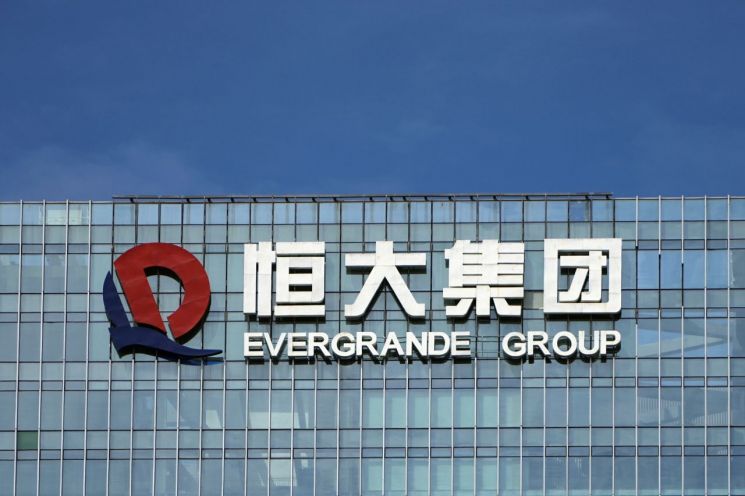
[Asia Economy Reporter Kim Suhwan] It has been reported that talks are being pursued between Evergrande (恒大·Ebeogeuraendeu), China’s second-largest real estate company facing a default crisis, and holders of its dollar bonds.
On the 27th (local time), Bloomberg News cited anonymous sources and reported that Evergrande’s advisory firms Houlihan Lokey and Admiralty Harbor Capital signed a confidential agreement for potential future talks with Moelis and Kirkland & Ellis, who advise overseas bondholders.
Among these, Houlihan Lokey is a U.S. investment bank specializing in restructuring. Evergrande selected Houlihan Lokey as its advisor last September.
Bloomberg News evaluated, "As Evergrande faces financial difficulties, Evergrande and the offshore bondholder group have taken the first step toward negotiations."
Sources said that the bondholders’ advisory firms aim to obtain information on Evergrande’s construction projects, liquidity, and asset values through the talks.
Earlier, since September when Evergrande’s default crisis rapidly escalated, bondholders sent letters to Evergrande requesting information about the company’s situation. They also demanded that Evergrande refrain from selling offshore assets while debt resolution plans are being discussed.
Evergrande barely overcame the official default crisis on the 23rd and has resumed operations at some construction sites in Guangdong Province.
However, with the liquidity crisis fundamentally unresolved, the upcoming dollar bond interest payment dates on the 29th of this month and the 11th of next month are approaching consecutively. If Evergrande fails to make interest payments by then, an official default will be declared.
However, the National Development and Reform Commission (NDRC) signaled government intervention in resolving the Evergrande crisis by convening eight major real estate companies including Evergrande on the 26th and expressing willingness to facilitate procedures such as currency exchange to support dollar bond repayments.
Overseas dollar bondholders have long feared that China might prioritize repayment of domestic bonds and financial sector debts, pushing dollar bond repayments to a lower priority.
Meanwhile, Bloomberg recently reported that Chinese authorities demanded Chairman Xu Jiayin to use his personal assets to resolve the debt issues.
However, most of Chairman Xu’s assets are in Evergrande shares, which have plummeted over 80% this year, and his asset value has decreased to $7.8 billion (approximately 9.09 trillion KRW). Therefore, there is a considerable view that Chairman Xu’s personal asset injection will not be a meaningful solution to Evergrande’s debt crisis.
Evergrande initially planned to secure around 3 trillion KRW in cash by selling shares of its subsidiary Evergrande Property Services to overcome the urgent liquidity crisis, but the deal fell through at the final stage, causing setbacks to this plan.
© The Asia Business Daily(www.asiae.co.kr). All rights reserved.
![Clutching a Stolen Dior Bag, Saying "I Hate Being Poor but Real"... The Grotesque Con of a "Human Knockoff" [Slate]](https://cwcontent.asiae.co.kr/asiaresize/183/2026021902243444107_1771435474.jpg)
















