Korea Real Estate Board October 4th Week Apartment Price Trends
Seoul and Metropolitan Area Price Increase Slows... Purchase Demand Shrinks
Jeonse Prices Remain Generally Similar to Previous Week
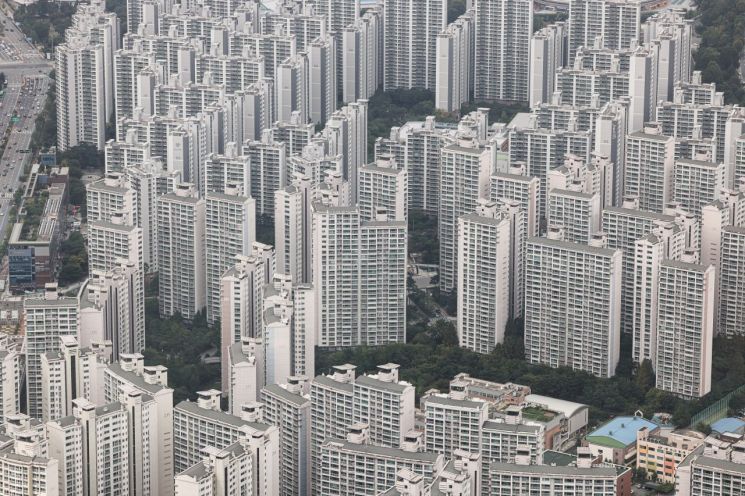 Apartment complexes in Songpa and Gangnam areas as seen from the 'Seoul Sky' observatory at Lotte World Tower, Jamsil, Songpa-gu, Seoul [Image source=Yonhap News]
The apartment price increase rate in the Seoul metropolitan area has narrowed for three consecutive weeks. In Seoul, the rate of increase decreased in most districts due to the government's strengthened loan regulations. The high asking prices and the spread of perceptions that housing prices have peaked are also interpreted as factors that have dampened buying demand.
According to the weekly apartment price trend for the fourth week of October announced by the Korea Real Estate Board on the 28th, as of the 25th, apartment prices in the metropolitan area rose by 0.28%, a decrease in the rate of increase compared to the previous week (0.30%). In the metropolitan area, the rate of increase has slowed for three consecutive weeks this month, from 0.34% → 0.32% → 0.30% → 0.28%.
In Seoul, prices rose by 0.16% this week, down from 0.17% the previous week. The Real Estate Board explained, "As the announcement of strengthened household debt management measures approaches, transaction activity and buying demand have weakened, leading to a reduced rate of increase in most areas of Seoul."
In Seoul, Yongsan-gu (0.28%) and Mapo-gu (0.27%) showed relatively high increases. In the Gangnam 4 districts, Gangnam-gu (0.23%) rose mainly in major complexes in Dogok-dong and redevelopment in Gaepo-dong, and Songpa-gu (0.23%) increased mainly in popular complexes in Jamsil, Garak, and Bangi-dong. Seocho-gu (0.21%) rose in new buildings in Jamwon and Banpo-dong, and Gangdong-gu (0.16%) increased mainly in Godeok and Myeongil-dong, but the overall increase rate in the Gangnam 4 districts narrowed.
Outside the Gangnam 4 districts, Dongjak-gu (0.17%) rose mainly in older complexes in Sangdo and Noryangjin-dong, and Gangseo-gu (0.16%) increased mainly in mid- to low-priced areas such as Gayang, Banghwa, and Deungchon-dong. Among the 25 districts, 17 districts saw a decrease in the rate of increase.
In Incheon, the apartment price increase rate slowed from 0.40% to 0.38%. Yeonsu-gu (0.46%) rose mainly in mid- to large-sized units in Songdo-dong with good educational environments, and Michuhol-gu (0.45%) increased mainly in Hakik and Yonghyeon-dong, where expectations for residential environment improvements exist.
Gyeonggi-do also saw a decrease in the rate of increase from 0.35% to 0.33%. Osan-si (0.57%) rose significantly mainly in Gasu and Nueup-dong, which are perceived as low-priced compared to nearby areas, and Icheon-si (0.51%), Anseong-si (0.49%), Gimpo-si (0.46%), and Gunpo-si (0.45%) also saw relatively large increases.
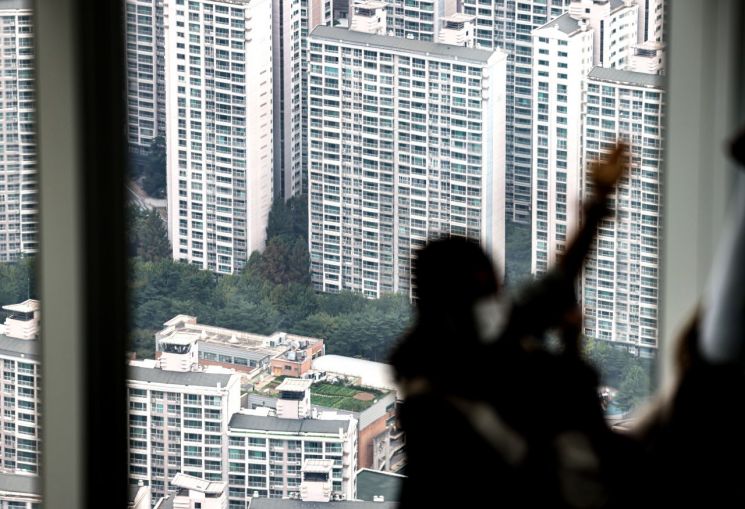
The jeonse (long-term lease) market showed a generally similar pattern to the previous week.
Seoul apartment jeonse prices rose by 0.13%, the same as the previous week. Jeonse prices increased mainly in school districts and mid- to low-priced areas, but some complexes saw a backlog of listings and a drop in asking prices due to high jeonse price burdens and loan regulations, maintaining last week's rate of increase.
By district, jeonse prices rose in Jung-gu (0.19%), Mapo-gu (0.18%), and Yongsan-gu (0.16%), but overall transaction activity decreased, leading to a reduced rate of increase in the entire Gangbuk area. South of the Han River, jeonse demand continued in Gangdong-gu (0.16%), Songpa-gu (0.15%), Gangnam-gu (0.14%), and Seocho-gu (0.11%).
In Incheon (0.23%) and Gyeonggi-do (0.25%), the jeonse price increase rates were also the same as the previous week. In Incheon, Michuhol-gu (0.37%) saw a significant rise in jeonse prices mainly in Sungui and Hakik-dong, areas affected by redevelopment projects. Yeonsu-gu (0.37%) rose mainly in Songdo-dong and Yeonsu-dong station area complexes with good educational environments, and Gyeyang-gu (0.27%) increased mainly in Gyesan, Yongjong, and Seoun-dong.
In Gyeonggi-do, Yangju-si (0.59%) saw a significant rise in jeonse prices mainly in Gwangsa and Mansong-dong, which have good living conditions. Siheung-si (0.54%), Anseong-si (0.53%), Danwon-gu in Ansan (0.44%), and Icheon-si (0.44%) also continued to see price increases.
© The Asia Business Daily(www.asiae.co.kr). All rights reserved.


















