POSCO, Lotte Chemical, Samsung ENG
Sign MOU for Domestic and International Hydrogen Business Development
Infrastructure Construction Requires Cost and Time
Commit to Strengthening the Value Chain Together
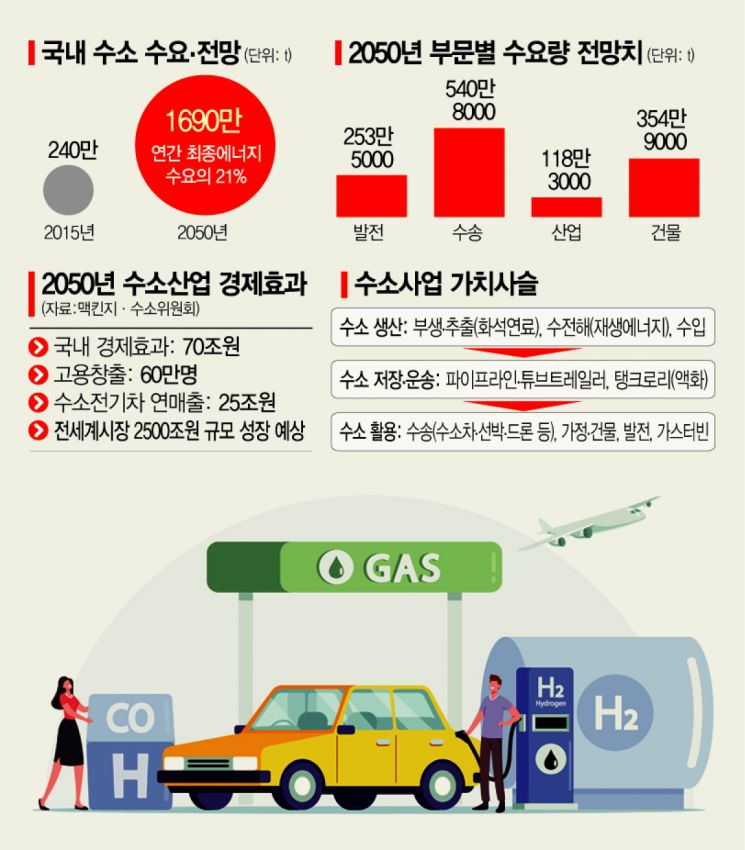
[Asia Economy Reporter Choi Dae-yeol] The wave of corporate alliances to activate the ‘hydrogen economy’ is intensifying. Hydrogen is considered a next-generation energy source worldwide, including in South Korea, due to its minimal carbon emissions and better accessibility compared to traditional fossil fuels.
However, no matter how excellent hydrogen is as a fuel, replacing the oil infrastructure built over more than 100 years is expected to require considerable costs and time. The increasing cooperation among private companies reflects the judgment that expanding the hydrogen value chain comprehensively is a priority over exclusive competition.
POSCO, Lotte Chemical, and Samsung Engineering signed a memorandum of understanding (MOU) on the 28th to establish a partnership for developing domestic and international hydrogen projects. Under this MOU, the three companies agreed to collaborate on importing blue and green hydrogen?considered eco-friendly hydrogen?from overseas. Since green hydrogen, which emits no carbon, is viewed as the ultimate eco-friendly fuel, and South Korea has a weak renewable energy base such as solar power, the industry expects hydrogen imports to increase in the future.
The three companies also agreed to jointly develop, invest in, and operate hydrogen projects domestically and internationally. They plan to share their expertise, experience, and achievements in their respective fields to create synergy. Earlier in July, they formed an ammonia consortium and are conducting a preliminary feasibility study with the state government to develop blue and green hydrogen projects in the Sarawak region of Malaysia. Yoo Byung-ok, head of POSCO’s Industrial Gas and Hydrogen Business Division, said, "This is a meaningful start where leading companies from each industry cooperate to lead national carbon neutrality," adding, "We expect to select competitive overseas projects and secure buying power."
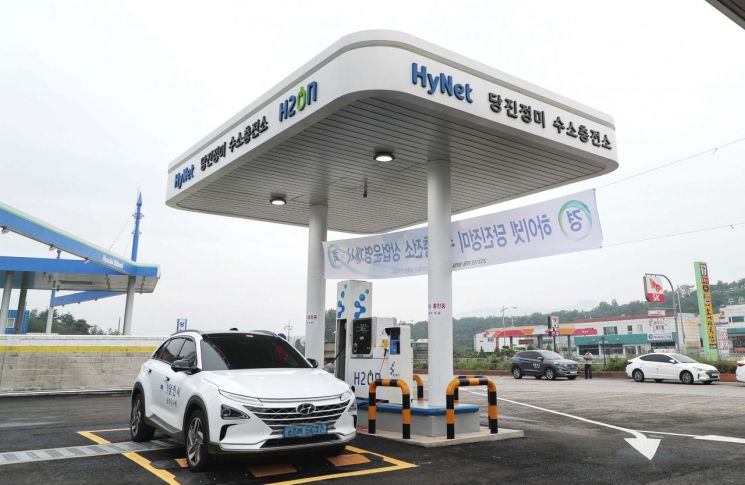
Last year, POSCO announced its mid- to long-term hydrogen business vision, aiming to establish a production system for 5 million tons of green hydrogen by 2050. It plans to gradually replace the carbon-intensive blast furnace with hydrogen reduction steelmaking technology by 2050. Additionally, POSCO is participating in several green hydrogen production projects in regions with strong renewable energy bases such as Australia and the Middle East. It is also collaborating with various research institutes on ammonia extraction technology, a key technology for hydrogen transport and storage.
Lotte Chemical announced a hydrogen business roadmap in July, aiming to supply 30% of domestic hydrogen demand by 2030. It currently produces the largest amount of by-product hydrogen domestically and plans to leverage infrastructure from other affiliates, with strong support at the group level. Samsung Engineering also has carbon-neutral business models including hydrogen and carbon capture, utilization, and storage (CCUS). Its strengths include extensive experience in engineering, procurement, and construction (EPC), technical expertise, and overseas networks.
Hwang Jin-gu, head of Lotte Chemical’s Basic Materials Business, said, "We will contribute to the development of the hydrogen industry based on diverse global base operation experience and efficient production know-how." Choi Sung-an, president of Samsung Engineering, stated, "We will contribute to activating the hydrogen economy and carbon neutrality with our global network and technology."
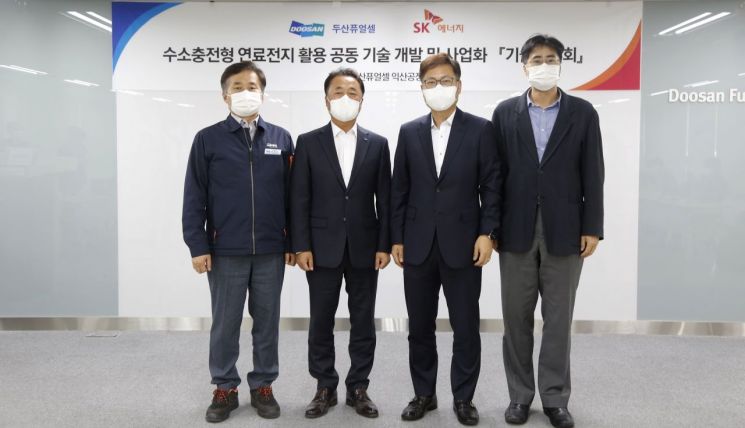 At the first technical exchange meeting held on the 27th at the Doosan Fuel Cell factory in Iksan, Jeonbuk, Doosan Fuel Cell's Head Moon Hyung-won (from left), Head Lee Seung-jun, SK Energy's Director Kang Dong-su, and Energy Solutions Manager Jang Ho-jun are posing for a commemorative photo.
 SK Energy, the largest domestic oil refiner, and Doosan Fuel Cell, which entered fuel cell development early, also signed a business agreement on the same day to jointly utilize each company’s technology and infrastructure. Under the agreement, the two companies will develop optimal linkage technology between hydrogen refueling fuel cells (TriGen) and high-purity hydrogen production systems. They will also collaborate on distributed power generation and onsite hydrogen refueling hub projects that charge hydrogen produced locally.
At the first technical exchange meeting held earlier that day for the joint technology development project, they specified future joint business schedules and goals and conducted a performance demonstration of the TriGen fuel cell. The TriGen fuel cell can simultaneously produce electricity, heat, and hydrogen in urban areas through hydrogen refueling. It enables the establishment of urban-type complex energy stations similar to existing gas stations, allowing distributed power generation and electric and hydrogen refueling in one place.
Doosan Fuel Cell will handle fuel cell technology development, manufacturing, and supply, while SK Energy will manage the refining technology to inject the hydrogen produced here into vehicles. Construction of the first eco-friendly complex energy station is planned to begin as early as next year. Currently, hydrogen refueling stations have low operational profitability, which this project is expected to improve. Oh Jong-hoon, head of SK Energy’s P&M CIC, said, "We will accelerate eco-friendly energy businesses to achieve net-zero carbon emissions before 2050."
© The Asia Business Daily(www.asiae.co.kr). All rights reserved.
![From Hostess to Organ Seller to High Society... The Grotesque Scam of a "Human Counterfeit" Shaking the Korean Psyche [Slate]](https://cwcontent.asiae.co.kr/asiaresize/183/2026021902243444107_1771435474.jpg)


















