Announcement on the 27th: 'Review of Major Inflation Drivers in Our Country and the United States'
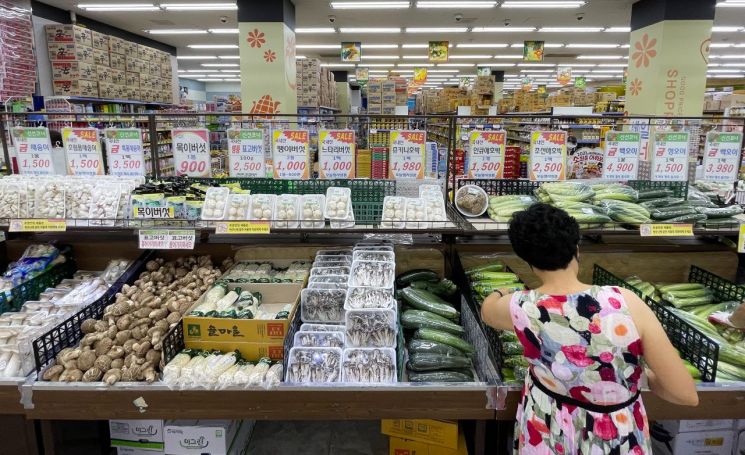
[Asia Economy Reporter Jang Sehee] It has been pointed out that attention should be paid to the possibility that the high inflation rate may persist longer than expected due to the domestic impact of global supply bottlenecks and increased demand following the restructuring of the quarantine system. When supply-side factors and demand-side factors intertwine, inflationary pressures can intensify.
The Bank of Korea stated this in its report titled "Review of Major Inflation Drivers in Korea and the United States (BOK Issue Note)" released on the 21st. With the consumer price inflation rates in Korea and the United States exceeding 2% for six consecutive months, the Bank examined the possibility of sustained high inflation and reviewed recent inflation trends and future inflation outlooks.
The high inflation rates in Korea and the United States were influenced by ▲ energy and food prices ▲ demand-side inflationary pressures ▲ supply bottlenecks.
Due to economic recovery following vaccination, demand-side inflationary pressures in both countries are expected to continue into next year. Last year, Korea’s dining-out price inflation rate was only 0.9%, but it rose to 3.0% last month as social distancing measures were eased. In the United States, the rate increased from 3.1% to 3.9% during the same period. The U.S. has shown a steeper rise compared to Korea as economic activities resumed this year.
Regarding the impact of supply bottlenecks, Korea is analyzed to be relatively less affected than the United States. However, it was noted that prolonged supply bottlenecks could also act as inflationary pressure in Korea. Lee Seungcheol, head of the Bank of Korea’s Inflation Trends Team, stated, "If supply bottlenecks persist, there could be a lagged transmission effect to consumer prices."
Energy prices are expected to act as a common factor driving the recent high inflation. Unlike Korea, where food prices have shown a strong upward trend since the second half of last year, the U.S. experienced a slowdown in food price increases before recently rebounding. The Bank of Korea explained, "If international food prices continue to rise, upward pressure on processed food prices and dining-out prices is likely to increase."
Additionally, housing costs are expected to continue exerting inflationary pressure in the future. It was also analyzed that the increased liquidity during crisis response processes could act as an inflationary pressure.
© The Asia Business Daily(www.asiae.co.kr). All rights reserved.
![Clutching a Stolen Dior Bag, Saying "I Hate Being Poor but Real"... The Grotesque Con of a "Human Knockoff" [Slate]](https://cwcontent.asiae.co.kr/asiaresize/183/2026021902243444107_1771435474.jpg)
















