"Strong Connection Suggested by Aboveground Building Structure and Large Pottery Fragments"
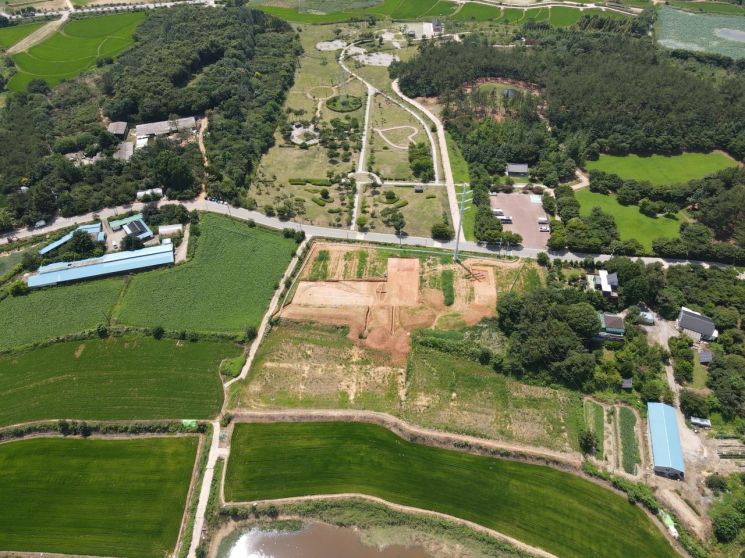
Two large building site ruins presumed to be related facilities were discovered near Ssangneung in Iksan. On the 26th, Iksan City and the Wonkwang University Mahan Baekje Culture Research Institute announced that they conducted an excavation in the eastern maintenance area of Ssangneung and found two building sites and pit (竪穴, dugout) remains believed to have been used from the Baekje Sabi capital period to the Unified Silla period.
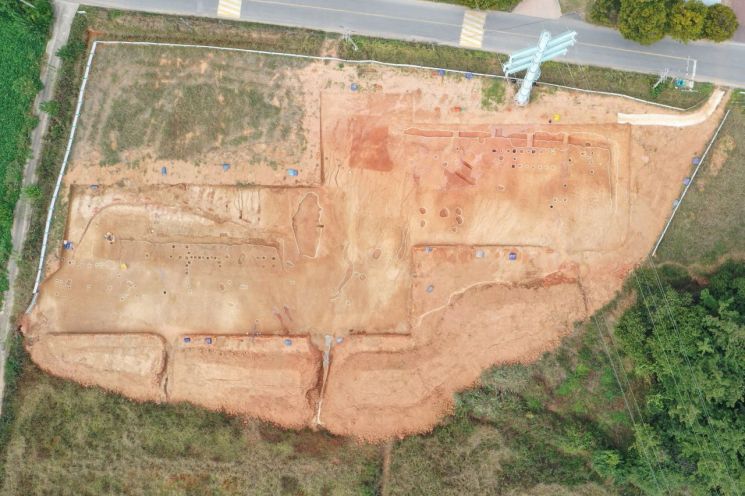
The scale of Building Site No. 1 is 35 meters in length and approximately 11 meters at its widest. Artifacts such as inkstone fragments, lid fragments, stamped roof tiles from the Sabi capital period, and Unified Silla period pottery with stamped patterns were unearthed. Building Site No. 2 measures 27 meters in length and about 10 meters at its widest. Pottery fragments from the Sabi capital period and stamped pottery fragments from the Unified Silla period were recovered. It is believed that both building sites had above-ground structures with pillars and floors elevated above the ground. The distance between the two building sites is about 10 meters. A ditch-shaped facility (溝狀遺構, trench-type structure) was constructed on the upper slope to prevent water from entering.
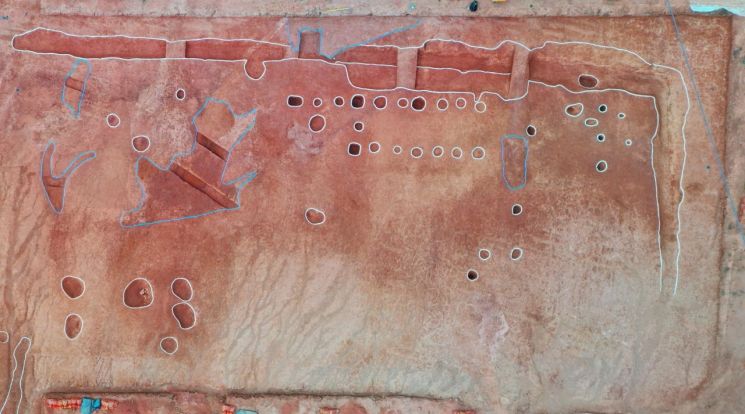
A representative from the Mahan Baekje Culture Research Institute explained, "Since there are no hearth (fireplace) facilities inside, it is not a general residential facility," adding, "Judging from the above-ground building structure using pillars, the inkstone found inside, and large pottery fragments, it appears to be a building site with a special character related to Ssangneung in Iksan." Ssangneung in Iksan is traditionally known as the tomb of Baekje King Mu (reigned 600?641) and his queen. Excavations conducted until 2019 attracted attention after human bones were discovered and it was confirmed that the burial mound was constructed by rammed earth."
© The Asia Business Daily(www.asiae.co.kr). All rights reserved.



















