Announcement of the '2021 Q3 GDP Preliminary Estimate' on the 26th
[Asia Economy Reporter Jang Sehee] Due to the impact of the fourth wave of COVID-19 and supply bottlenecks, private consumption and investment decreased, resulting in South Korea's economy growing by only 0.3% in the third quarter. If the remaining fourth quarter does not exceed 1.04%, achieving an annual growth rate of 4% this year will become difficult.
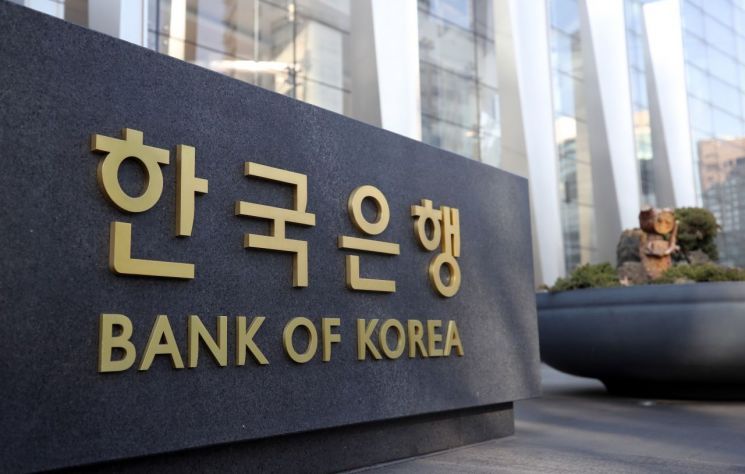
According to the '2021 Q3 Real Gross Domestic Product (GDP, preliminary)' data released by the Bank of Korea on the 26th, GDP in the third quarter grew by 0.3% compared to the previous quarter. Looking at the quarterly growth rates, it has been declining for three consecutive quarters after recording 1.7% in Q1 and 0.8% in Q2 this year. This is the lowest since Q2 last year (-3.2%). The Q3 growth rate was 4.0% compared to the same period last year.
When the Bank of Korea announced the provisional GDP growth rate for Q2 last September, it analyzed that if Q3 and Q4 each increase by about 0.6% (quarter-on-quarter), 4.0% growth for this year would be possible.
Investment and Consumption Plummet... Net Export Growth Contribution 0.8 Percentage Points
This growth was largely influenced by an expanded decline in construction investment and a slowdown in private consumption.
Construction investment decreased by 3.0%, mainly in civil engineering construction, marking the lowest since Q3 last year (-3.9%). After recording a 1.3% increase in Q1, construction investment turned to a 2.3% decrease in Q2. Facility investment decreased by 2.3% due to a reduction in transportation equipment, the lowest since Q1 2019 (-8.3%).
Private consumption, which briefly revived in Q2, decreased by 0.3% quarter-on-quarter due to declines in food and accommodation, and entertainment and culture, turning negative again after two quarters. However, government consumption increased by 1.1%, mainly due to spending on goods.
Exports, a pillar of the Korean economy, increased by 1.5%, centered on coal and petroleum products, machinery, and equipment. Exports turned positive again after recording a negative growth of -2.0% in Q2. The growth contribution of net exports was 0.8 percentage points. Imports decreased by 0.6% due to a reduction in transportation equipment and others.
By industry, manufacturing grew by 0.2%, and services grew by 0.4%.
The real gross domestic income (GDI) growth rate was recorded at 0.3%, the same as the real GDP growth rate (0.3%), as terms of trade remained at a similar level to Q2.
Global Supply Bottlenecks Persist... Exports and Overall Economy Expected to be Hit
Experts point out that the global supply bottleneck is expected to continue, potentially worsening the economy further.
Professor Andonghyun of Seoul National University’s Department of Economics stated, "Since the supply bottleneck is expected to continue until Q1 next year, growth in Q4 this year may be slower than expected."
Jung Kyucheol, head of the Economic Outlook Office at the Korea Development Institute (KDI), also emphasized, "As global supply chain bottlenecks continue, both exports and imports may be affected," adding, "If prices rise further in the future, consumption capacity may decrease."
© The Asia Business Daily(www.asiae.co.kr). All rights reserved.

















