District Opens Nation's First Comprehensive Management Facility for Child Abuse Prevention through Private, Administrative, and Police Cooperation... 9 Staff Members Provide On-Site Counseling and Treatment, Establishing a Robust Child Protection Response System
[Asia Economy Reporter Park Jong-il] A new concept Child Protection Response Center that integrates the fragmented response system of related agencies for child abuse cases and manages them comprehensively through collaboration between the private sector, administration, and police has been established in Seocho-gu.
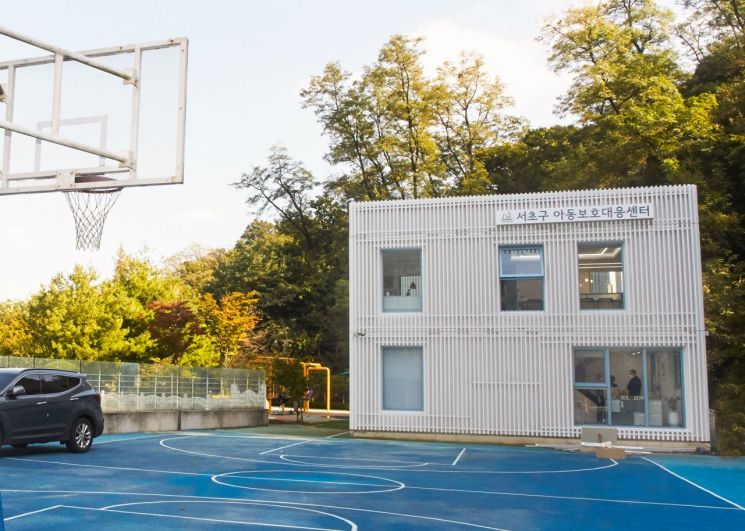
Seocho-gu (Mayor Cho Eun-hee) announced on the 25th that it has opened the "Seocho Child Protection Response Center," the first in the nation to provide a one-stop response and management system from reporting child abuse to post-management.
The issue highlighted by the ‘Jung-in’ case, where a child died due to abuse by adoptive parents last year, was the division of authority among the police, autonomous district, and child protection agencies, which hindered organic cooperation. The absence of a control tower for the case was pointed out as a significant blind spot.
In response, Seocho-gu has prepared to establish the Child Protection Response Center by building a system that recognizes the need for the district to act as a control tower, sharing information on child abuse cases in one place, executing protective measures, and responding in an organic, comprehensive, and systematic manner.
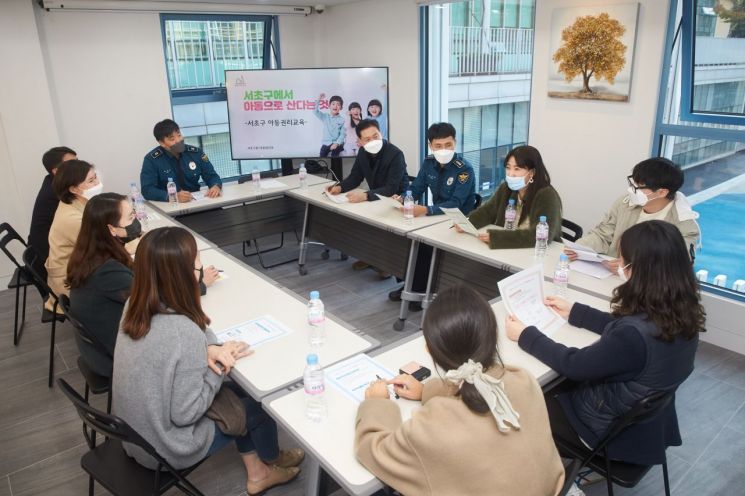
Located in Seocho-dong, the Child Protection Response Center is staffed by nine professionals, including dedicated public officials, police officers, child protection specialists, and psychotherapists. The center’s roles are broadly divided into ▲early intervention in child abuse ▲child protection measures ▲child abuse prevention education.
First, for early intervention in child abuse, once a report is received, dedicated public officials, police, and child protection specialists discuss the investigation methods and schedule according to the abuse situation to determine the direction of early intervention. This measure aims to partially resolve issues such as investigation delays and duplicate investigations of abused children. From the initial investigation stage, they communicate frequently to discover and connect welfare resources needed by the child and family.
Case judgment for child protection is conducted through the ‘Child Abuse Case Judgment Panel,’ composed of 10 members including police, dedicated public officials, child protection agencies, lawyers, and family therapy experts. This panel makes in-depth and comprehensive decisions prioritizing the child’s best interests. This enhances professionalism compared to the previous system where dedicated public officials independently judged whether abuse occurred.
Child abuse prevention education is operated continuously within the response center, recognizing that raising awareness of children’s rights is crucial to preventing child abuse.
In particular, the district plans to strengthen prevention education for teachers at schools, daycare centers, and kindergartens who are required to complete at least one hour of child abuse prevention education annually.
To fundamentally improve awareness of child abuse and children’s rights, the center runs various community programs. To eradicate abusive behaviors by parents in abusive families, programs such as ‘Todak Todak Parent Education,’ which teaches desirable parenting attitudes, and ‘Parent Self-Help Groups’ to resolve communication issues with adolescent children are also operated.
This is based on the ‘2020 Child Abuse Annual Report’ released by the Ministry of Health and Welfare, which found that 82.1% of abusers were parents.
The response center is newly constructed with a total floor area of 108㎡ over two floors above ground, featuring ▲collaborative offices for public, private, and police sectors ▲integrated conference rooms ▲abuse prevention education rooms ▲counseling and treatment rooms ▲parent education rooms, where specialized counseling and treatment are delicately and systematically conducted in each space.
Although the district faced difficulties in building the response center due to high land prices and long construction periods characteristic of the area, it secured the site with determination and made every effort for rapid construction. Additionally, the construction period was shortened thanks to building donations from local socially responsible companies ‘Hoban Construction’ and ‘Ten Eleven.’
Furthermore, the response center operates ‘Child Guardians’ led by local residents. Two ‘Child Guardians’ appointed per neighborhood monitor places frequently used by children such as convenience stores and stationery shops, inspect illegally operated child welfare facilities in the area, and strive to detect children exposed to abuse risks early to prevent abuse incidents.
In connection with the establishment of the Child Response Center, the district also opened the Seocho Abused Child Shelter on the 25th on a separate site, where immediate separation can be implemented in severe child abuse cases (following the amendment of the Child Welfare Act in March this year). It is the only shelter in the southeastern Seoul area (Seocho, Gangnam, Songpa, Gangdong), with a total floor area of 108㎡ over two floors above ground, housing ▲playrooms ▲living room and kitchen ▲counseling rooms ▲outdoor terrace ▲children’s rooms. Professional psychotherapists and childcare teachers reside here to conduct psychological assessments for abused children and provide cultural experience programs such as camping and theater viewing.
The district has been proactive in addressing blind spots in child abuse. In January this year, it established a Child Protection Team and assigned five dedicated public officials, exceeding the Ministry of Health and Welfare’s recommended standard (one per 50 cases). In May, it designated two specialized medical institutions, including Seoul St. Mary’s Hospital, to build a thorough child abuse response system in advance. Going forward, based on this infrastructure, Seocho Child Response Center plans to serve as a control tower for child abuse prevention in the region and make every effort to eliminate blind spots in child abuse.
Seocho-gu Mayor Cho Eun-hee stated, “I am glad and proud that we have been able to create an environment that can eliminate blind spots in child abuse and complement gaps in the response system. We will manage thoroughly from prevention to post-management so that no child suffers from abuse again. Seocho-gu will continuously strive to ensure that all children grow up safely and healthily.”
© The Asia Business Daily(www.asiae.co.kr). All rights reserved.


















