China supplies 85% of global magnesium, Europe uses 95% Chinese magnesium
China's power shortage limits magnesium production to 40% of usual, prices soar
[Asia Economy Beijing=Special Correspondent Jo Young-shin, Reporter Kim Su-hwan] The Chinese government, facing a power shortage, is controlling the production of magnesium ingots (hereafter magnesium), which consume a large amount of electricity, causing a global supply shortage.
Magnesium is an essential material for producing aluminum alloys, used in lightweighting parts such as automobile bodies, vehicle seat frames, and aircraft. China is the world's largest producer and exporter, supplying 85% of global magnesium.
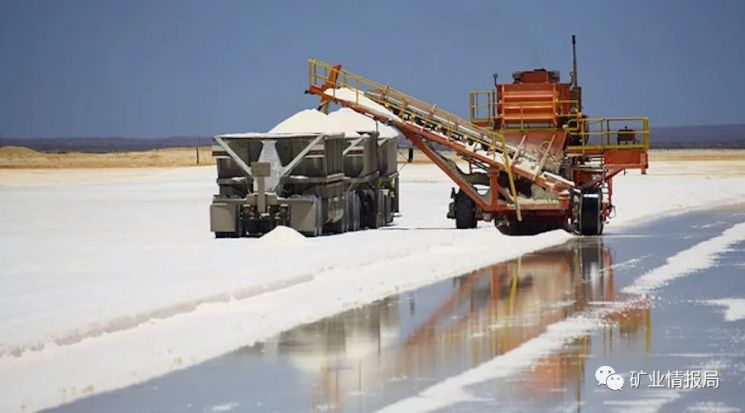
The Chinese state-run Global Times reported on the 25th that China's magnesium exports this year are expected to decrease by 10% compared to the previous year, which could have widespread effects on global industries. The media stated that magnesium production was halted in mid-September and resumed in October but is operating at only 40% of normal capacity, indicating that supply disruptions will continue for the time being.
The Global Times explained that the overlap of the Chinese government's carbon neutrality policy and power shortages has caused disruptions in magnesium production. The media added that producing 1 ton of magnesium requires 35 to 40 megawatts (MW) of electricity.
The largest magnesium production site in China is Yulin City, Shanxi Province, which experienced flooding. Sixty-five percent of China's total magnesium production comes from Yulin (Pugu County).
An official from a magnesium production plant in Pugu County explained, "Due to insufficient power supply, production has been limited to 40% of normal output," adding, "There are difficulties due to cost pressure from increased electricity fees caused by rising coal prices, and magnesium prices have soared due to reduced production."
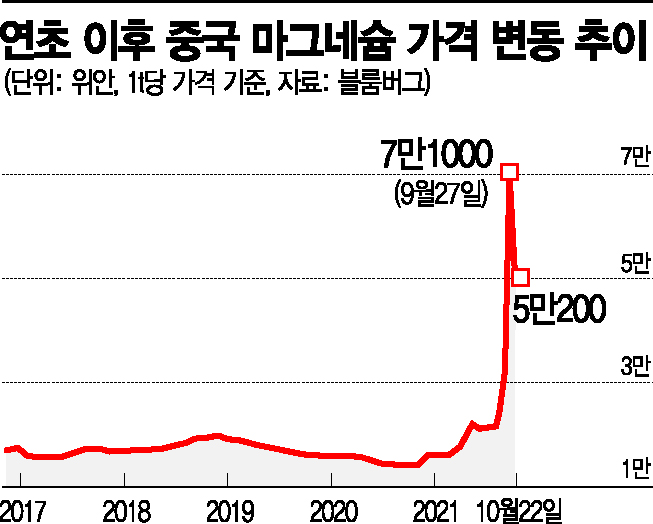
In fact, the price of magnesium, which was only 16,550 yuan per ton (approximately 3.05 million KRW) in January, surged to 71,000 yuan (13.1 million KRW) in September when production was halted. Since production resumed this month, it has been trading at 50,200 yuan per ton.
Europe has been hit hardest by the reduction in Chinese magnesium production. Europe depends on China for 95% of its magnesium imports. It is reported that Europe's magnesium stock will be depleted by the end of November. This is why there are concerns that automobile production lines in Germany and other European countries could come to a halt.
The Global Times cited experts saying that more than half of the magnesium produced in China is exported to Europe, with most of the final destination of these exports being Germany. Some in China analyze that magnesium shortages could be more fatal to the automotive industry than the shortage of vehicle semiconductor chips.
As the situation rapidly escalates, European non-ferrous metal associations and organizations issued a statement on the 22nd (local time), warning that the shortage of Chinese magnesium supply could lead to the loss of millions of jobs in various sectors such as automotive and construction industries. They urgently requested the European Union (EU) Commission to intervene and engage in dialogue with the Chinese government.
Since magnesium oxidizes and becomes unusable after three months, there are concerns that most of Europe's manufacturing could stop if China does not increase production.
Meanwhile, the Chinese government announced on the 25th a plan to supply at least 80% of its total energy from non-fossil fuel sources by 2060. The expansion plan for non-fossil fuel energy sources is part of China's original goal to achieve "carbon neutrality" by 2060, according to the state-run Xinhua News Agency. Xinhua reported that the Chinese government will strictly control investments in coal, steelmaking, cement, and petrochemical industries to achieve this.
© The Asia Business Daily(www.asiae.co.kr). All rights reserved.


















