Both Trees Are Large, Healthy, and Beautifully Shaped
Evaluated as Living Evidence of Prosperous Sericulture in Jeongseon Region
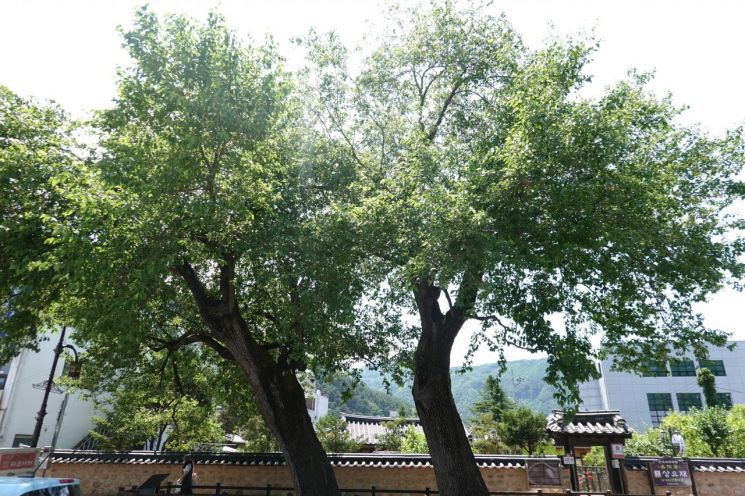
The mulberry tree in front of Jeongseon County Office in Gangwon-do is designated as a natural monument. On the 25th, the Cultural Heritage Administration announced that the name of 'Bongyang-ri Mulberry Tree,' Gangwon-do Monument No. 7, will be changed to 'Jeongseon Bongyang-ri Mulberry Tree' and it will be preliminarily designated as a nationally designated cultural heritage natural monument. Opinions from various sectors will be collected for a month, and the designation will be finalized after review by the Cultural Heritage Committee.
This mulberry tree is located at the historic Jeongseon Sangyujae Old House. It is said that the Jeju Go family resigned from a central government post 500 years ago, retired to Jeongseon, built the old house, and planted the tree together. There are two Bongyang-ri mulberry trees. The northern tree is 14.6 meters tall, with a chest-height circumference of 3.5 meters, and a crown width of 15 meters east-west and 18 meters north-south. The southern tree is 13.2 meters tall, with a chest-height circumference of 3.3 meters, and a crown width of 18 meters east-west and 15.8 meters north-south. They are large in size, in good health, and have a beautiful tree shape.
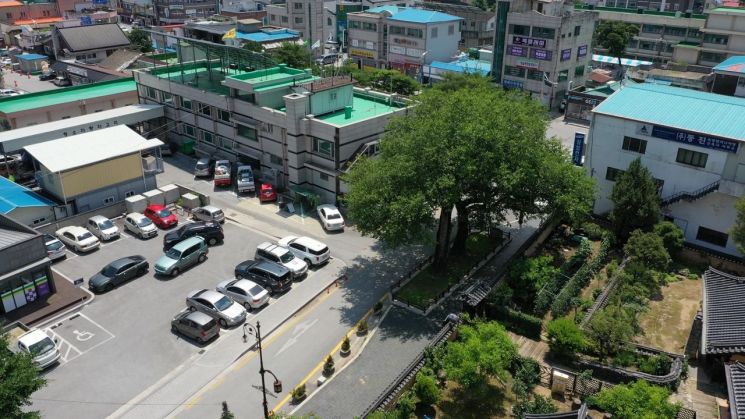
The mulberry trees in the Jeongseon area are recorded in the 'Jeongseon Chongswaerok,' written by the late Joseon Dynasty official Oh Hoeng-muk during his tenure as Jeongseon County Governor. They are also mentioned alongside sericulture (raising silkworms to produce cocoons) in Jeongseon County's modern administrative documents from 1909. The Bongyang-ri mulberry trees are also evaluated as living evidence indicating the prosperity of sericulture.
Mulberry trees bloom in June. They bear fruit called 'odi,' and their root bark is used in traditional Korean medicine for fever reduction, cough relief, diuretic purposes, and treatment of sores. Earlier mulberry trees designated as natural monuments include the Changdeokgung Mulberry Tree (2006) and the Sangju Dugok-ri Mulberry Tree (2020).
© The Asia Business Daily(www.asiae.co.kr). All rights reserved.
![Clutching a Stolen Dior Bag, Saying "I Hate Being Poor but Real"... The Grotesque Con of a "Human Knockoff" [Slate]](https://cwcontent.asiae.co.kr/asiaresize/183/2026021902243444107_1771435474.jpg)

















