"Even if Registered as Residential in Management Ledger, Not a House if Independent Residence is Difficult"
[Asia Economy Reporter Choi Seok-jin, Legal Affairs Specialist] A court ruling has determined that it is illegal to revoke the status of a non-homeowner eligible for redevelopment allocation simply because the use of a restaurant building, which cannot be used as a residence, was registered as 'residential' in the management ledger.
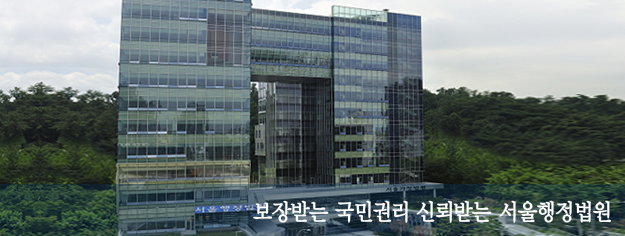
On the 24th, according to the legal community, the Seoul Administrative Court Administrative Division 4 (Presiding Judge Han Won-kyo) ruled in favor of resident A from Seongbuk-gu, Seoul, in a lawsuit confirming membership status against the Jangwi 6 District Housing Redevelopment Maintenance Project Association, stating, "The part concerning the plaintiff in the management disposition plan approved by the defendant, the head of Seongbuk-gu Office, is canceled."
When redevelopment was approved in 2015 for the Jangwi-dong area of Seongbuk-gu, the association notified members to apply for allocation. At that time, A, who owned land within the project area, applied for two 84㎡ type houses as first and second priority but was excluded from the allocation plan announced in July last year.
In February 2019, A registered the building under his name to align the ownership of the unauthorized building where he operated a restaurant with the land ownership. However, the building's use was registered as 'residential' in the unauthorized building management ledger maintained by the district office.
As a result, under the relevant ordinance, A lost his non-homeowner qualification and was excluded from the allocation target, prompting him to file a lawsuit.
In court, A argued, "The unauthorized building in question is a commercial space of about 17 pyeong (approximately 56 square meters) and cannot be considered a 'house' where people can live."
The court ruled in favor of A.
The court noted that ▲ the unauthorized building mostly contained items and equipment necessary for operating the restaurant, but none of the basic items required for human habitation (such as bedding, wardrobes, washing machines) were present; ▲ the space for customers to dine was separate from the restaurant, and there was no independent space for residential use where one could eat or sleep, nor was there a bathroom equipped with facilities sufficient for daily living; ▲ the plaintiff appeared to have continued residing in Seongbuk-gu, Seoul, making it difficult to find any special circumstances indicating that the unauthorized building was used as a living base; and ▲ considering the circumstances, purpose, and standards for creating the unauthorized building management ledger, it could not be seen as accurately reflecting the current status of the unauthorized building.
Based on these grounds, the court stated, "The fact that the use of the unauthorized building is registered as 'residential' in the existing unauthorized building management ledger alone does not mean that the unauthorized building is necessarily a 'house' structured for long-term independent residential living."
Furthermore, the court explained, "The unauthorized building in question cannot be considered a 'house' as it does not have the form or structure sufficient for independent residential living. Therefore, even if the plaintiff owns the unauthorized building, he is still considered a person who does not own a house and thus qualifies as an allocation target for apartment units under Article 27, Paragraph 1, Subparagraph 2 of the former Maintenance Ordinance."
The court concluded, "Therefore, the part of the disputed management disposition plan that excluded the plaintiff from the allocation target on the premise that he owns a house is illegal and must be canceled without further examination."
© The Asia Business Daily(www.asiae.co.kr). All rights reserved.

















