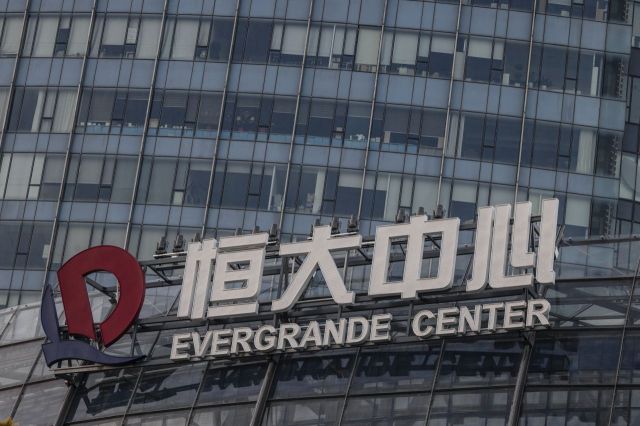
[Asia Economy Reporter Kim Hyung-min] Evergrande, which was on the brink of an official default, has temporarily averted crisis by paying $83.5 million (approximately 98.5 billion KRW) in interest on its dollar bonds that were due by the 23rd.
However, the principal and interest repayment deadlines will continue to come due, so the company remains in crisis. Analysts say whether Evergrande can escape its liquidity crisis ultimately depends on the sale of major assets.
On the 22nd, China’s state-run Securities Times reported Evergrande’s dollar bond interest payment. Following the failure to sell Evergrande Property shares, which caused the stock to plunge more than 12% the previous day, Evergrande’s shares rose as much as 7% intraday on the Hong Kong stock exchange.
Concerns had been raised that Evergrande’s official default could trigger a chain default in the real estate sector, but Chinese real estate developers’ stocks, including Sunac China Holdings which rose more than 13%, showed broad gains.
Many found Evergrande’s interest payment news somewhat unexpected. There had been worries that Evergrande would fail to properly pay nearly 100 billion KRW in dollar bond interest by the 23rd after its plan to secure about 3 trillion KRW in cash by selling Evergrande Property shares fell through, leaving the company in a critical liquidity crunch.
Evergrande’s total debt amounts to about 2 trillion yuan (approximately 369 trillion KRW), and some sober assessments say that even though this interest payment was made, there is no sign that the company’s liquidity crisis has significantly improved.
According to major foreign media, Justin Tang, head of Asia research at United First Partners, said, "Today’s interest payment is only a very small part of the whole," adding, "It neither solves the company’s problems nor changes the fact that the company is a 'zombie firm.'"
Therefore, for Evergrande to have the ability to repay the mounting debts ahead, it must achieve results in the asset sales it is currently pursuing. The dollar bond interest payments that were missed on the 29th of last month and the 11th of this month will come due again one after another starting next week after the grace period ends.
Additionally, Evergrande must cover interest payments on four more dollar bonds this year, and the total amount of dollar and yuan bonds to be repaid by next year reaches $7.4 billion (approximately 8.7 trillion KRW).
Ultimately, the key to resolving the situation lies with the Chinese authorities. They hold the actual authority to approve Evergrande’s asset sales and other measures.
However, from the Chinese authorities’ perspective, Evergrande’s current management difficulties are an inevitable part of the 'reform' aimed at stabilizing housing prices and eliminating long-term national risk factors.
Many believe that as long as the Evergrande crisis does not spread to the entire real estate sector or the financial industry, the authorities will allow Evergrande’s bankruptcy to proceed.
© The Asia Business Daily(www.asiae.co.kr). All rights reserved.
![Clutching a Stolen Dior Bag, Saying "I Hate Being Poor but Real"... The Grotesque Con of a "Human Knockoff" [Slate]](https://cwcontent.asiae.co.kr/asiaresize/183/2026021902243444107_1771435474.jpg)











