'NRC Carbon Neutrality Research Group Public Debate' Held
Energy Economics Institute: "Factors Causing Rate Increases Must Be Clearly Explained When Promoting Carbon Neutrality"
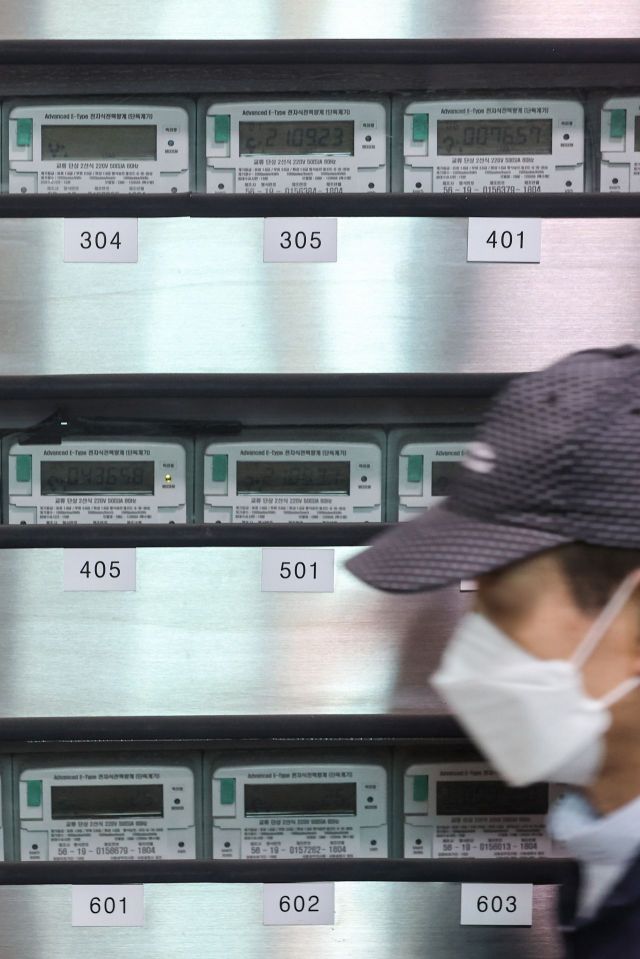
[Sejong=Asia Economy Reporter Kwon Haeyoung] A government-funded research institute has called for transparent disclosure to the public that an increase in electricity rates is inevitable to achieve the goal of reducing greenhouse gas emissions by 40% by 2030 and net zero by 2050. While the Presidential Committee on Carbon Neutrality remains silent about the climate and environmental costs associated with the 'accelerated' push for carbon neutrality, there is a significant concern that a 'substantial increase in electricity rates' will become a reality. Therefore, it is necessary to seek public understanding of the increased environmental cost burden and to enhance acceptance of electricity rate hikes.
On the 21st, the Korea Energy Economics Institute (KEEI) stated at the 'NRC Carbon Neutrality Research Group Public Forum' hosted by the National Research Council for Economics, Humanities and Social Sciences (NRC) and the Korea Environment Institute (KEI) that "recently, during the application process of the fuel cost linkage system, public acceptance of electricity rate adjustments was found to be very low."
Researcher Jeong Yeon-je of KEEI diagnosed, "To maintain a fair and rational electricity rate system, the focus should not be solely on adjusting the rate levels, but efforts should be made to improve the rate adjustment system itself." He added, "Since November 2013, there has been no actual adjustment of rates reflecting the total cost," emphasizing, "The principle of rate adjustment according to the total cost specified in the electricity rate calculation standards must be observed." The total cost refers to the amount that includes not only the appropriate cost of power supply but also a reasonable return on investment.
He particularly pointed out that the scope of the climate and environmental charge, introduced during the electricity rate reform at the end of last year, should be expanded and complied with. He said, "Costs arising from the Renewable Portfolio Standard (RPS), Emissions Trading System (ETS), and the seasonal fine dust management system should, in principle, be borne by consumers," adding, "If the climate and environmental charge is not properly reflected considering its impact on prices, achieving carbon neutrality cannot be guaranteed." This is interpreted as a veiled criticism of the government suppressing electricity rate hikes due to concerns about inflation despite rising fuel costs since early this year.
KEEI's statement on this day is notable as a government-funded research institute mentioned the possibility of electricity rate increases due to carbon neutrality. The Carbon Neutrality Committee (CNC) has set aggressive targets such as reducing greenhouse gas emissions by 40% by 2030 and achieving net zero emissions by 2050 but has not estimated the associated costs at all. At a National Assembly audit of the Ministry of Trade, Industry and Energy earlier this month, Yoon Soon-jin, the CNC's private co-chair, avoided answering a question from People Power Party lawmaker Yang Geum-hee about how much electricity rates would need to increase due to the expansion of renewable energy such as solar and wind power, saying, "I have not thought about it specifically. You should ask the Ministry of Industry."
However, internally, the CNC has estimated that up to 1,248 trillion won is needed solely for the construction of energy storage systems (ESS), which is part of the cost associated with expanding the share of renewable energy. This figure does not include costs for building renewable energy power generation facilities or installing transmission and distribution networks. The CNC plans to increase the share of renewable energy generation from only 5.6% in 2019 to 30.2% by 2030 and 70.8% by 2050.
© The Asia Business Daily(www.asiae.co.kr). All rights reserved.

















