"High Work Intensity Compared to Compensation" Leads to Reluctance to Work
Food Service Industry Faces Persistent Labor Shortage for Years
Restless Ahead of With-Corona Era
Youth Flock to Delivery for 'Short-Term High Earnings'
Additional Pay Attractive in Bad Weather Like Rain and Snow
COVID-19 Entry Restrictions Reduce Foreign Residents, Worsening Labor Shortage
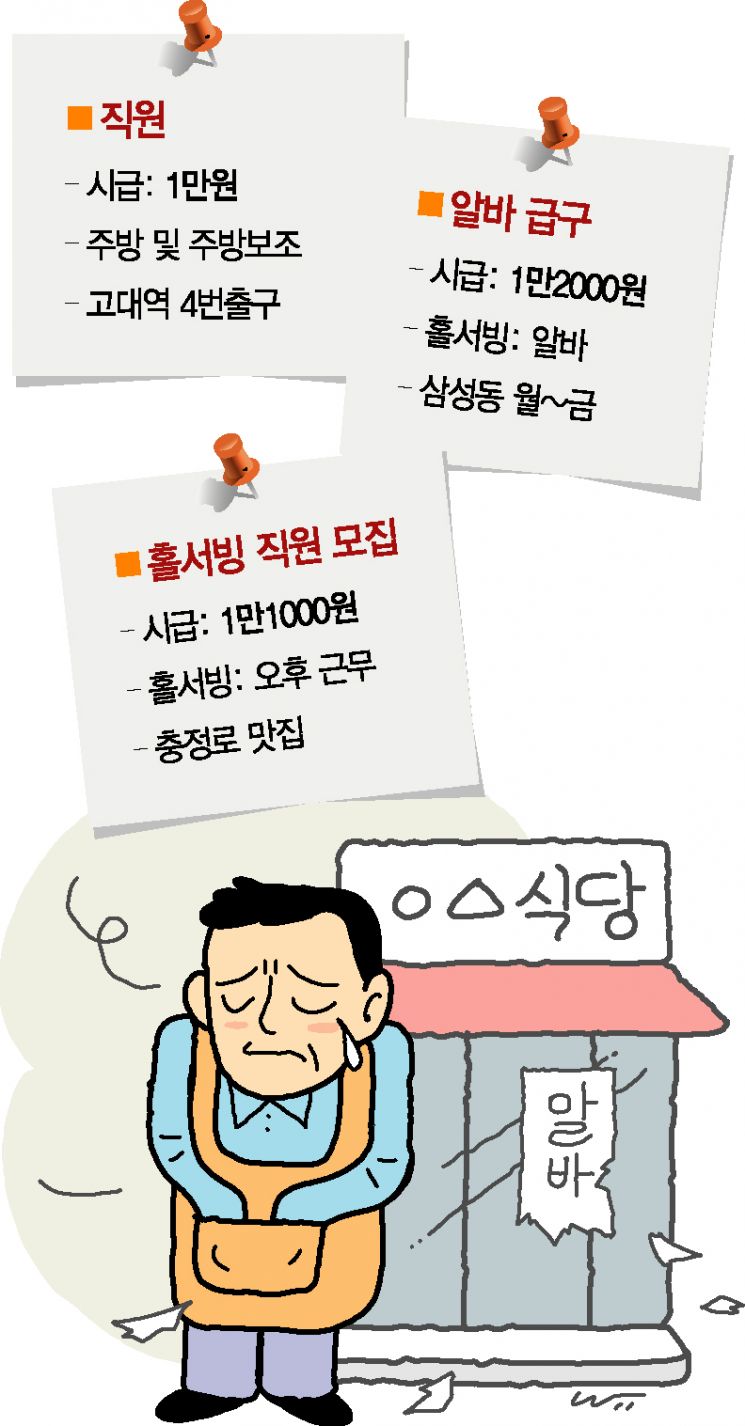
[Asia Economy Reporter Seungjin Lee] "Even if we offer a monthly salary of over 2 million won, we cannot find employees."
Lee Jeong-hyun (37, pseudonym), who runs a cafe in Dongdaemun-gu, Seoul, has been operating the cafe alone for half a year because he has been unable to find staff. He said, "Except for Sunday, I run the cafe 12 hours a day from Monday to Saturday, so I am very exhausted and have no personal time. I tried to hire employees, but only a few people came for interviews." He added, "I raised the hourly wage so that the monthly salary would exceed 2 million won, but no one came for interviews, so I am currently running the cafe with the help of my mother, who is nearly seventy."
Worsening Labor Shortage in the Food Service Industry
According to industry sources on the 20th, despite the COVID-19 impact and what is considered the worst employment crisis since the International Monetary Fund (IMF) foreign exchange crisis, the food service industry continues to suffer from a labor shortage. The shortage of manpower in the food service industry has persisted for several years.
According to the Ministry of Employment and Labor's survey on workforce by occupation, the labor shortage rate in restaurants and pubs has remained around 3% from 2019 to the first half of this year. In contrast, the overall industry labor shortage rate during the same period was around 2%, indicating that the food service industry faces a greater labor shortage compared to the overall industry. Additionally, a 2020 survey on food service management by the Ministry of Agriculture, Food and Rural Affairs found that about 45% of respondents reported difficulties in hiring.
A report by the Korea Federation of Small and Medium Business last year showed that the average labor intensity score was 6.27, while restaurants and pubs scored 7.1, higher than other industries. The perception that the work environment can involve conflicts not only with customers but also with employers has spread, leading to a decrease in young people entering the industry.
Younger Generation Flocking to Delivery Jobs
One major reason is that young people are interested in delivery jobs, which can generate high income in a short period. Among the younger generation, delivery job posts boasting earnings of hundreds of thousands of won per day have become popular, increasing interest in delivery part-time work. Delivery jobs can be easily done by bicycle or on foot, and additional pay is provided during bad weather such as rain or snow, allowing for high short-term earnings. Another advantage is the flexibility to quit anytime.
Kim Hyung-woo (40, pseudonym), who runs a barbecue restaurant in Seoul, explained, "These days, young people seem to prefer earning a lot in a short time and then taking a long break, even if the work is physically demanding. It is practically impossible to find long-term part-time workers, and only short-term part-time job postings can attract some applicants."
Foreign Workers Leaving Korea
The relatively high dependence on foreign workers compared to other industries, due to domestic workers' reluctance to work, is another cause of the labor shortage in the food service industry. The decrease in foreign residents due to COVID-19 has made it difficult to employ foreign workers, exacerbating the hiring difficulties in the food service sector.
According to data from the Korea Labor Institute last year, the accommodation and food service industry ranked third among all industries in terms of foreign worker dependence. However, the number of foreign residents increased from 2017 to 2019 but sharply declined after the COVID-19 outbreak due to entry restrictions. Consequently, the number of foreign workers also decreased; last year, the number of foreign workers was 847,000, down 160,000 from the previous year.
A survey conducted by the Korea Foodservice Industry Research Institute from September 1 to September 8 among food service business owners nationwide found that 80% of foreign cuisine restaurants reported difficulties in securing manpower. Korean restaurants reported 77.7%, and other simple food establishments 53.6%.
A representative from the Korea Foodservice Industry Research Institute stated, "The labor shortage in the food service industry has persisted for years, so measures to expand worker recruitment are necessary. It is essential to attract domestic young workers through hiring subsidies, build platforms for flexible workforce utilization, and improve working conditions in food service businesses."
© The Asia Business Daily(www.asiae.co.kr). All rights reserved.

















