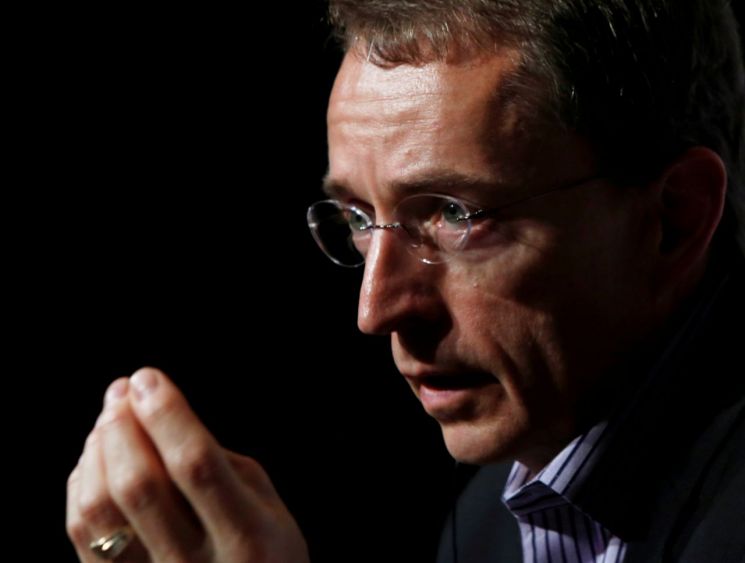
[Asia Economy Reporter Kim Suhwan] Intel's Chief Executive Officer (CEO) argued that relying on semiconductor production in Korea and Taiwan is geopolitically risky and called for U.S. government subsidies to ensure semiconductor manufacturing takes place in the United States.
Intel CEO Pat Gelsinger appeared on the documentary news program 'Axios on HBO' on the 18th (local time) and said, "Korea and Taiwan are geopolitically unstable," adding, "It is not right for the whole world to depend on politically unstable regions."
He continued, "If God decided where oil comes from, we can decide where to place semiconductor manufacturing plants."
"There is no issue more important than semiconductors for the U.S."
Major U.S. semiconductor design companies such as Qualcomm, AMD, and Nvidia primarily outsource production of their products to Samsung Electronics or Taiwan's TSMC.
As a result, the U.S. share of global semiconductor production, which accounted for one-third just a few years ago, has plummeted to 12% today. Analysts say that because semiconductor production costs are relatively cheaper in Asia than in the U.S., most design companies have outsourced production to Korean and Taiwanese firms.
Gelsinger said, "Our production costs should not be 30 to 40% higher than Asia's," appealing, "Help us reduce this gap so we can build bigger and faster semiconductor plants in the U.S."
He emphasized, "Intel plans to invest $20 billion (about 23.6 trillion KRW) this year alone in semiconductor research labs and production facilities, yet we still need government support."
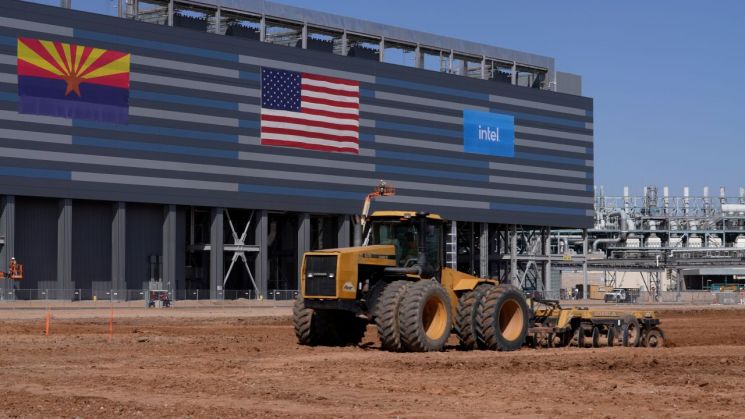
Gelsinger described the semiconductor supply chain as "a critical issue for the U.S. to lead the digital future," and challenged, "Tell me what issue is more important to the U.S. than this."
The U.S. Senate passed the 'U.S. Innovation and Competition Act' in June, which includes $52 billion (about 61.36 trillion KRW) in support for semiconductor manufacturing, but it has not yet passed the House of Representatives.
Gelsinger pointed out that even the $52 billion support is insufficient.
He said, "A second semiconductor support bill is needed, and to achieve the so-called 'moonshot'?a bold plan like building a lunar probe?a third semiconductor support bill will also be necessary," emphasizing, "Whatever its name, semiconductor support legislation is more important to the U.S. than anything else."
Gelsinger also criticized former management for Intel's recent semiconductor production issues.
He said former CEOs "were not engineers with expertise in semiconductor technology," and "as the company grew rapidly, management gradually abandoned the strategies that made Intel the industry leader."
"We will win the competition against Apple"
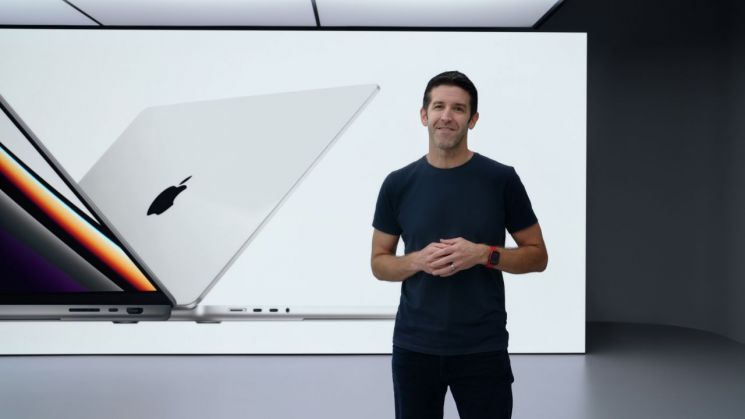
Gelsinger also said that Intel's semiconductors could be used again in Apple products or that Apple might want to outsource semiconductor production to Intel.
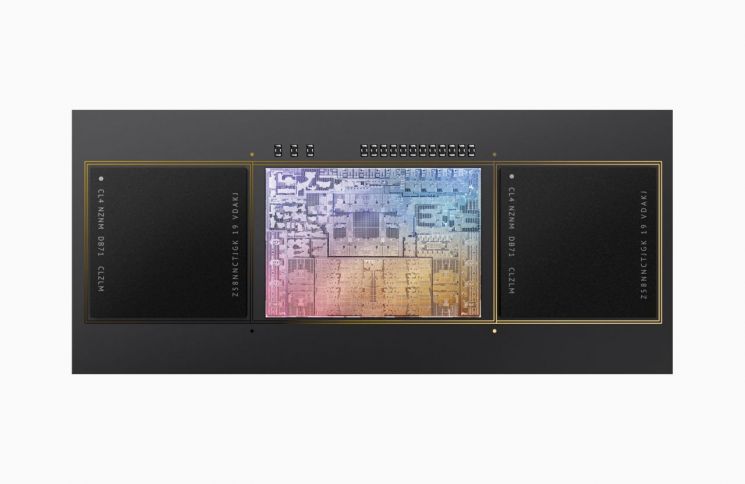 The 'M1 Pro,' an independently designed chip unveiled by Apple on the 18th (local time)
 [Image source=EPA Yonhap News]
Apple used Intel-designed semiconductors in its Mac computer series starting in 2005. However, Apple announced its split from Intel in 2020, stating it would use semiconductors designed by Apple itself in the Mac series, just like in the iPhone and iPad.
Regarding this, Gelsinger said, "Apple believed it could produce better semiconductors than us and actually did well," adding, "All we can do is produce better semiconductors than they do."
He continued, "We will create better products so developers and consumers can settle on Intel-based products," and said, "We will fight hard to beat Apple."
One way he cited to make Intel PCs more attractive was Intel's collaboration with Microsoft (MS) to enable Android applications to run on Windows 11.
Gelsinger also emphasized that semiconductors designed by Apple could be produced at Intel's factories rather than Samsung Electronics or TSMC.
He mentioned Intel's contract manufacturing agreements with Amazon, Qualcomm, and the U.S. Department of Defense, saying, "We hope other companies, including Apple, will also sign production contracts with us."
Intel CEO Gelsinger joined Intel as an engineer at age 18 and worked there for over 30 years, rising to Chief Technology Officer (CTO), the company's second-highest position. He was the youngest vice president in Intel's history.
However, he left for another company in 2009 and served as CEO of software development company VMware from 2012 until returning as Intel CEO earlier this year.
Upon his return, he announced plans to reclaim the semiconductor production market lost to Samsung Electronics and TSMC and pledged to lead mass semiconductor production.
© The Asia Business Daily(www.asiae.co.kr). All rights reserved.



















