NDC Significantly Raised from 26.3% to 40% Compared to 2018
Final Confirmation Scheduled at Next Week's Cabinet Meeting
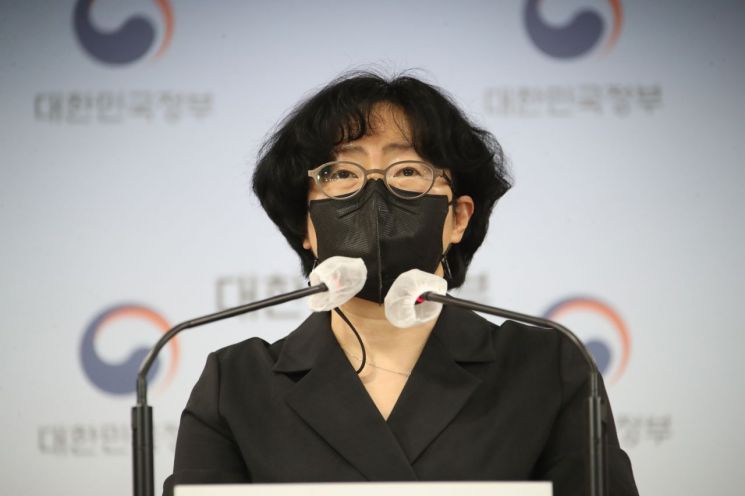 Yoon Soon-jin, Private Chairman of the 2050 Carbon Neutrality Committee. (File photo) [Image source=Yonhap News]
[Sejong=Asia Economy Reporter Joo Sang-don] The Presidential 2050 Carbon Neutrality Committee approved and resolved the '2030 Greenhouse Gas Reduction Target (NDC)' at 40% on the 18th. This came just ten days after proposing the upward revision through an online forum on the 8th.
On the afternoon of the 18th, the Carbon Neutrality Committee held its 2nd plenary meeting at Nodeulseom, Seoul, and announced that it reviewed and approved the proposal to raise the national greenhouse gas reduction target for 2030. The committee proposed to the government a significant increase in the NDC to a 40% reduction compared to the total greenhouse gas emissions in 2018, up from the previous 26.3% reduction.
A committee official explained, "Considering Korea's industrial structure, the short time from emission peak to carbon neutrality, and the high annual reduction rate compared to major countries, the 40% target is by no means an easy goal," adding, "However, it reflects the government's strong policy will to achieve carbon neutrality and reduce greenhouse gases."
With the additional NDC increase, Korea must reduce its greenhouse gas emissions from 727.6 million tons in 2018 to 436.6 million tons by 2030, cutting 291 million tons.
By sector, the power conversion sector, which has emitted the most greenhouse gases so far, will see the largest reduction rate. Under the previous NDC, emissions were to be reduced from 269.6 million tons in 2018 to 192.7 million tons in 2030, a 28.5% reduction. However, with the additional NDC increase, the power conversion sector must reduce emissions to 149.9 million tons, a 44.4% reduction compared to 2018.
The government plans to reduce greenhouse gas emissions in the power conversion sector by reducing existing oil and coal power generation, expanding renewable energy generation, and introducing co-firing of zero-carbon fuels such as ammonia. The projected power generation shares by energy source in 2030 are 23.9% nuclear, 21.8% coal, 19.5% liquefied natural gas (LNG), 30.2% renewables, and 3.6% ammonia.
The reduction rate for the industrial sector was also raised from 6.4% to 14.5%. As reduction measures, the government proposed replacing new and expanded steel facilities with electric furnaces and early commercialization of future technologies such as coke consumption heat reduction technology. For petrochemicals, the plan includes switching to eco-friendly raw materials and expanding the use of waste plastics as raw materials through resource circulation. For cement, key reduction methods include improving energy efficiency of preheaters and coolers and switching to eco-friendly fuels (from bituminous coal to waste plastics, LNG to electricity).
The building sector will reduce greenhouse gas emissions from 41.9 million tons to 35 million tons through energy efficiency improvements, the spread of high-efficiency equipment, and demand management. For transportation, the main measure is the spread of eco-friendly vehicles, reducing emissions from 98.1 million tons in 2018 to 61 million tons in 2030.
The government will make every effort to discover additional domestic reduction measures but will use international reductions as a supplementary means to achieve the target. To this end, it plans to activate bilateral cooperation utilizing free trade agreements (FTA) and official development assistance (ODA), strengthen multilateral cooperation through expanded participation in international platforms, and maximize the use of international carbon markets linked with the private sector.
The 2030 NDC upward revision proposal approved on this day is scheduled to be finalized after the Cabinet meeting on the 27th. It will then be officially announced to the international community at the 26th United Nations Climate Change Conference of the Parties (COP26) scheduled to be held in Glasgow, UK, in early November.
© The Asia Business Daily(www.asiae.co.kr). All rights reserved.
![Clutching a Stolen Dior Bag, Saying "I Hate Being Poor but Real"... The Grotesque Con of a "Human Knockoff" [Slate]](https://cwcontent.asiae.co.kr/asiaresize/183/2026021902243444107_1771435474.jpg)
















