[Asia Economy Reporter Yu Je-hoon] As the global carbon neutrality trend strengthens 'eco-friendly' policies in the complete vehicle industry, domestic and international automakers are gaining attention by continuously introducing everyday products made from automotive waste and eco-friendly materials.
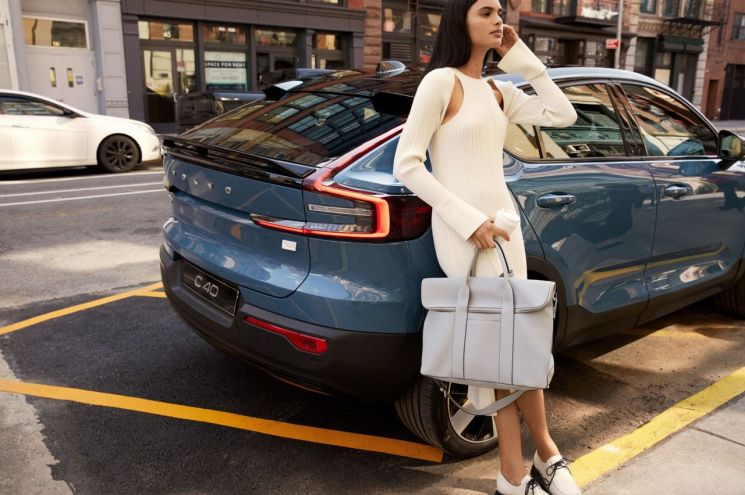
According to the industry on the 17th, Volvo Cars recently unveiled a limited edition Weekend Bag made from next-generation eco-friendly interior materials in collaboration with the fashion brand '3.1 Phillip Lim.'
This Weekend Bag was made using Volvo Cars' next-generation eco-friendly interior material called 'Nordico.' It is an innovative material made from textiles recycled from PET bottles, bio-based materials sourced from forests in Sweden and Finland, and cork recycled from the wine industry.
Volvo Cars has announced plans to complete a fully circular business by 2040, using Nordico materials in new cars and continuously replacing many materials currently widely used in the automotive industry with high-quality sustainable sources.
Robin Page, Head of Design at Volvo Cars, said, "We have a vision for the future Volvo Cars to use sustainable, nature-friendly, and recycled materials. This collaboration has strengthened our vision to use tomorrow's materials together with the broader design industry. From creating runway collections to car interiors, we share a collective responsibility to find alternatives in sustainable materials."
The domestic industry is no different. Hyundai Motor Company also conducted the 'Restyle 2021' project with global fashion edit shops such as Boon the Shop and Leclaire, unveiling products upcycled from automotive materials. They showcased 12 types of clothing, including jackets, hoodies, and pants, made from various automotive waste and eco-friendly materials from the Ioniq 5.
In particular, this project utilized not only automotive waste such as airbags and seat belts but also eco-friendly materials applied to the Ioniq 5, including recycled yarn and bio PET yarn. Recycled yarn is made by crushing and processing transparent PET bottles, and bio PET yarn is made using bio components extracted from sugarcane, corn, and other sources.
Hyundai previously started by unveiling clothing upcycled from discarded leather seats in New York in 2019 in collaboration with the U.S. eco-friendly brand 'Zero + Maria Cornejo.' Last year, they collaborated with six global fashion brands including 'Alighieri' and 'ELV Denim' to showcase jewelry and vests made from automotive waste, creating a stir in both the fashion and automotive industries.
The complete vehicle industry's challenge to upcycling is in line with the global 'carbon neutrality' trend. Just as power sources are shifting from traditional petroleum to electricity and hydrogen to reduce carbon emissions, efforts to eco-friendliness and upcycling of materials continue in vehicle bodies as well.
© The Asia Business Daily(www.asiae.co.kr). All rights reserved.
![Clutching a Stolen Dior Bag, Saying "I Hate Being Poor but Real"... The Grotesque Con of a "Human Knockoff" [Slate]](https://cwcontent.asiae.co.kr/asiaresize/183/2026021902243444107_1771435474.jpg)
















