Stepwise Reduction, Complete Abolition, and Other Options Also Discussed
[Asia Economy Reporter Kwangho Lee] The government plans to include a measure to ease the prepayment penalty fees on policy mortgages in its high-intensity household debt management plan to be announced immediately after the National Assembly audit. The most likely option is to reduce the current 1.2% fee to 0.6%, with phased reductions and complete abolition also being discussed.
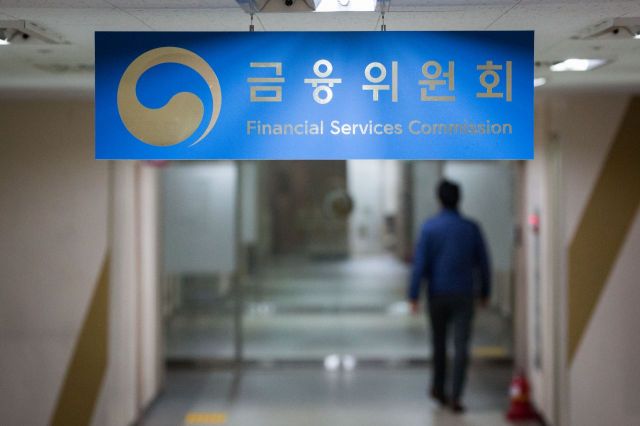
According to financial authorities and the financial sector on the 14th, the Financial Services Commission is considering reducing the prepayment penalty fees on policy mortgages as one of the alternatives to curb the rapid increase in household debt.
At the National Assembly audit on the 6th, Financial Services Commission Chairman Ko Seung-beom responded to a question from Kim Byung-wook, a member of the Democratic Party of Korea, about the intention to abolish the prepayment penalty fees on policy mortgages by saying, "We are considering lowering the prepayment penalty fees on policy mortgages, which are currently up to 1.2%, to about half, around 0.6%," adding, "The monthly repayment amount for policy mortgages has decreased significantly, causing the outstanding balance to increase rapidly. It seems necessary to lower the fee somewhat."
Chairman Ko's remarks are interpreted as an effort to prevent the total loan volume from increasing by encouraging borrowers who can repay early but hesitate due to fees to prepay their loans. In other words, by opening an exit for faster loan repayment, the plan aims to increase the total household loan limit.
A financial authority official said, "We are setting the direction and conducting consultations," adding, "The final decision will be made after discussions between the ruling party and the government."
The issue of prepayment penalty fees on policy mortgages has been pointed out several times but has not been designated for change. It is a recurring topic every year during the National Assembly audit.
According to data received by Min Hyung-bae, a member of the Democratic Party of Korea, from the Financial Supervisory Service, the Korea Housing Finance Corporation earned 203.1 billion KRW in prepayment penalty fees from 2016 to the first half of this year.
This amount exceeds the average prepayment penalty fee income of 129.7 billion KRW earned by the five major commercial banks?KB Kookmin, Shinhan, Hana, Woori, and NH Nonghyup?during the same period.
By year, the Korea Housing Finance Corporation's prepayment penalty fee income sharply decreased from 70 billion KRW in 2016 to 35.7 billion KRW in 2017 and 21.1 billion KRW in 2018. However, it increased again to 33 billion KRW in 2019 and recorded 31.6 billion KRW last year. The first half of this year saw 11.7 billion KRW.
The 11.7 billion KRW earned by the Korea Housing Finance Corporation in prepayment penalty fees in the first half of this year is about 1.4 times the average of 8.7 billion KRW earned by the five major commercial banks during the same period.
Prepayment penalty fees are fees that borrowers must pay when repaying loans before the agreed maturity date. The Korea Housing Finance Corporation charges up to 1.2% fees to borrowers who prepay their Bogeumjari Loan, Didimdol Loan, or Qualified Loan within three years.
© The Asia Business Daily(www.asiae.co.kr). All rights reserved.

















