Coal Demand Plummeted During Trump Era Surges for First Time in 8 Years
China Mobilizes to Stabilize Coal Supply... Requests Expanded Supply from Mongolia
Macron Also Shifts from Nuclear Phase-Out to Expansion... 1 Billion Euro Investment
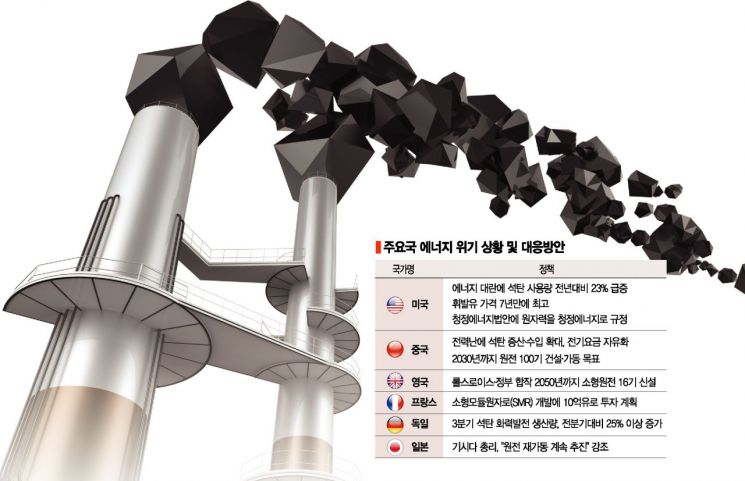
[Asia Economy Beijing=Correspondents Youngshin Cho, Hyunwoo Lee, Suhwan Kim] Analyses are emerging that the climate change policies, which were strongly promoted mainly in the US and Europe at the beginning of the year, are now facing challenges due to the global energy crisis caused by the sharp rise in oil and natural gas prices. In particular, coal usage is increasing again in advanced countries such as the US, Germany, France, and the UK, which were leading the coal phase-out and nuclear phase-out trends. With the harsh winter expected and elections looming, major advanced countries are rapidly abandoning or shifting their nuclear phase-out policies.
◆ US and Germany, once advocating ‘carbon neutrality,’ see a surge in coal usage
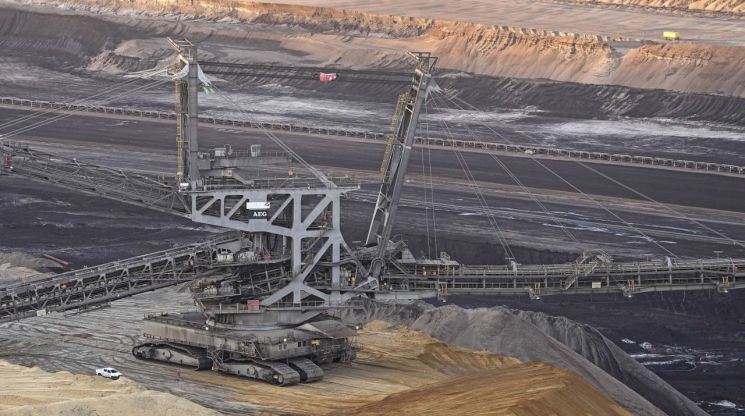
On the 12th (local time), the US Energy Information Administration (EIA) announced that coal usage in the US is expected to reach 537 million tons this year, an increase of more than 23% compared to the previous year. This is the first increase in US coal usage in eight years since 2013.
According to Bloomberg News, US coal usage had decreased by more than 36% after the Trump administration, which encouraged fossil fuel use, took office. Bloomberg pointed out that "coal fuel is making a comeback under the Joe Biden administration, which was supposed to promote eco-friendly policies," calling it a very ironic situation.
The surge in US coal demand is attributed to the global energy crisis caused by recent supply issues with oil and natural gas. Demand is shifting to coal, which remains a relatively inexpensive energy source. Bloomberg also reported that the share of coal among major power generation energy sources in the US is expected to rise from 20% last year to 24% this year.
Germany, known as a leading country in carbon neutrality in Europe, has also seen a recent surge in coal usage. According to Euronews, electricity generation from coal-fired power plants such as lignite in Germany reached 35.1 terawatt-hours (TWh) in the third quarter of this year, an increase of more than 25% compared to the second quarter. This is due to the sharp rise in oil and natural gas prices since July, which led to a significant increase in the use of relatively cheap lignite.
Previously, the German government succeeded in reducing the share of nuclear power generation from 20% to 11% last year by emphasizing decarbonization and nuclear phase-out, but the share of thermal power generation has not decreased much. According to the Associated Press, thermal power accounted for 23.8% of Germany’s electricity generation this year, still the second highest share after renewable energy sources such as hydro, wind, and solar power, which make up 35%.
◆ China, facing power shortages, reaches out to Mongolia for coal
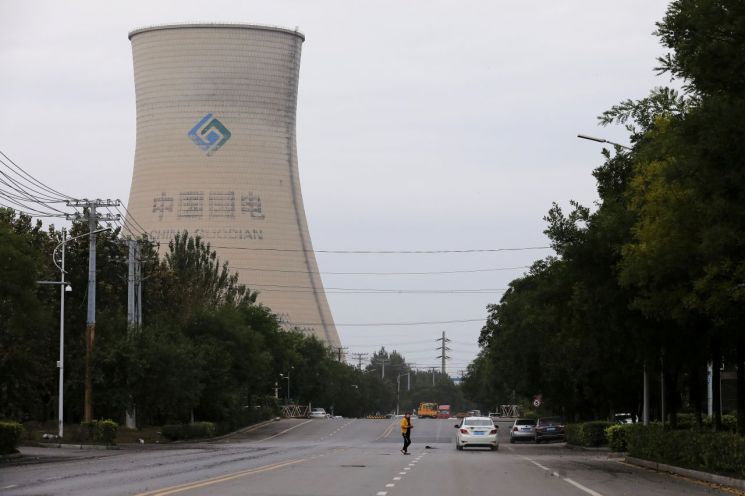
China, already experiencing severe power shortages, is putting all its efforts into diplomatic efforts to secure coal import networks. According to Chinese state media such as Xinhua News Agency on the 13th, Chinese Premier Li Keqiang held a video call with Mongolian Prime Minister Oyun-Erdene the day before, discussing ways to expand trade and economic cooperation between the two countries while requesting an increase in coal supply.
During the call, Premier Li emphasized, "Energy security is directly linked to the lives of the people in both countries. Enterprises from both countries must establish long-term and stable energy supply chains based on market principles," expressing hope for diverse energy cooperation with Mongolia. Given that some regions in China are implementing power rationing due to coal shortages, Premier Li’s request for increased coal supply is interpreted as a subtle appeal.
Earlier, the Chinese government urgently imported 136,000 tons of coal from Kazakhstan. The Chinese State Council also announced that it would raise the cap on electricity price increases from the current 10-15% to 20% to alleviate the power shortage.
China is also pursuing large-scale nuclear power plant construction to reduce dependence on thermal power. In June, the Chinese government announced in its national five-year plan that it would build 100 nuclear reactors by 2050, including the development of Small Modular Reactors (SMRs).
◆ Macron’s U-turn on ‘nuclear phase-out’: "1.4 trillion won for SMR development"
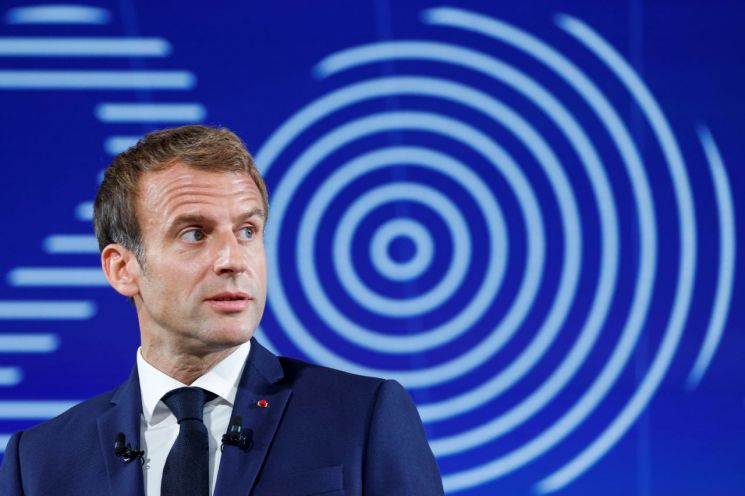
French President Emmanuel Macron, who had made nuclear phase-out a key campaign pledge, completely reversed his stance by announcing a policy to expand nuclear power.
On this day, President Macron announced the ‘France 2030’ project, investing 30 billion euros (about 41 trillion won) in key industries such as Small Modular Reactors (SMRs), electric vehicles, and pharmaceuticals, emphasizing increased investment in nuclear power. According to the project, the French government plans to invest 1 billion euros (about 1.4 trillion won) in SMR development and nuclear power investment.
Previously, after his election in 2017, President Macron had announced plans to reduce the share of nuclear power in France’s electricity production from the current 75% to 50% and to close 14 aging nuclear reactors. However, as the energy crisis deepened, he appears to have shifted to a nuclear expansion policy that directly contradicts his earlier stance.
The UK, known alongside France as a leading European country advocating nuclear phase-out, also officially declared the abandonment of its nuclear phase-out policy by recently announcing additional nuclear power plant construction. According to the UK daily The Times, the UK government announced on the 26th of last month plans to build 16 small nuclear reactors in central England in partnership with the Rolls-Royce consortium.
Japan, which had led nuclear plant closures following the 2011 Fukushima nuclear accident, is also restarting nuclear reactors. Japanese Prime Minister Fumio Kishida emphasized at the House of Representatives plenary session held on the afternoon of the 11th that "restarting nuclear power plants is very important."
© The Asia Business Daily(www.asiae.co.kr). All rights reserved.



















