Statistics Korea Announces September Employment Trends... Number of Employed Increased by 671,000 Compared to Last Year
Self-Employed and Daily Workers Still Face Challenges in Employment Vulnerable Groups
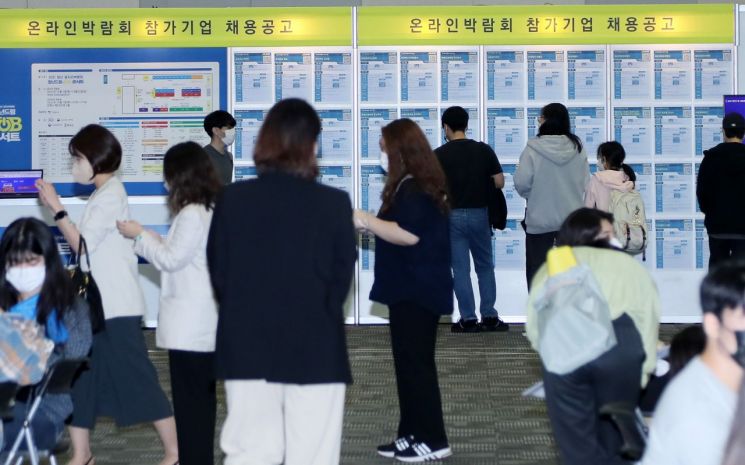
[Sejong=Asia Economy Reporter Kim Hyun-jung] Despite the steady increase in COVID-19 confirmed cases, the number of employed persons last month rose at the fastest pace in 7 years and 6 months. This was due to improvements in vaccination rates and strong exports, coupled with an increase in employment in non-face-to-face and digital-related sectors, as well as a turnaround to growth in some face-to-face service industries, indicating that the employment market has already entered the 'With COVID' phase.
According to the 'September 2021 Employment Trends' released by Statistics Korea on the 13th, the number of employed persons last month was 27,683,000, an increase of 671,000 compared to the same month last year. The employment increase trend that began in March has continued for seven consecutive months, and in terms of the increase scale, it was the largest jump in 7 years and 6 months since March 2014 (726,000).
Jung Dong-myung, Director of the Social Statistics Bureau at Statistics Korea, explained, "September employment increased due to the base effect of non-face-to-face digital transformation and strong exports, and the number of unemployed and economically inactive population decreased, showing a continued recovery trend in employment."
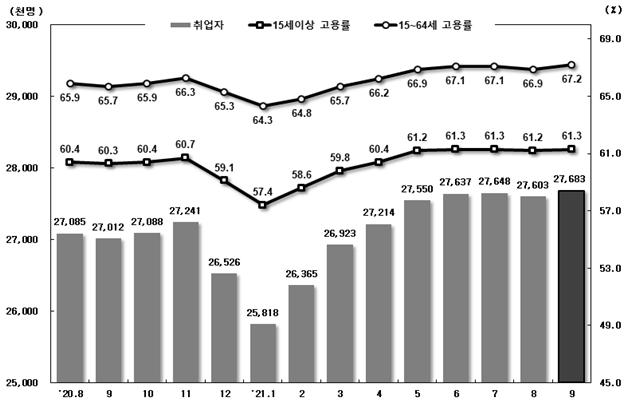
◆ Despite the 4th wave, private sector jobs increased significantly = The number of employed persons steadily declined from March last year, immediately after the COVID-19 outbreak, but turned to increase from March this year, one year later, thanks to the base effect and other factors. As a result, the overall employment rate for those aged 15 and over rose to 61.3%, up 1.0 percentage point compared to the same month last year.
The number of unemployed persons was 756,000, down 244,000 from a year earlier. The unemployment rate fell by 0.9 percentage points to 2.7%, marking the lowest level in eight years since September 2013 (2.7%) for the same month. The economically inactive population was 16,685,000, decreasing by 132,000, marking seven consecutive months of decline since March.
By industry, the number of workers in health and social welfare services surged by 280,000, transportation and warehousing increased by 163,000, and education services rose by 98,000 last month. Notably, accommodation and food services, a representative face-to-face service industry, turned to growth (39,000) three months after the 4th wave of COVID-19, which is significant. On the other hand, the number of workers in wholesale and retail trade decreased by 122,000, and those in associations, repair, and other personal services decreased by 41,000. The number of manufacturing workers also declined by 37,000.
By working hours, those working 36 hours or more increased by 412,000 compared to a year ago, and those working less than 36 hours increased by 653,000. The average weekly working hours were 39.1 hours, down 0.1 hours from the same month last year.
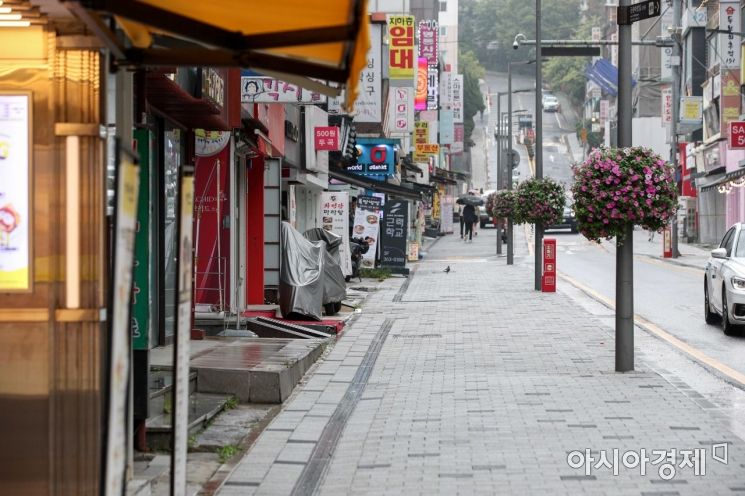 As non-face-to-face classes continue due to COVID-19, the worries of merchants in university commercial districts are deepening. On the 8th, the commercial area near Ewha Womans University in Seodaemun-gu, Seoul, showed a quiet scene due to the absence of students. Photo by Jinhyung Kang aymsdream@
◆ Solo entrepreneurs still increasing... self-employment struggles = However, the situation remains difficult for vulnerable employment groups such as self-employed and temporary workers.
Among non-wage workers, self-employed without employees, or 'solo entrepreneurs,' increased by 22,000, but self-employed with employees decreased by 48,000. The decrease in self-employed with employees includes those who have closed their businesses or laid off employees and are now working alone. By employment status, among wage workers, permanent employees increased by 515,000, temporary workers by 340,000, but daily workers decreased by 121,000.
By age group, those in their 30s decreased by 12,000, showing a continuous decline for 19 consecutive months since March last year. Those aged 60 and over increased by 323,000, those in their 20s by 202,000, those in their 50s by 124,000, and those in their 40s by 18,000. The government explained that the decrease in employment among those in their 30s is actually an increase when considering the natural decrease in employed persons due to population decline (-139,000). The employment rate for those in their 30s improved, with the increase rate rising from 0.3 percentage points last month to 1.3 percentage points.
Regarding this, Hong Nam-ki, Deputy Prime Minister and Minister of Economy and Finance, said, "We will strengthen policy efforts to quickly achieve a full economic recovery where the number of employed persons recovers to pre-COVID-19 levels this year, and the economy, employment, and people's livelihoods all improve steadily." He added, "By expanding vaccination and moving toward a phased return to daily life that balances quarantine and the economy, we will reduce the uncertainty in the employment market caused by quarantine measures."
© The Asia Business Daily(www.asiae.co.kr). All rights reserved.



















