[Seoul District News] Gwanak-gu Opens 600㎡ Electric Wheelchair Practice Facility with Systematic Safety Training... Gwangjin-gu Establishes Home Treatment Task Force (Health Management and Isolation Teams) with Twice-Daily Monitoring and Emergency Support... Yongsan-gu Publishes COVID-19 Response White Paper... Yangcheon-gu to Close COVID-19 Vaccination Center by End of October
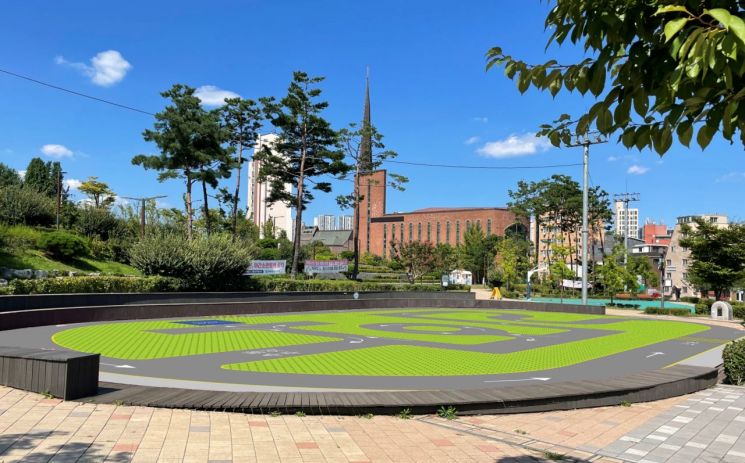
[Asia Economy Reporter Park Jong-il] Gwanak-gu (Mayor Park Jun-hee) announced plans to install a dedicated driving practice ground for electric wheelchairs and operate safety education courses to prevent safety accidents and improve driving skills for mobility-impaired individuals.
Electric mobility aids such as electric wheelchairs and electric scooters are classified as pedestrians under relevant laws and must travel on sidewalks. However, due to risks of collisions with pedestrians, obstacles, and narrow sidewalks, users are often forced onto the road, exposing them to accident risks.
Despite the increasing number of users, mainly elderly and severely disabled individuals, there is no education beyond the user manual, and operation is possible without a separate license or safety training, making the establishment of safety policies urgent.
Accordingly, the district plans to install a dedicated driving practice ground for electric mobility aids to help users learn traffic regulations and master operation skills, and to operate systematic safety education courses.
This is the first time a local government has directly installed a dedicated practice ground for electric wheelchairs nationwide. The practice ground will be installed on a 600㎡ site within Nakseongdae Outdoor Playground in Gwanaksan Neighborhood Park.
Starting with related ordinance amendments in November, construction will be completed by March next year, with full operation beginning in April.
Safety education will combine theory and practice, providing comprehensive and diverse training on usage and management of electric mobility aids, safety rules, accident response methods, and road traffic safety regulations.
Additionally, wheelchair experience classes will be offered not only to people with disabilities but also to welfare facility staff, students, and general residents to improve public awareness and understanding of electric mobility aid users, contributing to the establishment of a safe road traffic culture for all.
Opposite the practice ground is the Nakseongdae Park Gateball Court (620㎡), where people with and without disabilities enjoy sports activities together.
The district adopted a resident participation budget proposal to install rain shelters so that activities can continue during rain or winter, and is proceeding with maintenance work on the gateball court, including installing membrane structures and rest facilities, aiming to complete it within this year.
With the installation of the wheelchair practice ground and the refurbishment of the gateball court, various physical activities linking the two facilities will become possible, greatly benefiting the health promotion of people with disabilities and the elderly.
The district conducted a full survey and comprehensive maintenance of convenience facilities for the disabled, such as braille tactile blocks around subway Line 2 stations, to ensure comfortable walking for people with disabilities. It plans to continue implementing user-centered policies reflecting the lives and realities of transportation-vulnerable groups, including people with disabilities.
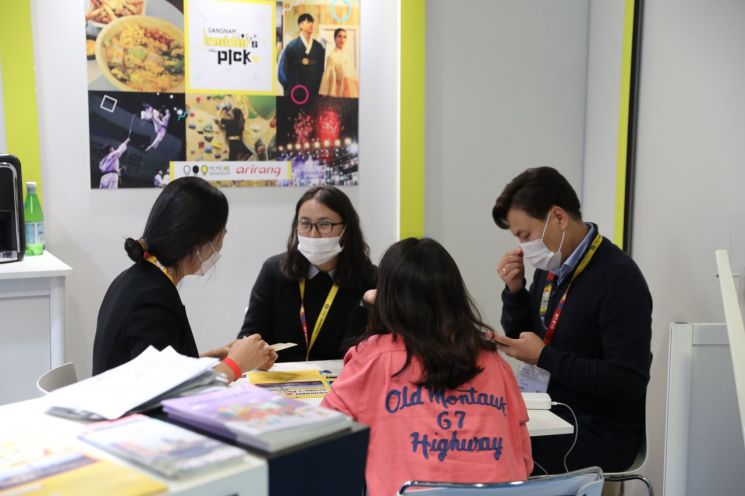
Gangnam-gu (Mayor Jung Soon-gyun) will participate in the world’s largest video content exhibition, ‘2021 MIPCOM,’ held in Cannes, France, from the 11th to the 14th (local time), operating the only East Asian promotional booth under the title ‘Gangnam Insider’s Picks.’
Since 2019, Gangnam-gu has been producing ‘Gangnam Insider’s Picks,’ covering Gangnam’s history, culture, and tourism, jointly with Arirang TV, currently airing Season 3, to promote Gangnam globally.
Through the promotional booth, Gangnam-gu plans to promote the content to 5,870 participants from 2,716 companies worldwide (as of the 12th), providing the programs free of charge to secure overseas export channels.
Lee Ki-ho, Director of Policy Promotion Office, said, “Despite COVID-19, Gangnam-gu under the 7th elected administration is promoting ‘cultural and tourism city’ Gangnam with high-quality video content. We hope participation in MIPCOM will serve as an opportunity for more foreign tourists to visit Gangnam.”
‘Gangnam Insider’s Picks’ is broadcast to 83 million households in 29 countries via Channel NewsAsia and to 142 million households in 103 countries via Arirang TV, establishing the global image of Gangnam. MIPCOM is an exhibition attended by video distribution and production professionals worldwide, held annually in October in Cannes, the ‘city of cinema.’
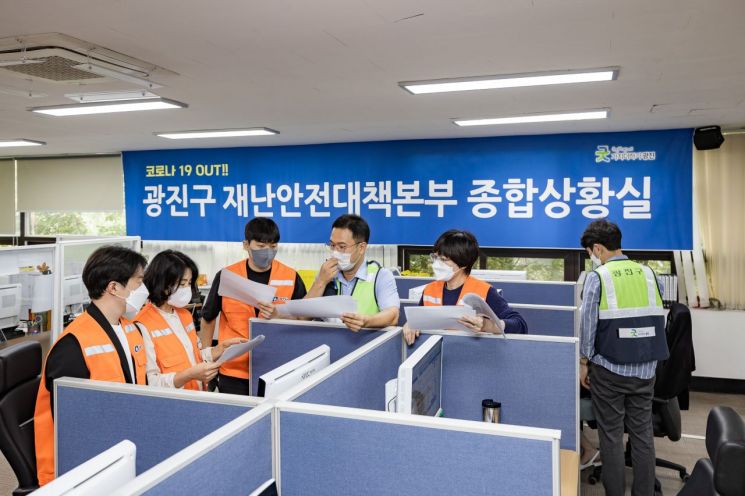
Gwangjin-gu (Mayor Kim Seon-gap) has established a home treatment system amid the overload of the medical system due to a surge in confirmed COVID-19 cases and bed shortages.
The district reorganized the Disaster and Safety Countermeasures Headquarters’ comprehensive situation room, newly establishing an isolation management team and a health management team dedicated to home treatment management.
Previously, the Gwangjin-gu Disaster and Safety Countermeasures Headquarters operated with five working teams (situation management, living support, field inspection, welfare facility management, self-quarantine monitoring) and two call centers (vaccination, quarantine). With the recent implementation of home treatment, the isolation management and health management teams were newly created and reorganized.
The existing situation management team and self-quarantine monitoring team remain unchanged, while the field inspection team’s function was strengthened to focus on quarantine complaint field inspections.
With dedicated teams for home treatment, the total number of working teams changed to four. The call centers remain as before, and the living support and welfare facility management teams were transferred to departments.
The ‘isolation management team’ handles delivery of home treatment kits, essential daily necessities and medications for confirmed patients, and monitors app-based quarantine compliance.
The ‘health management team’ cooperates with three local medical institutions to monitor home treatment patients twice daily and supports emergency transport and treatment when needed.
The reorganized comprehensive situation room will operate until the end of the COVID-19 situation, from 9 a.m. to 9 p.m. on weekdays and 9 a.m. to 6 p.m. on weekends and holidays.
Gwangjin-gu Mayor Kim Seon-gap said, “Due to the spread of the Delta variant and the surge in confirmed cases, the medical system is overloaded with bed shortages. Accordingly, Gwangjin-gu has expanded the dedicated organization for managing mild and asymptomatic confirmed patients under home treatment to thoroughly manage COVID-19 patients.”
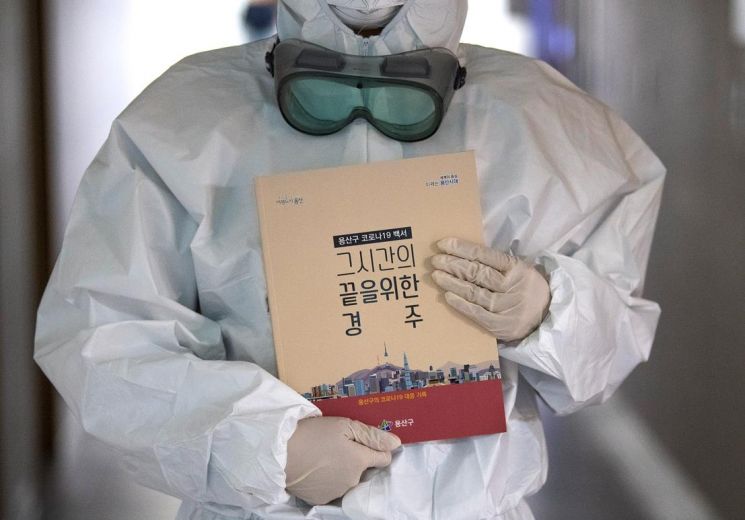
Yongsan-gu (Mayor Seong Chang-hyun) will publish and distribute the ‘Yongsan-gu COVID-19 White Paper’ (hereafter ‘COVID-19 White Paper’) starting from the 13th. It aims to serve as a guideline for effective response by both public and private sectors in future infectious disease outbreaks.
The ‘COVID-19 White Paper’ is a report containing Yongsan-gu’s COVID-19 response process and key cases. It is organized into sections: Introduction, COVID-19 Overview, Yongsan-gu Quarantine Activities, Damage Recovery Support, Resident Publicity, Administrative Operations, Vaccination, Quarantine Best Practices, and Appendix. It is A4 size, 440 pages, double-sided color, with 500 copies produced.
The district established a quarantine task force and screening clinics immediately after the first domestic COVID-19 case on January 20 last year. Seven days later, the Disaster and Safety Countermeasures Headquarters began full operation, with all Yongsan-gu public officials fully committed to COVID-19 response to date.
The introduction includes a timeline and photos of Yongsan-gu’s COVID-19 response from January last year to June this year. One page covers an overview of COVID-19, domestic and international status, response system establishment, screening clinic operation, and self-quarantine management.
Section 2 covers quarantine response direction, Disaster and Safety Countermeasures Headquarters operation, major quarantine inspection cases, and support for supplies and donations. Section 3 includes damage recovery support such as emergency living expenses, jobs, small business support, diversified resident communication like disaster text alerts and disclosure of confirmed cases, quarantine-centered administrative operations, and vaccination promotion.
Section 4 introduces best practices such as the intensive response to the Itaewon club cluster infection, drive-through and walk-through screening clinics on US military base land, special quarantine measures for Halloween and multinational foreign gatherings, special measures to support dining businesses, and a 5 billion KRW emergency management fund for small businesses.
The appendix contains memoirs from department heads who led quarantine systems and frontline staff, as well as an encouragement message from the mayor.
The district will distribute the white paper to all departments, community service centers, the district council, and related organizations. Yongsan-gu Mayor Seong Chang-hyun said in the foreword, “We published the white paper inspired by the meaning of ‘Jingbirok,’ which means learning from past mistakes to prevent future worries. Just as the insight from 500 years ago guided us, we hope Yongsan-gu’s COVID-19 response record will serve as a beacon for future generations.”
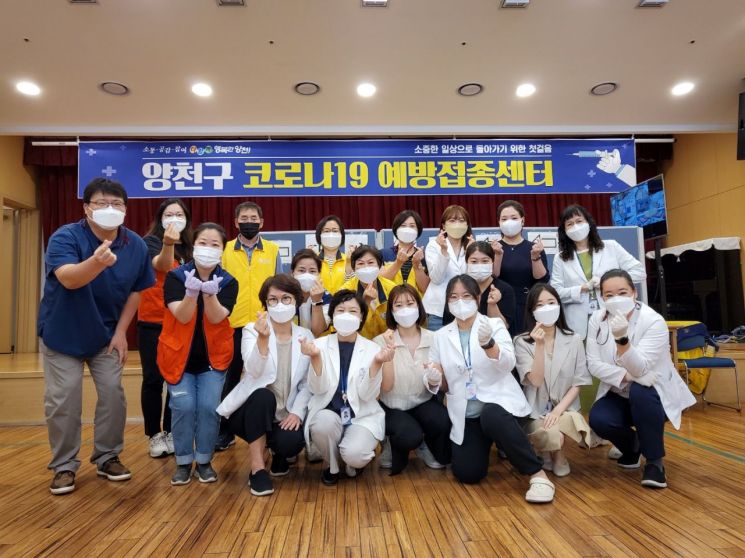
Yangcheon-gu (Mayor Kim Soo-young) announced it will end the operation of COVID-19 vaccination centers by the end of October.
The first vaccination center at Haenuri Town will operate until October 30, and the second vaccination center at the Health Healing Culture Center will close on October 23, concluding 198 days of COVID-19 vaccination operations.
The district operated two vaccination centers regionally to ensure rapid vaccination of high-risk groups before the vaccination system was stabilized in local private medical institutions. The first center opened on April 15 at Haenuri Town, and the second began operation on July 5 at the Health Healing Culture Center.
To operate the vaccination centers, the deputy mayor led a task force, and all Yangcheon-gu departments collaborated to efficiently carry out vaccination tasks. Cooperation with related agencies such as the police and military ensured safe vaccine transport and management, and the Yangcheon Fire Station provided professional personnel and ambulances for rapid response to adverse reactions.
Volunteer activities by the Yangcheon Volunteer Center helped elderly and severely disabled recipients receive comfortable guidance and safe vaccination.
A total of 161 personnel (43 medical staff, 118 administrative support) were deployed across the two centers, handling pre-screening forms, registration and vaccination, vaccine management, adverse reactions, and form registration. Each center employed six doctors, enabling about 1,000 vaccinations per day.
In the second quarter (April-June), the first center began vaccinations for seniors aged 75 and older and residents of elderly welfare facilities. Consent forms were collected at community centers, appointments scheduled, and buses provided for convenience, vaccinating 20,464 seniors aged 75 and above. The vaccination rate was 85% of the registered population (23,892) and 97.5% of those who consented (20,982).
In the third quarter (July-September), vaccinations targeted vulnerable care workers, teachers, high school seniors and college entrance exam takers, academy and transportation workers, employees of multi-use facilities such as restaurants and department stores, and severely disabled individuals. To prevent overload from the rapid increase in eligible recipients, the second vaccination center opened on July 5 at the Health Healing Culture Center, enabling up to 2,500 vaccinations per day across two centers. In the third quarter, 55,078 people (19.6% of 280,000 eligible) were vaccinated at the centers (30,464 at center 1, 24,614 at center 2).
In October, vaccinations continue for those aged 18-49 and unvaccinated adults through entrusted medical institutions and vaccination centers. From April opening to the end of October, the centers are expected to have administered 154,615 vaccinations, serving about 80,000 residents.
The district has continuously signed contracts with medical institutions capable of COVID-19 vaccination, expanding from 5 to 130 sites, establishing a stable vaccination system in the community. The system was improved to allow overseas vaccinated individuals, uninsured, and unregistered foreigners to receive vaccinations at entrusted medical institutions, alleviating concerns about vaccination blind spots after center closures.
After the centers close, the district will conduct regular inspections of vaccinations at entrusted medical institutions to strengthen vaccine management and prevent misadministration.
Yangcheon-gu Mayor Kim Soo-young said, “From the opening of the centers in April to their closure at the end of October, it has been a 198-day journey of united effort to prevent COVID-19 infection. I sincerely thank the center staff, related agencies, volunteers, and residents who followed guidelines with mature civic awareness.”
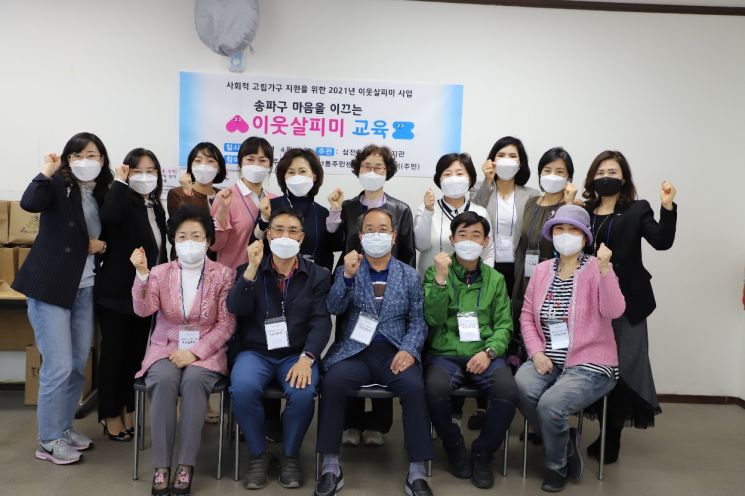
Songpa-gu (Mayor Park Sung-soo) announced on the 13th that it will carry out the ‘Ham-bap Bundle’ support project, providing meal sets to about 50 middle-aged and elderly single-person households in Samjeon-dong, led by the ‘Neighbor Caregivers’ group.
‘Neighbor Caregivers’ is a resident-led project building a tight local safety net through surveys of vulnerable single-person households and prevention of solitary deaths. It is piloted in seven neighborhoods in Songpa-gu. In March this year, 13 residents in Samjeon-dong formed the group and have been conducting monthly home visits and welfare checks for about 50 vulnerable residents living alone in basements and rooftop rooms.
As part of the ‘Neighbor Caregivers’ project, the district planned the ‘Ham-bap Bundle’ support project, meaning ‘Sharing a Meal, Gift of Heart,’ to form safe resident networks for socially isolated households living alone due to prolonged COVID-19 social distancing.
The project provides ‘single meal sets’ (including 8 types and 12 food items such as instant rice, soup, stew, porridge, curry, tuna, and ham) prepared with the spirit of sharing meals with neighbors, to 54 socially isolated and vulnerable middle-aged single-person households in Samjeon-dong.
The ‘Neighbor Caregivers’ will visit target households while observing COVID-19 quarantine rules, deliver the meal sets, check on residents’ well-being, listen to their difficulties, encourage outdoor activities, and provide tailored welfare counseling.
Additionally, through the ‘Neighbor Caregivers’ project, the district strives to strengthen emotional communication and resident bonds by checking on vulnerable groups and middle-aged single-person households. In Samjeon-dong, where 2,500 single-person households aged 50 and above account for 6.4% of the district’s total, support projects such as laundry services and small rest areas for single-person households will be expanded.
Songpa-gu Mayor Park Sung-soo said, “In these times when social isolation is easy due to COVID-19, the ‘Neighbor Caregivers’ activities will greatly help comfort the minds and bodies of low-income residents. We will strive to build a resident network that includes socially isolated vulnerable households so that no one is left out.”
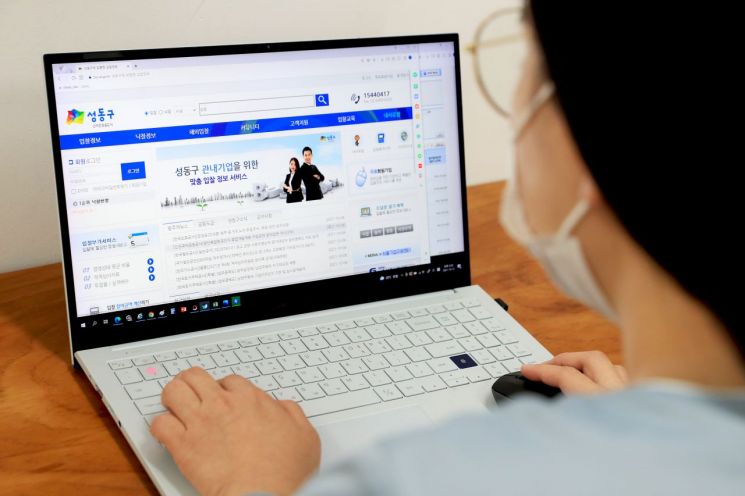
Seongdong-gu (Mayor Jung Won-oh) will officially operate the ‘Customized Bidding Information Service’ from the 13th, allowing local businesses to check nationwide bidding information at a glance.
Previously, local businesses and small merchants found it difficult to invest time and human resources to find suitable bidding information posted on the Public Procurement Service and other sites, often having to use paid private bidding information systems.
The district provides the ‘Customized Bidding Information Service’ to help small merchants easily check bidding information, reducing related costs and lowering entry barriers to bidding, thereby strengthening business competitiveness.
The service provides optimized real-time information on bids and awards from nationwide ordering agencies including the Public Procurement Service’s ‘Nara Market,’ Ministry of National Defense, Korea Expressway Corporation, and private sectors.
Users can set conditions such as period, region, industry, and license to filter information matching their interests and check relevant announcements daily through their company’s weekly schedule.
Users can also separately classify and manage bids of interest to prepare for bidding at any time, and consult on bidding procedures and methods through a professional call center. Future plans include related education by bidding experts to actively support business operations.
Using the service, local businesses and small merchants can reduce costs and increase sales, while the district can monitor statistics such as award rates to develop active management support policies.
The service is free after confirming local business status and registering as a member on the website.
Seongdong-gu Mayor Jung Won-oh said, “Through this service, we hope businesses and small merchants struggling due to prolonged COVID-19 can gain more bidding opportunities, open new sales channels, and contribute to increased sales and cost reduction. We will continue to make active efforts and support to create a business-friendly environment.”
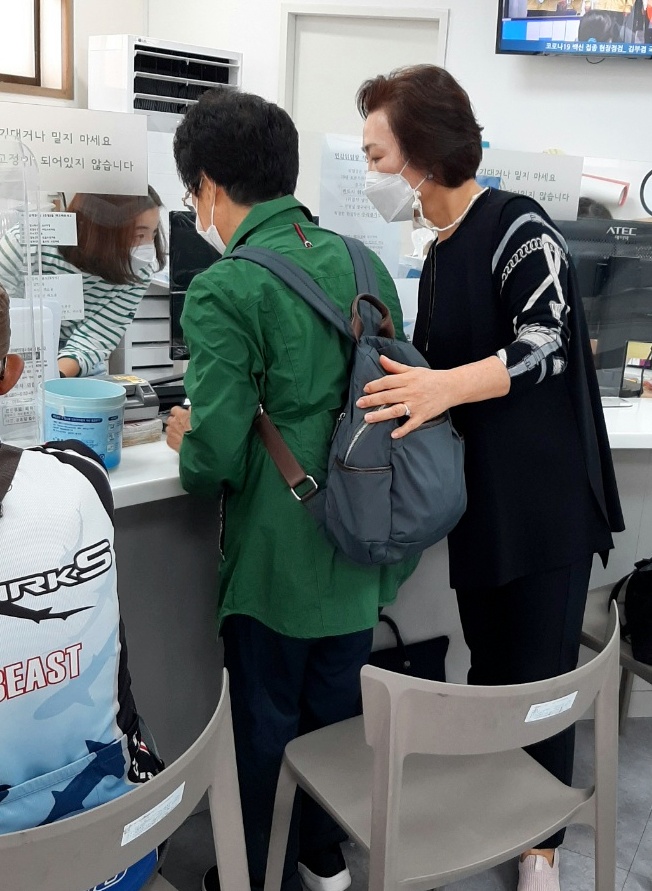
Seodaemun-gu (Mayor Moon Seok-jin) has designated the period from this month to the end of the year as the focused promotion period for the ‘Customized Care Service for the Elderly,’ strengthening the ‘Senior Care Safety Net’ through discovering and supporting new beneficiaries, the district announced on the 13th.
Launched in earnest this year, the service provides tailored care to elderly people who have difficulty with daily living. It targets residents aged 65 or older living alone, in grandparent-grandchild households, or elderly couples who are recipients of basic livelihood security, lower-income brackets, or basic pensions.
Support includes ▲Safety (welfare checks, companionship, safety inspections) ▲Daily life (outings, housework) ▲Social activities (culture, leisure) ▲Life education (health, nutrition, depression prevention). Applications can be made by the individual, relatives, interested parties, or public officials at community service centers. The service period is one year and may be extended as needed.
Before new beneficiary discovery and support, the district conducted a full survey of about 1,100 existing service recipients and formed a ‘Customized Elderly Care Council’ with public officials and welfare experts to discuss continuous care service cooperation.
The district collaborates with community centers, welfare and single-person household departments, and service providers such as Seodaemun Senior Welfare Center and Hyolim Home Care Center to discover beneficiaries.
The goal is to add about 500 new beneficiaries by the end of the year, expanding the total to about 1,600. However, those already receiving similar support such as veterans’ home care services are excluded to avoid duplication.
Seodaemun-gu Mayor Moon Seok-jin said, “We will strengthen the customized elderly care service to ensure safe and comfortable old age for seniors in Seodaemun-gu.”
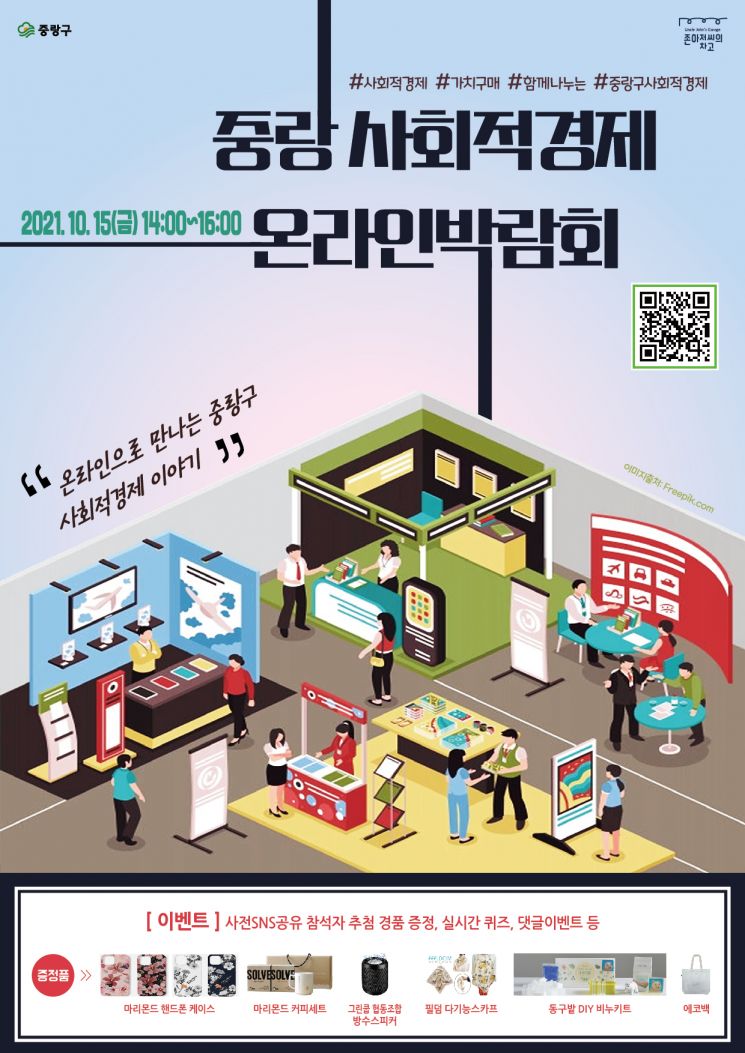
Jungnang-gu (Mayor Ryu Gyeong-gi) announced it will hold an online social economy fair on the 15th to support social economy enterprises facing difficulties in distribution and sales due to COVID-19.
Five local companies will participate, introducing excellent social economy products to residents and public procurement officials. The fair will be held online, accessible via the QR code on the poster.
From 2 p.m. to 4 p.m., a live commerce event will be held with professional show hosts and company staff introducing various social economy products. Products such as multifunctional bags, Haedami fermented extract, and gardening tool bags will be sold on ‘Naver Shopping Live,’ with quiz events adding fun.
Vlogs showing employees’ work life will also be available, providing residents with a friendly glimpse into the daily lives of social economy enterprises.
After the fair, detailed information will be posted on the Jungnang-gu website and the Jungnang Social Economy Support Center blog to encourage continued use of social economy products and services. Support will also be provided for companies to enter dedicated online shopping malls such as ‘Hamkke Nuri’ and ‘e-store 36.5’ to secure stable sales channels.
Jungnang-gu Mayor Ryu Gyeong-gi said, “We hope this fair will make social economy more accessible and enjoyable for residents. We will discover capable social economy enterprises and support their steady growth to build a robust social economy ecosystem.”
The Jungnang Social Economy Support Center near Jungnang Station provides office and shared spaces to help social economy enterprises grow stably. Facilities include offices for resident companies, shared offices, training rooms, and shared studios, available by reservation to anyone.
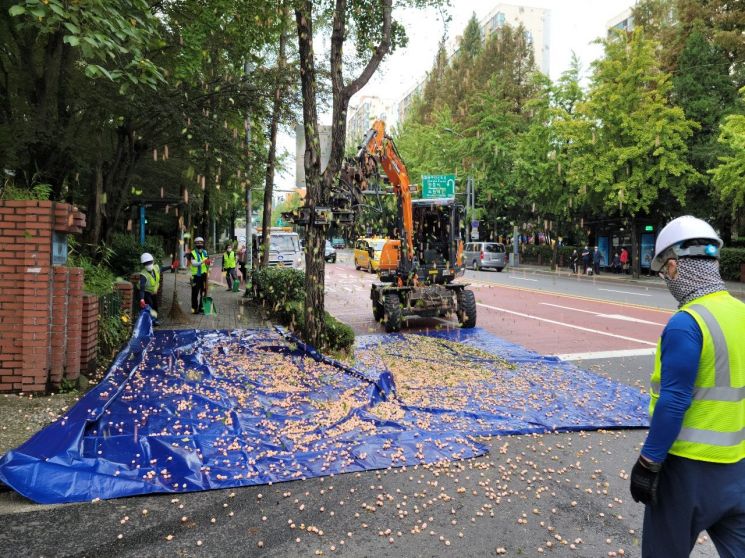
Dobong-gu (Mayor Lee Dong-jin) has introduced a ‘Ginkgo Fruit Vibration Harvester’ and installed ‘Ginkgo Fruit Collection Devices’ at 45 locations in the district to eliminate the foul-smelling ginkgo fruits, a major cause of autumn odors.
Ginkgo trees, which color the autumn city yellow, are representative street trees resistant to pests and pollution, planted throughout the district. However, their fruits emit a foul odor and dirty roads, causing urban nuisance. Of the 4,811 ginkgo street trees in Dobong-gu, 1,090 (22.7%) are female trees that bear fruit.
To minimize residents’ inconvenience from ginkgo fruits before the peak foliage season, the district took measures.
The district replaced the traditional method of shaking fruits with long poles with the ‘Ginkgo Fruit Vibration Harvester,’ improving speed and efficiency. Previously, workers had to climb ladder trucks and hit fruits one by one, but the vibration harvester applies about 800 vibrations per minute to the tree, shaking fruits off, greatly reducing work time and labor.
Especially in areas with many female trees and frequent resident complaints, such as around Changdong Jugong Apartments Complexes 17, 18, and 19 and Madeul-ro (from Daesang Town Hyundai Apartments to Dobong Middle School), 45 ‘Ginkgo Fruit Collection Devices’ were installed. These devices catch fruits in nets to prevent pedestrians from stepping on them or stains on the ground. After collection, devices are dismantled and stored for reuse next year.
The district also formed a ‘Ginkgo Fruit Harvest Task Force’ operating from October to November to collect roadside ginkgo fruits early. The task force handles complaints and focuses on bus stops, subway entrances, commercial areas, and other heavily trafficked places.
The district is gradually replacing female ginkgo trees with male trees that do not bear fruit. Last year, 218 trees were replaced along Dobong-ro, Banghak-ro, and Dobong-ro 154-gil. This year, with a budget of 100 million KRW including resident participation funds, 67 trees along school routes such as Munhwa High School, Sinbanghak Elementary, Changil Elementary, and Changil Middle School will be replaced by mid-October.
Dobong-gu Mayor Lee Dong-jin said, “Many residents suffer inconvenience every year due to ginkgo fruits. We will actively secure available resources such as resident participation budgets to expand collection devices and continue replacing trees with male ginkgo. We will do our best to create a pleasant autumn city to walk in.”
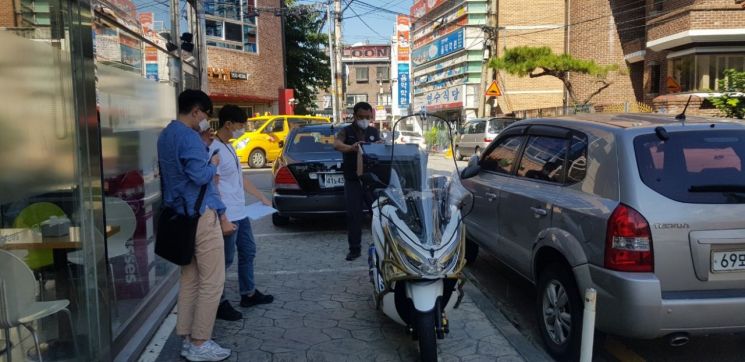
Eunpyeong-gu (Mayor Kim Mi-kyung) will conduct an intensive crackdown on illegally modified two-wheeled vehicles for one month starting from the 15th.
Due to the activation of delivery services amid COVID-19, noise complaints and increased operation of two-wheeled vehicles violating safety standards due to illegal structural modifications have caused inconvenience to residents, prompting this crackdown.
The district plans to conduct joint intensive inspections with the local police at major two-wheeler traffic areas such as side streets and complaint-prone areas.
The crackdown targets illegal tuning (LED lights, unauthorized muffler changes, etc.), safety standard violations, unregistered or damaged license plates, and abandoned two-wheeled vehicles.
Illegally modified two-wheelers caught will face criminal or administrative penalties under the Motor Vehicle Management Act. Illegal modification of mufflers or headlights can result in imprisonment up to one year or fines up to 10 million KRW. Operating without registration or license plates can incur fines up to 1 million KRW, and damaged or obscured license plates up to 3 million KRW.
Residents can also participate in reporting illegal two-wheelers. Reports can be made immediately upon discovery via the Vehicle Civil Service Portal (ecar.go.kr/Index.jsp) → Civil Application → Illegal Vehicle Report, the National Sinmungo or Safety Sinmungo portals, or Eunpyeong-gu Traffic Administration Division.
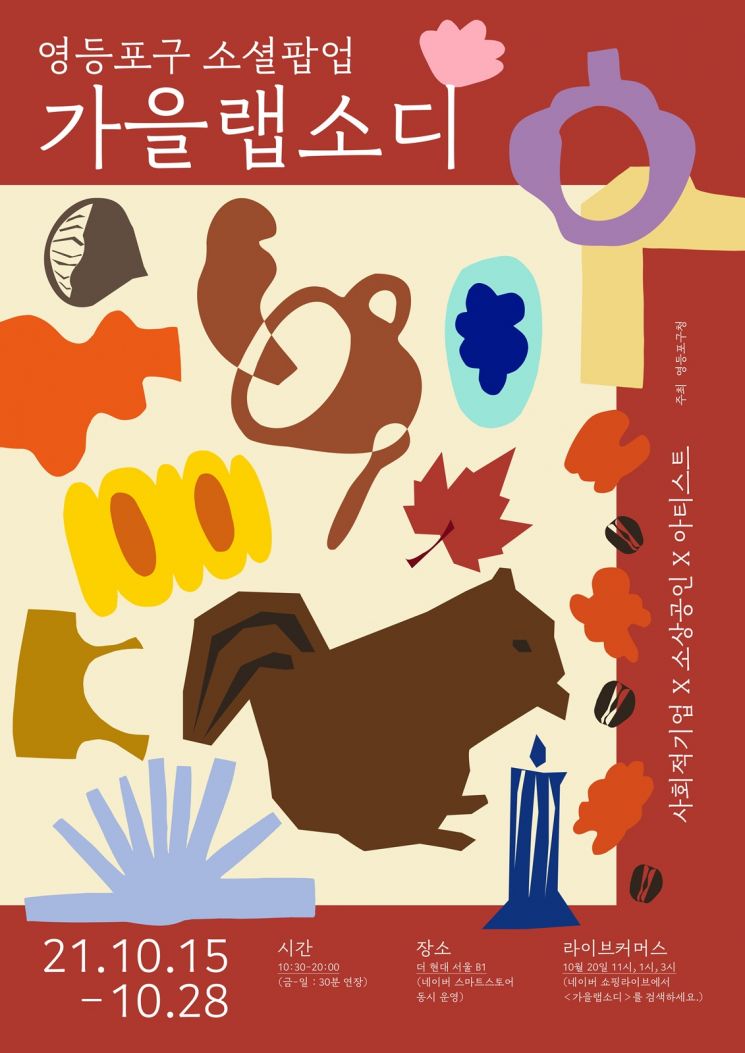
Yeongdeungpo-gu (Mayor Chae Hyun-il) will hold a social pop-up event ‘Autumn Rhapsody’ from the 15th to promote and support sales of excellent products from local social economy enterprises.
The social pop-up ‘Autumn Rhapsody’ aims to help social economy enterprises in Yeongdeungpo-gu, struggling due to COVID-19, find new sales channels and provide residents with opportunities to experience excellent local products.
This event is meaningful as it involves collaboration between the district’s social economy joint brand ‘Popogre’ and local artists to rebrand products and develop storytelling content, improving the image of social value and promoting social economy activation.
The pop-up store will be held from the 15th to the 28th at the underground first floor event hall of The Hyundai Seoul in Yeouido. Local social economy enterprises, small merchants, and artists will participate, showcasing various products evoking autumn moods such as coffee, cookies, poetry collections, candles, and soaps. These products will also be available for purchase on Naver Smart Store during the same period.
Live commerce broadcasting will be conducted three times on October 20 from 11 a.m., allowing residents nationwide to interactively purchase products.
The district expects live commerce to enhance recognition of social economy enterprises, attract new customers, and maximize sales growth.
Live commerce sessions can be accessed by searching ‘Autumn Rhapsody’ on Naver Shopping Live.
The district plans to provide participating companies with recorded sales videos for promotional and marketing use.
Yeongdeungpo-gu Mayor Chae Hyun-il said, “We hope this social pop-up will expand new sales channels and increase sales for local social economy enterprises, helping alleviate economic difficulties caused by COVID-19. We will continue efforts to develop various products and services under the joint brand ‘Popogre’ to promote good consumption and realize social value.”
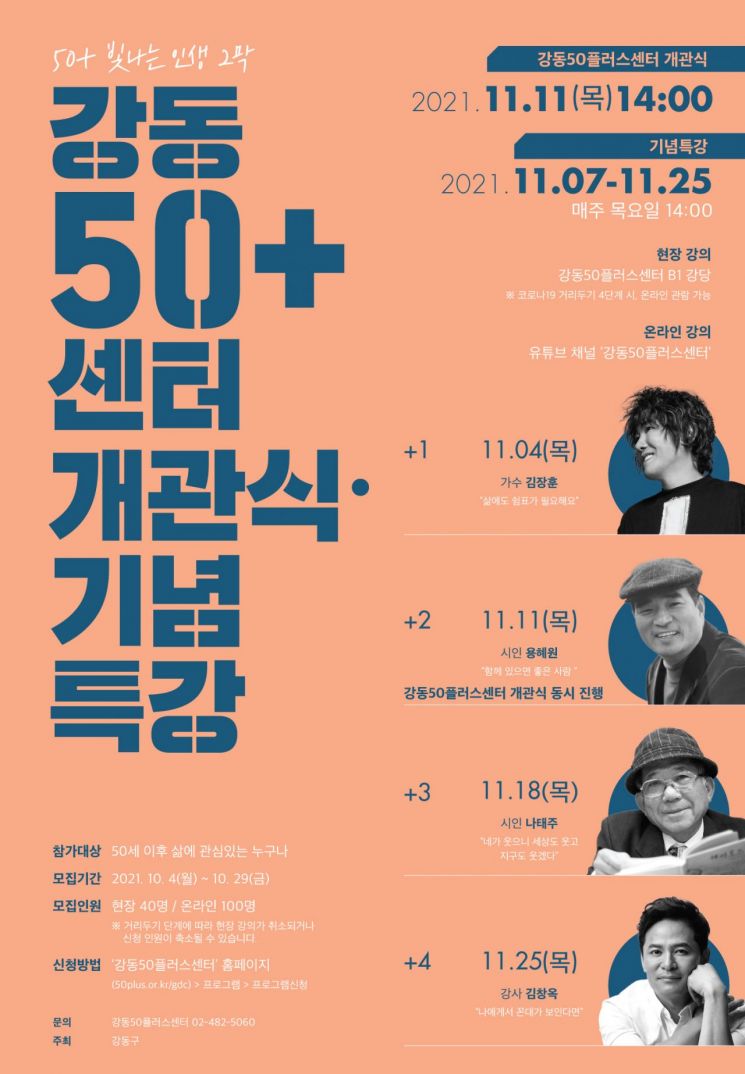
Gangdong-gu (Mayor Lee Jeong-hoon) announced it will hold special lectures titled ‘50+ Shining Second Act’ in November to commemorate the opening of the Gangdong 50 Plus Center, inviting distinguished figures from various fields to teach life attitudes.
The lectures will be held every Thursday at 2 p.m. from November 4 to 25, totaling four sessions, designed to explore life transitions and directions for the 50+ generation (ages 50-64) from diverse perspectives with four distinguished guests.
Singer Kim Jang-hoon, poets Yong Hye-won and Na Tae-joo, and lecturer Kim Chang-ok, known for practicing positive living, will share insights on finding new directions and reflecting on the second half of life.
On November 4, singer Kim Jang-hoon, known as a donation angel, will open the series with a lecture titled ‘Life Needs a Comma,’ sharing his active social service experiences.
On the 11th, following the Gangdong 50 Plus Center opening ceremony, poet Yong Hye-won will give a lecture titled ‘People Who Are Good to Be With.’ On the 18th, poet Na Tae-joo will speak on ‘When You Smile, the World and Earth Smile Too.’ Both poets are beloved for their resonant poetry and will discuss changed life perspectives and mindset formation for the 50+ generation preparing for later life.
The final session on the 25th will feature lecturer Kim Chang-ok, popular for communication leadership lectures, discussing ‘If You See the Old Man in Me,’ focusing on communication methods for the 50+ generation to become young adults, concluding the commemorative lectures.
Those aged 50+ wishing to participate can register on the Gangdong 50 Plus Center website by October 29 on a first-come, first-served basis. The lectures are free, with options for online or offline attendance.
Gangdong-gu Mayor Lee Jeong-hoon said, “To commemorate the opening of the Gangdong 50 Plus Center, we prepared special lectures on various topics to help the 50+ generation lead vibrant second acts. We will actively promote customized projects to help the 50+ generation live healthy and balanced lives after retirement.”
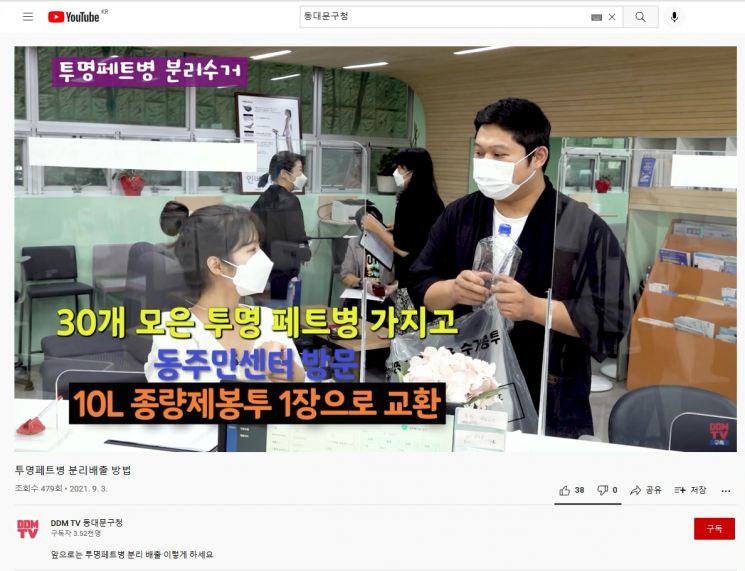
Dongdaemun-gu (Mayor Yoo Deok-yeol) will run a project until November to encourage residents to collect 30 transparent PET bottles in exchange for a 10-liter volume-based waste bag to improve recycling rates and secure high-quality waste PET bottles.
The transparent PET bottle-volume-based waste bag exchange project allows residents to collect 30 transparent PET bottles and visit community centers on designated days to exchange them for one 10-liter waste bag.
With mandatory separate collection of transparent PET bottles for detached houses and commercial buildings starting December 25, this exchange project is expected to raise recycling awareness and promote early adoption of separate collection.
Eligible transparent PET bottles include water bottles, beverage bottles, transparent milk bottles, and transparent Makgeolli bottles. Bottles must be cleaned, labels removed, crushed, and caps closed when submitted. Waste bags are limited to two per person per week.
Dongdaemun-gu Mayor Yoo Deok-yeol said, “We aim to promote early adoption of the transparent PET bottle separate collection day system through this exchange project and expect active participation from residents.”
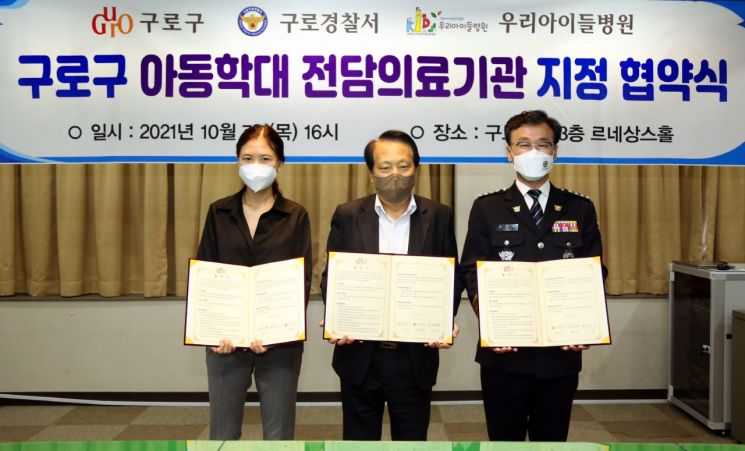
Guro-gu (Mayor Lee Seong) has established a protection system for abused children in cooperation with local hospitals and police.
On the 13th, Guro-gu announced it designated Woori Children’s Hospital (Director Baek Jeong-hyun), a specialized pediatric hospital in the area, as a dedicated medical institution for child abuse cases and established a cooperation system among related agencies.
Abused children require urgent diagnosis and treatment for separation from their families but had to use metropolitan dedicated medical institutions located in other districts.
To enable prompt action, Guro-gu decided to designate a dedicated medical institution locally and build a cooperation system among related agencies.
On the 7th, a business agreement ceremony for supporting abused children was held at the Renaissance Hall of the district office, attended by Mayor Lee Seong, Director Baek Jeong-hyun, and Guro Police Chief Im Gyeong-woo, including signing and commemorative photos.
The district office and police will respond to suspected child abuse reports by dispatching to the scene and conducting investigations, while the dedicated medical institution will perform diagnosis, treatment, and provide expert opinions on abuse cases.
Guro-gu plans to link health checkups for children in welfare facilities, whose health is a concern due to prolonged COVID-19, through the dedicated medical institution.
Following amendments to the Child Welfare Act transferring abuse investigation duties from private child protection agencies to local governments, Guro-gu established a Child Protection Team in July last year.
The Child Protection Team investigates reports, determines abuse, arranges separation, manages cases, and coordinates treatment to help children return to normal life.
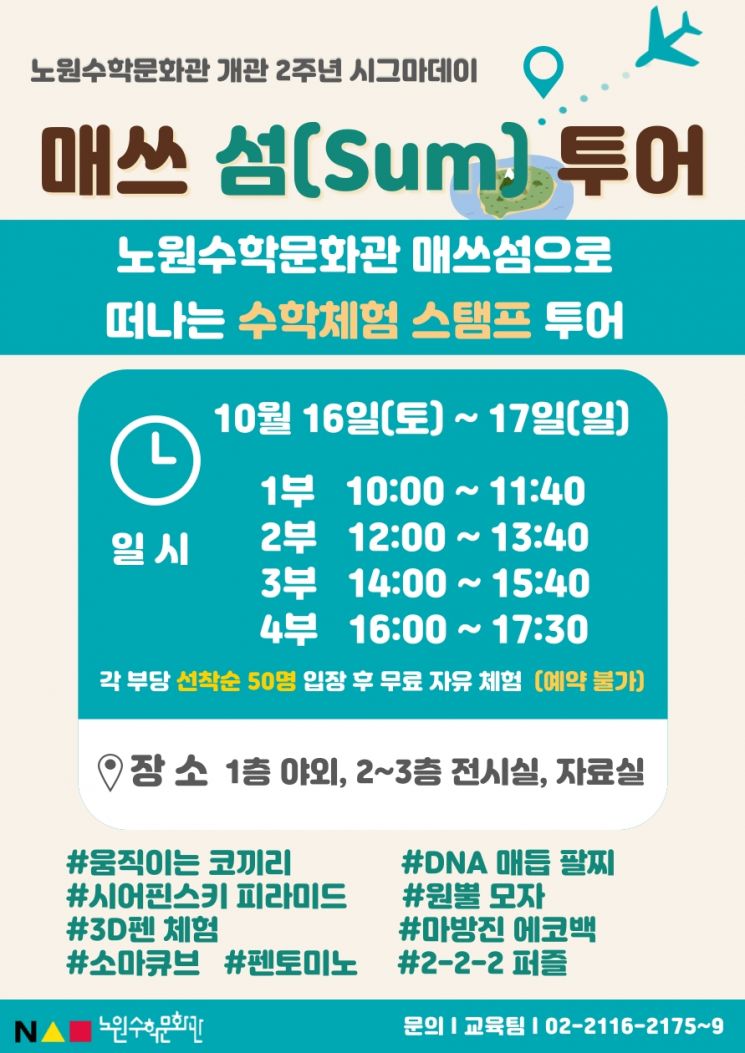
Nowon-gu (Mayor Oh Seung-rok) will operate the ‘Sigma Day Math-sum’ experiential exhibition to celebrate the 2nd anniversary of the ‘Nowon Math Culture Center’ opening.
This exhibition is designed as a stamp tour to relieve the frustration of travel restrictions due to COVID-19, allowing visitors to experience indoor and outdoor math culture center zones as if traveling.
Visitors can enjoy entertaining explanations from guides about mathematical principles embedded in daily life and engage in creative experiential learning at various booths, breaking the stereotype that math is boring and useless, and increasing interest in math.
The exhibition consists of 11 experiential activities across four creative experience zones: three indoors and one outdoors.
Activities include making 3D pen regular polyhedron models, Soma cube, Geoplick, Pentomino, 222 puzzle to learn polygon and spatial perception principles; making conic section hats to understand circles, ellipses, parabolas, and hyperbolas; experiencing time and space illusions with ‘Moving Elephant’; making colorful eco-bags to understand magic squares; making Sierpinski pyramids to understand fractal structures; making knot bracelets to learn DNA structure; and math explanations in art.
The special exhibition is free, with a daily limit of 200 participants across four sessions (10 a.m., 12 p.m., 2 p.m., 4 p.m.), subject to COVID-19 prevention guidelines.
Visitors can participate freely by receiving a stamp tour ticket on-site without prior reservation and collecting stamps at each booth.
For more information, contact the Nowon Math Culture Center.
Opened in October 2019 as the nation’s first math culture center established by a local government, it features themes such as ‘Math Playground’ stimulating imagination for young children, ‘Math and the World’ for experiencing everyday math, and ‘Math and Art’ exploring mathematical principles in nature and culture. It focuses on experiential content rather than passive viewing and contributes to popularizing math through various educational and experiential programs.
Nowon-gu Mayor Oh Seung-rok said, “This exhibition was prepared to answer children’s question ‘What is math good for?’ by showing that math is hidden everywhere in daily life. We hope many will participate and experience math through diverse activities.”
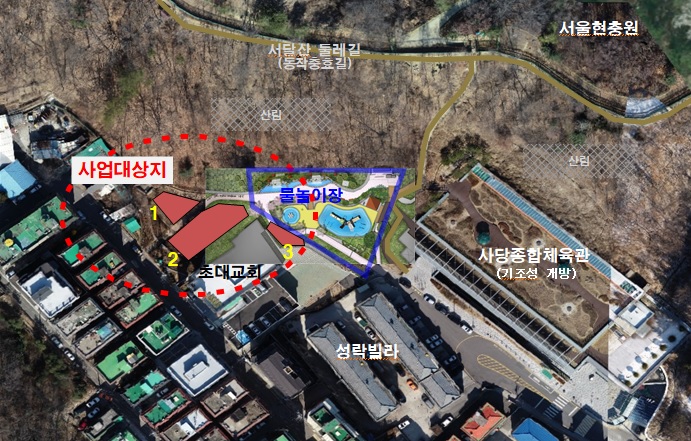
Dongjak-gu (Mayor Lee Chang-woo) announced on the 13th that it will begin construction of a family-friendly forest rest area around the multi-generational water play area in Hyeonchung Neighborhood Park (San 21-9, Sadang-dong).
The project aims to create a pleasant park environment for residents and visitors by utilizing green spaces around the water play area to form a ‘Forest Family Rest Area.’
Previously, the district completed a 370-pyeong (approx. 1,223㎡) ‘All-Season Multi-Generational Water Play Area’ last month.
Key projects for the ‘Forest Family Rest Area’ include planting trees, transplanting and pruning obstructive trees within the project area, maintaining walking paths using palm mats, and installing benches, picnic tables, shade tents, and exercise equipment for visitors.
The district will invest 100 million KRW and begin full construction this month, aiming to complete by November.
For more details about the rest area construction, contact the Parks and Greenery Division.
Kim Won-sik, head of the Parks and Greenery Division, said, “We will do our best to create a park environment where residents and children can enjoy pleasant times with their families anytime through this rest area project.”
The multi-generational water play area in Hyeonchung Neighborhood Park features combined play equipment including slides, usable year-round, with soft elastic flooring for children’s safety.
The district plans to complete maintenance of five playgrounds including Samil Park Children’s Playground by the end of this year and create an indoor badminton court and children’s experience forest around Dalmasa Temple in Hyeonchung Neighborhood Park next year.
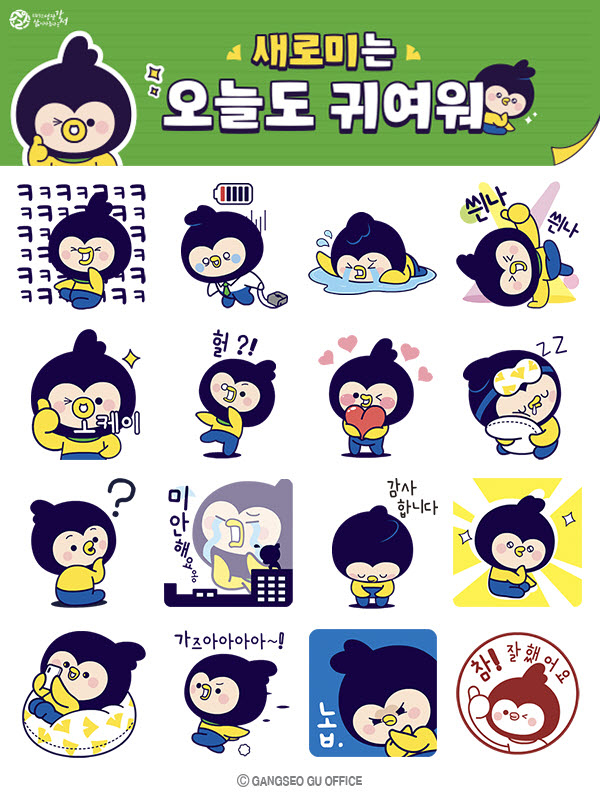
Gangseo-gu’s representative character ‘Saeromi’ has been newly transformed.
Seoul Gangseo-gu (Mayor Noh Hyun-song) announced it has renewed the official character ‘Saeromi’ to communicate more closely with residents.
In the era of non-face-to-face communication and increasing importance of online media such as SNS, the district developed a social character reflecting the latest trends to use the official character as a useful communication tool online.
‘Saeromi’ is the official character of Gangseo-gu, inspired by the magpie, one of the district’s symbols. Created in 1994, it symbolizes a friendly and warm friend delivering good news to residents.
The new character features a cute appearance resembling a magpie, wearing yellow clothes representing the district’s symbolic ginkgo tree, symbolizing delivering good news throughout Gangseo-gu.
‘Saeromi’ was also made into animated emoticons expressing various daily emotions such as ‘OK,’ ‘Sorry,’ and ‘Excited,’ designed for easy and fun use by anyone.
From 2 p.m. on the 14th, the district will distribute ‘Saeromi’ KakaoTalk emoticons free to the first 25,000 people. To receive the emoticons, search ‘Seoul Gangseo-gu Office’ in the KakaoTalk search bar and add the channel. The emoticons can be used free for 30 days after download.
The district plans to continue using Saeromi in various district promotions to communicate more closely with residents.
Gangseo-gu Mayor Noh Hyun-song said, “We hope the new Saeromi will become a more friendly and natural communication tool for residents. We will strengthen natural and familiar communication methods to increase residents’ interest in district affairs.”
The district posted the ‘Saeromi’ character manual guidebook on the Gangseo-gu website so anyone can use the character according to the manual.
© The Asia Business Daily(www.asiae.co.kr). All rights reserved.



















