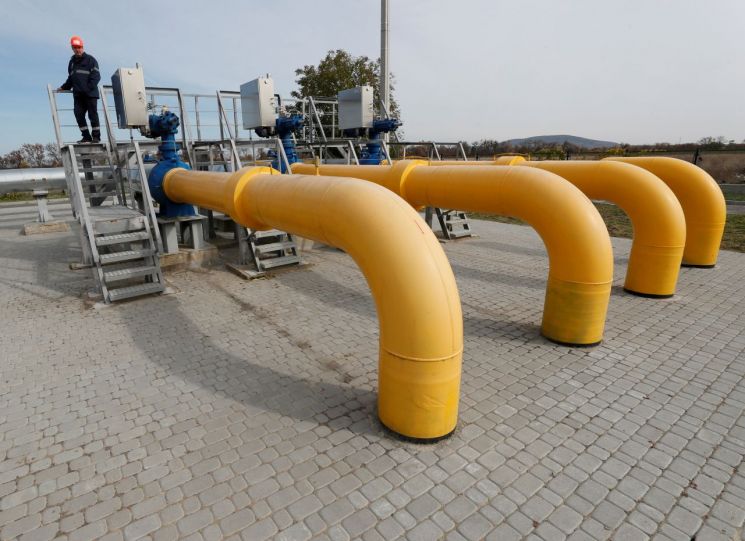
[Asia Economy Reporter Junho Hwang] Due to rising prices of raw materials such as natural gas, Indonesian Exchange-Traded Funds (ETFs) have been on a continuous upward trend.
According to the Korea Exchange on the 12th, the KINDEX Indonesia MSCI ETF has risen for six consecutive trading days since the 30th of last month. It increased by up to 2.99% in a single day, gaining a total of 11.57% over the six trading days.
This ETF tracks the MSCI Indonesia Index and invests in major stocks listed on the Jakarta Stock Exchange. Recently, with the rise in international crude oil and natural gas prices and the expansion of vaccine distribution, expectations for a full-scale economic recovery have grown, boosting the ETF’s returns.
The recent rise in raw material prices due to global supply and demand instability is acting as a catalyst for Indonesia’s economic stimulus. Indonesia, a representative resource-exporting country, has seen its export economy improve mainly in the mining sector. Exports in August surged 64.1% year-on-year, and imports increased by 55.3%. Indonesia’s main export items include coal, nickel, natural gas, copper, and palm oil.
Supported by the export economy, Indonesia’s overall economic situation is also improving. It successfully achieved a V-shaped recovery in the first half of this year. According to Statistics Indonesia, the economic growth rate recorded a negative growth of -5.32% in the second quarter of last year due to the COVID-19 shock, marking the first contraction since the foreign exchange crisis. The contraction narrowed to -0.74% by the first quarter of this year and rebounded to a positive 7.07% in the second quarter.
From this month, benefits from the ‘reopening’ are also expected. So-yeon Lee, a researcher at Korea Investment & Securities, said, “Based on secured vaccines and an increased vaccination rate (35% completed first dose), there are plans to open Bali Island to foreign tourists,” adding, “The Jakarta index is expected to break out of the box range and settle at the 6500 level within this month.”
Jung Sung-in, head of the ETF Strategy Team at Korea Investment Management, cautioned, “As a currency-exposed product, returns may differ from stock market trends depending on exchange rate fluctuations. Especially since emerging countries tend to have high exchange rate volatility, investors should be careful when investing.”
© The Asia Business Daily(www.asiae.co.kr). All rights reserved.
![Clutching a Stolen Dior Bag, Saying "I Hate Being Poor but Real"... The Grotesque Con of a "Human Knockoff" [Slate]](https://cwcontent.asiae.co.kr/asiaresize/183/2026021902243444107_1771435474.jpg)
















