Tanzanian-born Abdulrazak Gurnah Awarded Nobel Prize in Literature
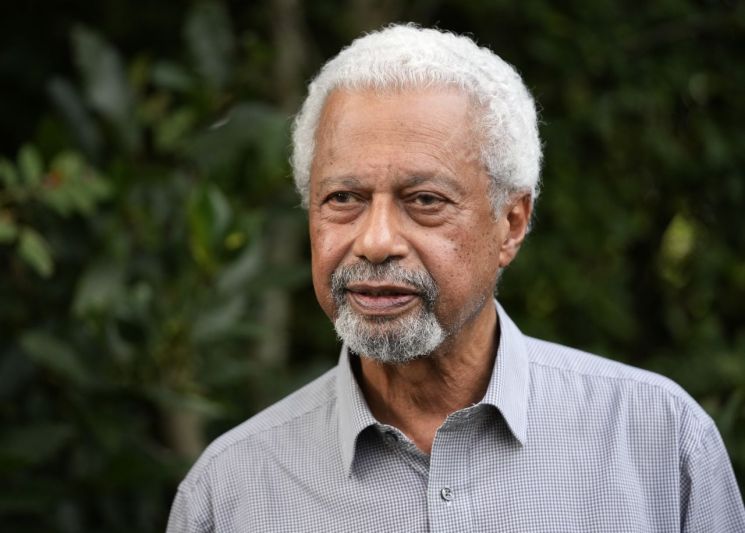
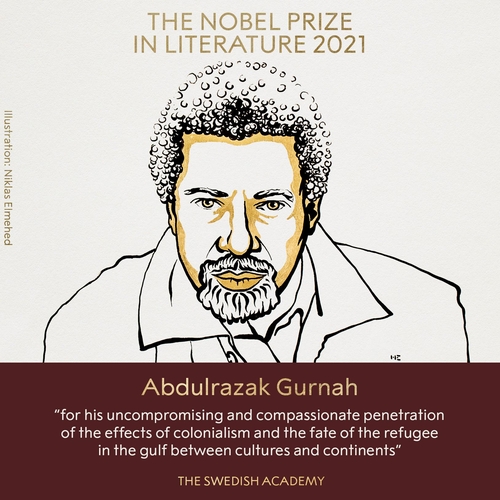
Abdulrazak Gurnah (73), a novelist from Zanzibar, Tanzania, has been honored with the Nobel Prize in Literature. The Swedish Academy announced Gurnah's award on the 7th (local time), explaining that he "insightfully and compassionately explored the fate of refugees caught between cultures and continents and the impact of colonialism."
The source of his keen observation is personal experience. Born in 1948, Gurnah spent his childhood on the East African island of Zanzibar. As a Muslim, he had to leave Zanzibar after the 1964 revolution, during which Arabs and Indians were persecuted. He entered the UK as a refugee and only set foot on his homeland again in 1984, shortly before his father's death.
Reflecting on painful memories, Gurnah began writing at the age of twenty-one. Although Swahili was his mother tongue, he chose English as his literary tool. His works broadly contain the oppression by colonial powers and the confusion he experienced as a refugee. His first novel, Memory of Departure (1987), dealt with a failed uprising in Tanzania, and his second novel, Pilgrim's Way (1988), depicted the multifaceted realities of exile life, including racial discrimination in the UK.
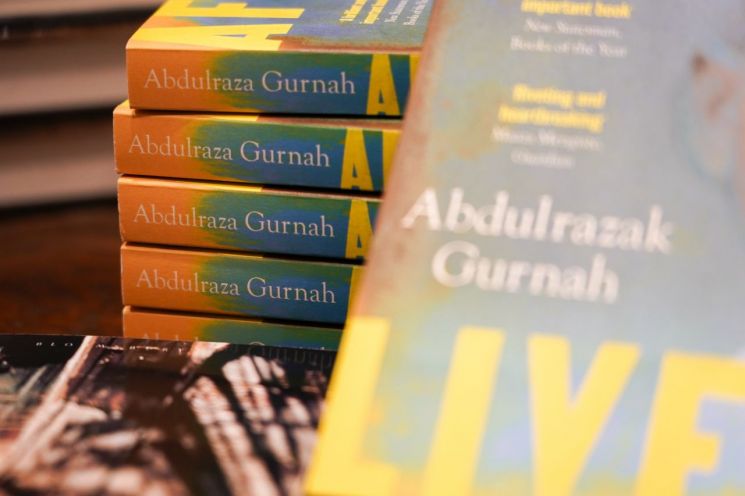
The work that made him known as a novelist was his fourth novel, Paradise (1994). Based on his research activities in East Africa around 1990, he wrote the story of a boy growing up in Tanzania. It vividly and violently portrayed the colonization of East Africa during World War I and was shortlisted for the Booker Prize. Other works, By the Sea (2001) and Desertion (2005), were also Booker Prize nominees.
His most recent work is Afterlives, published last year. It tells the story of a boy who is separated from his parents by the German army and participates in a civil war, fighting against his own people. Tanzania was under German colonial rule from the late 19th century and became a British colony after World War I. Gurnah focused on revisiting this painful history to recover identity and establish a self-image. By foregrounding characters marginalized due to differences in race, religion, and society, he emphasized the indigenous perspective and overturned colonial viewpoints.
Anders Olsson, chair of the Nobel Committee at the Swedish Academy, said, "In Gurnah's literary world, characters discover themselves in the gaps between cultures, continents, and time," adding, "They all point to an unstable state that can never be resolved." He further explained, "Everything?memory, names, identity?is fluid," highlighting "an endless quest driven by intellectual passion." Receiving the news in his kitchen, Gurnah said, "At first, I thought it was a joke. It is an honor to become the recipient of a great prize awarded to great writers." He will participate in an online award ceremony at the end of the year and receive a medal and a prize of 10 million kronor (about 1.35 billion won).
An African writer winning the Nobel Prize in Literature is the first in 18 years since J.M. Coetzee (South Africa) in 2003. Previous recipients include Wole Soyinka (Nigeria, 1986), Naguib Mahfouz (Egypt, 1991), and Nadine Gordimer (South Africa, 1991). The prize has mainly gone to white male European writers, leading to evaluations that diversity has been considered. There have also been reactions noting that the award has consistently drawn attention amid tensions between the Islamic world and the West. None of Gurnah's works have yet been translated into Korean.
© The Asia Business Daily(www.asiae.co.kr). All rights reserved.
![Clutching a Stolen Dior Bag, Saying "I Hate Being Poor but Real"... The Grotesque Con of a "Human Knockoff" [Slate]](https://cwcontent.asiae.co.kr/asiaresize/183/2026021902243444107_1771435474.jpg)


















