Opel Factory Closure Temporarily Lays Off 1,300 Workers
Semiconductor Supply Uncertainty Causes Market Chaos
Consecutive Shutdowns and Production Cuts Lead to Zero Visibility for Next Year
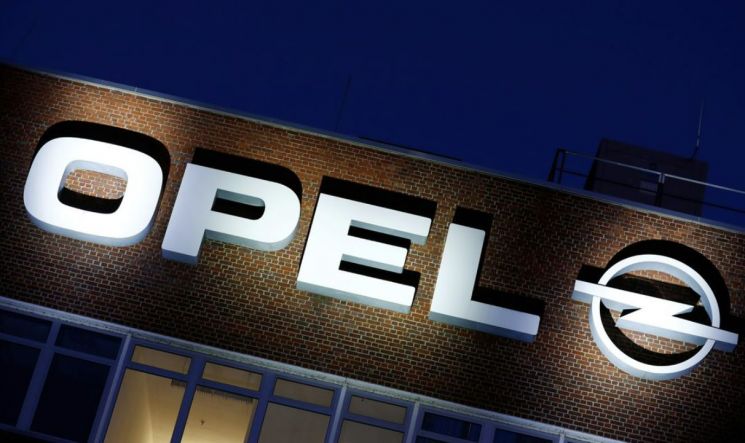
[Asia Economy reporters Yujin Cho and Jehun Yoo] Opel, a German complete car manufacturer with a 122-year tradition, has decided to close its factory and lay off 133 employees due to the semiconductor supply shortage. As the wave of semiconductor supply shortages is deeper and longer-lasting than expected, major global automobile companies are revising their business plans for next year. Domestic companies such as Hyundai Motor are also expressing difficulties in establishing next year's business plans. The uncertainty of semiconductor supply is throwing the global car market into chaos.
German complete car manufacturer Opel announced on the 30th (local time) that it will close its Eisenach plant until next year. Due to the suspension of factory operations, 1,300 employees will also be temporarily laid off. An Opel spokesperson said, "The prolonged COVID-19 situation and the long-term semiconductor supply shortage have put the industry in an unprecedented situation." Opel was established in 1862 and has been producing cars since 1899.
Opel's factory closure clearly shows the semiconductor shortage phenomenon sweeping the global car market. On the same day, The Wall Street Journal (WSJ) reported that global automobile companies are rewriting their business plans for next year due to ongoing shutdowns and production cuts.
As predictions emerge that the semiconductor supply chain crisis, which was expected to recover within this year, will not end next year either, adjustments to next year's production volume and profit and loss due to supply uncertainty are inevitable. Inside and outside the industry, there is a view that the semiconductor supply chain crisis is transforming into a structural problem that may take several more years to fully recover.
Mass brands with high production volumes such as the US Ford and Japan's Toyota, as well as luxury car brands like Mercedes-Benz and Land Rover, have recently stopped their production lines.
The domestic industry situation is no different. Hyundai Motor Group has expressed difficulties in finalizing next year's business plans due to the shortage of vehicle semiconductors. Hyundai Motor Group usually starts establishing next year's business plans from October and finalizes them by the end of the year, but this year, it is difficult to finalize the business plans due to the shortage of key parts.
Next year is expected to see some improvement in semiconductor parts supply compared to this year, but with unexpected variables such as the increased parts shortage amid the paradigm shift to electric vehicles and rising raw material prices, it is reported that they are considering business plans assuming the worst-case scenario.
Hyundai Motor halted operations at the Asan plant (which produces Grandeur and Sonata) on the 5th and the Ulsan Plant 4 (which produces Palisade and Staria) on the 2nd last month. Overseas, the Alabama Hyundai plant (on the 5th) and the Georgia Kia plant (on the 1st) also experienced shutdowns.
© The Asia Business Daily(www.asiae.co.kr). All rights reserved.

















