Korea's Largest Native Gym Brand 'SpoAny'... 90th Branch Opening Next Month
Direct Stores Increased by 20 Despite Pandemic... 42.4 Billion KRW Revenue Last Year
Growth in Scale and Profitability... Retained Earnings Up 10 Billion KRW Since 2019
Turning COVID Crisis into Opportunity... Accelerating Fitness App Development

[Asia Economy Reporter Junhyung Lee] Gyms are among the industries most severely affected by COVID-19. Although the restrictions on business operations were not exclusive to gyms, they were one of the sectors that suffered the most. As inconveniences increased, including restrictions on shower use, many people left gyms. Due to the relatively large size of gym facilities compared to other industries, the burden of fixed costs such as rent and maintenance fees was also significant.
KD Sports operates ‘SpoAny,’ the largest gym brand in South Korea. Despite the challenges posed by COVID-19 last year, the company did not stop its ‘territory expansion.’ As a result, the number of company-operated stores increased from 70 at the end of 2019 to 85 last year alone. Even this year, amid strict social distancing measures, the company has steadily increased its branches and is preparing to open its 90th location next month. Remarkably, all stores are company-operated, and the company added about 20 more locations despite the COVID-19 situation.
Kim Kyung-deok, CEO of KD Sports, explained, "Just as water boils at a critical point of 100°C, we saw the critical point for SpoAny’s growth as reaching 100 stores." He added, "There were difficult times due to COVID-19, but aggressive branch expansion remains one of our key strategies."
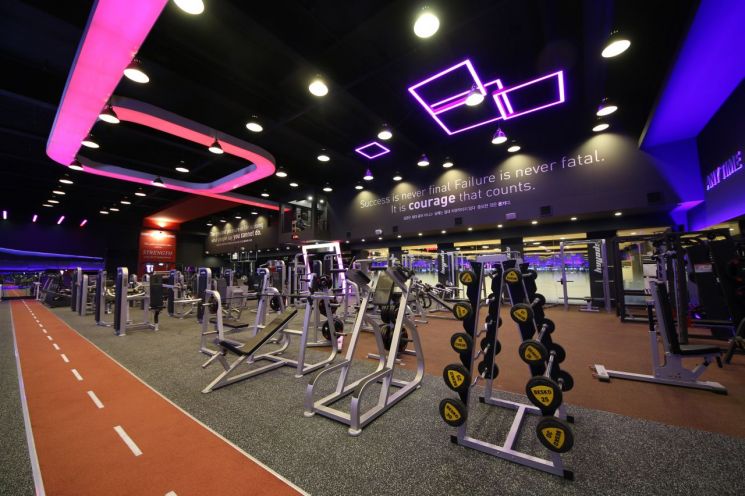
Starting from an Old Gym... Sales Surpass 40 Billion KRW
In 2003, CEO Kim started his business by acquiring an old gym in Seongnam-si, Gyeonggi-do. While expanding branches mainly in the metropolitan area, he felt the need for full-scale commercialization. This was because there were increasing cases of key personnel such as branch managers and trainers leaving, which created operational limits. In 2011, he rebranded all branches as ‘SpoAny,’ incorporated the company, and accelerated branding efforts. Kim said, "Most trainers aim to open their own health clubs. To build a partnership with the employees we worked with, we changed the operation method of each branch to a joint investment model, which enabled stable personnel management."
The company has grown into the largest native gym brand in South Korea. Sales reached 42.4 billion KRW last year, an 88% increase compared to 22.5 billion KRW in 2018. Combining the performance of all SpoAny branches, last year’s sales amounted to approximately 75 billion KRW. The cumulative number of members reached 600,000, with 120,000 active members currently. Every day, 40,000 customers visit the 89 company-operated branches located throughout the metropolitan area. Considering that the maximum capacity of Jamsil Sports Complex in Songpa-gu, Seoul, is about 25,000 people, this is a considerable scale.
They have secured not only scale but also profitability. Until 2019, the company’s retained earnings exceeded 10 billion KRW. This solid management has helped the company overcome crises and prepare for the ‘post-COVID-19’ era. Although operating profit decreased from 5.9 billion KRW in 2019 to 1.5 billion KRW last year, the company still made a profit.

Profit-First Principle... Health Management and Big Data Business through App Development
CEO Kim is a strict profit-first advocate. The company carefully reviews over 100 candidate sites annually in Seoul and the metropolitan area before opening 10 to 20 new stores each year. They open branches only in locations where they can generate profits by considering various factors such as site location. They also have know-how such as acquiring existing gyms or negotiating rent discounts through trust. Kim stated, "We enter only places where we can make a profit after thorough calculations. Because we have always prioritized operating profit, we were able to withstand the crisis caused by COVID-19 firmly."
Nevertheless, the Level 4 social distancing measures dealt a direct blow. Fixed monthly costs per branch reached at least 50 million KRW, resulting in losses of tens of billions of KRW each month during the closure period. Considering that the total facility reporting area of the 89 company-operated SpoAny branches is 57,533㎡ (about 17,404 pyeong), maintenance costs alone are substantial. The number of active members dropped by 30,000 from 150,000 just before COVID-19 to 120,000.
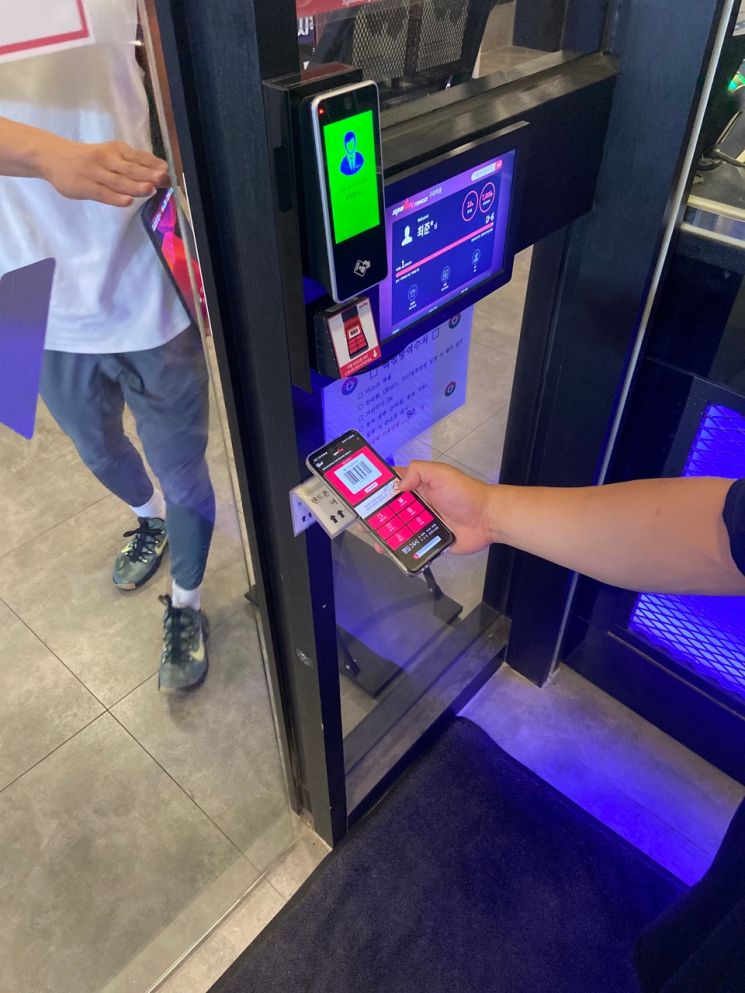
They found opportunities even in crisis. CEO Kim saw potential in the information technology (IT) business through rapidly growing platform companies. Last year, they established an affiliate called ‘Fit Dynamics’ to handle IT business and entered the fitness application (app) market. Fit Dynamics is developing a non-face-to-face training service app based on the exercise records of SpoAny members. The development is expected to be completed and launched by the end of this year. Kim explained, "COVID-19 taught us that business models that grow corporate value, not just chase profits, are possible." He added, "We plan to use SpoAny as a cash cow and develop businesses utilizing exercise big data through the IT affiliate." During the interview, Kim repeatedly expressed his intention to expand overseas. He said, "Within 2 to 3 years, I want to enter the U.S. market and grow into a company like the ‘Starbucks of the fitness industry.’"
© The Asia Business Daily(www.asiae.co.kr). All rights reserved.



















