Announcement of Q4 Vaccination Plan on the 27th Afternoon
Booster Shots for High-Risk Groups Including Seniors Aged 60 and Over to be Promoted
Vaccinations to Begin for Children and Adolescents Aged 12-17 and Pregnant Women
mRNA Vaccination Interval, Extended from '3-4 Weeks' to '6 Weeks', Likely to be Shortened Again
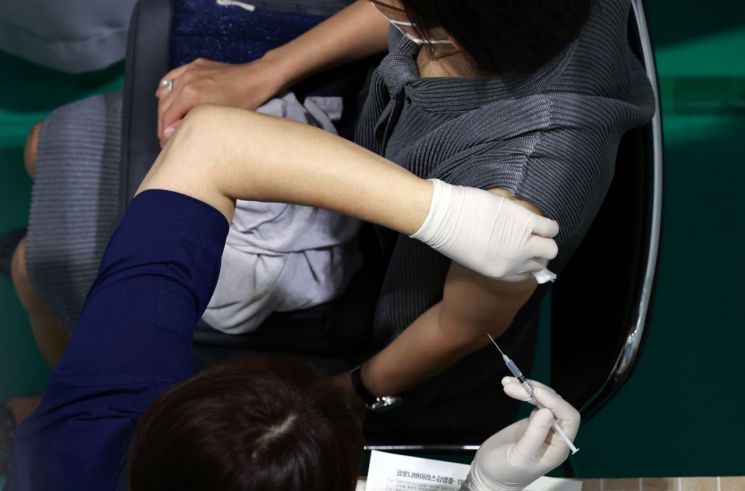 On the 23rd, citizens visiting the COVID-19 vaccination center set up at Bukahyeon Culture and Sports Center in Seodaemun-gu, Seoul, are receiving their vaccinations. [Image source=Yonhap News]
[Asia Economy Reporter Lee Chun-hee] The final vaccination plan of the year, which includes additional COVID-19 vaccinations (booster shots), vaccinations for children, adolescents, and pregnant women, and adjustments to the interval between messenger RNA (mRNA) vaccine doses, will be announced.
According to the COVID-19 Vaccination Response Task Force of the Korea Disease Control and Prevention Agency (KDCA) on the 27th, detailed plans for the fourth quarter vaccinations will be announced during a regular briefing in the afternoon. The fourth quarter plan will include COVID-19 vaccination plans for pregnant women and children and adolescents, as well as information on additional vaccinations and vaccination plans for the unvaccinated.
Prime Minister Kim Boo-kyum presided over the Central Disaster and Safety Countermeasure Headquarters meeting on COVID-19 the previous afternoon and stated, "We will soon begin additional vaccinations, so-called booster shots, starting with high-risk groups such as the elderly aged 60 and above and healthcare workers, expanding the vaccination target to adolescents and pregnant women."
Earlier, health authorities had announced plans to implement booster shots for vulnerable groups such as residents of nursing hospitals and facilities who were vaccinated early in February and March, as well as immunocompromised individuals. These groups are expected to receive booster shots six months after completing their initial vaccination.
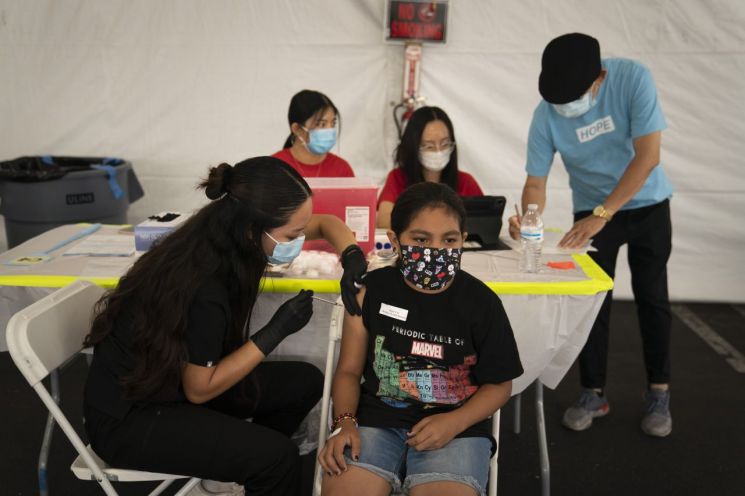 On the 28th (local time), a 13-year-old girl received the Pfizer COVID-19 vaccine in California, USA. [Image source=AP Yonhap News]
The vaccination target for adolescents is expected to be expanded to those aged 12 to 17, for whom the Pfizer vaccine has been authorized. Prime Minister Kim said, "With the expansion of the vaccination target to those aged 12 to 17, parents may have many concerns," and added, "The KDCA will cooperate with educational authorities to make sufficient efforts to explain the vaccination to students and share various overseas cases."
At the briefing held on the same day as the plan announcement, Professor Choi Eun-hwa of Seoul National University Children's Hospital's Department of Pediatrics, Professor Kim Yeo-hyang of Chilgok Kyungpook National University Hospital's Pediatric Cardiology Department, and Lee Sang-soo, Director of the School Innovation Support Office at the Ministry of Education, will attend to provide detailed answers to questions from parents and students regarding vaccination.
Currently, the United States has been vaccinating adolescents aged 12 and older with the Pfizer vaccine since May, and Israel since June. The United Kingdom administers only one dose of the Pfizer vaccine to adolescents aged 12 to 15. Since the Pfizer vaccine is the only vaccine authorized for those aged 12 to 17 in Korea, vaccinations are expected to focus mainly on the Pfizer vaccine. Moderna's vaccine distributor in Korea, GC Green Cross, has applied to the Ministry of Food and Drug Safety to change the authorization to include ages 12 to 17.
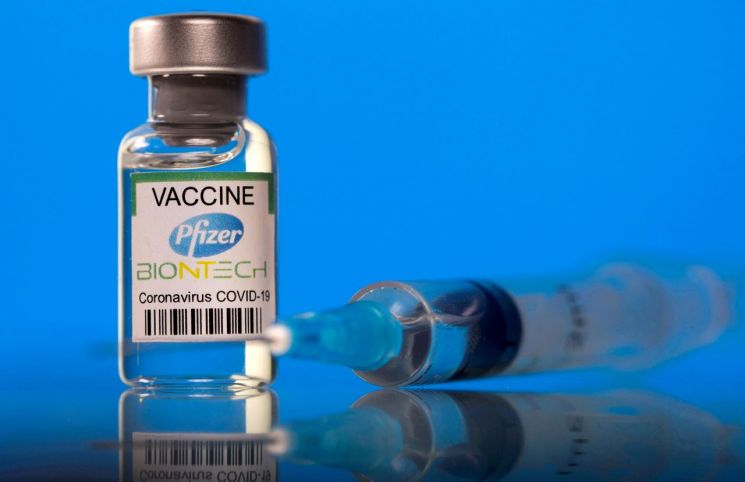
Meanwhile, the vaccination plan is also expected to include a reduction in the current 6-week interval for mRNA vaccines. Prime Minister Kim stated the previous day, "Starting early next month, we will shorten the interval between the first and second doses to increase the vaccination completion rate."
Among mRNA vaccines, Pfizer has been authorized with a 3-week interval and Moderna with a 4-week interval, but due to ongoing vaccine supply instability, the interval was uniformly extended to 6 weeks. However, as supply stabilizes, calls to revert to the original intervals have increased, and health authorities currently allow vaccination at the Pfizer 3-week and Moderna 4-week intervals when using leftover vaccines.
Adjusting vaccination schedules currently booked at 6-week intervals could cause confusion at vaccination sites. While it is expected that those receiving their first dose next month will have their intervals shortened, it is also reported that plans are underway to adjust intervals for those awaiting their second dose. Prime Minister Kim urged, "The KDCA and local governments should take thorough follow-up measures to prevent confusion at vaccination sites regarding reservation changes due to the shortened vaccination intervals."
© The Asia Business Daily(www.asiae.co.kr). All rights reserved.



















