Milk up by about 200 won, electricity for 4-person households rises up to 1,050 won
"Everything is rising," citizens sigh
Experts say "Government must show commitment to price stabilization policy"
[Asia Economy Reporter Kang Juhee] "No matter how much we endure, prices keep rising."
On the 23rd, after the Chuseok holiday, news of electricity bill and milk price hikes came one after another, deepening the sighs of citizens. With the already increased cost of living, the government’s decision to raise electricity rates for the first time in eight years is expected to further burden low-income households. Experts emphasized the importance of the government’s policy commitment to stabilizing prices.
On the 23rd, the government and Korea Electric Power Corporation (KEPCO) announced an increase in the electricity rates for the fourth quarter, effective from next month’s 1st. The final fuel cost adjustment rate will rise by 3 KRW per kWh, resulting in a maximum monthly increase of 1,050 KRW for a four-person household using an average of 350 kWh per month.
Although fuel costs have continuously risen this year, the government had postponed raising electricity rates due to concerns over rapid inflation. However, due to ongoing fuel cost increases, KEPCO’s poor financial performance, and rising carbon neutrality expenses, this decision appears to have been made. This electricity rate hike is expected to increase inflationary pressures on other public utilities such as city gas.
The government believes that the impact of this electricity rate hike on the overall inflation rate will not be as significant as some fear. According to reports, a Ministry of Economy and Finance official stated, "Considering the weight of electricity in the consumer price index, the impact on this year’s inflation rate is about 0.0075 percentage points," adding, "Because electricity rates are limited to quarterly increases of about 3 KRW to prevent a sharp rise in the burden on citizens, the fourth-quarter increase will not cause a sudden spike in inflation this year."
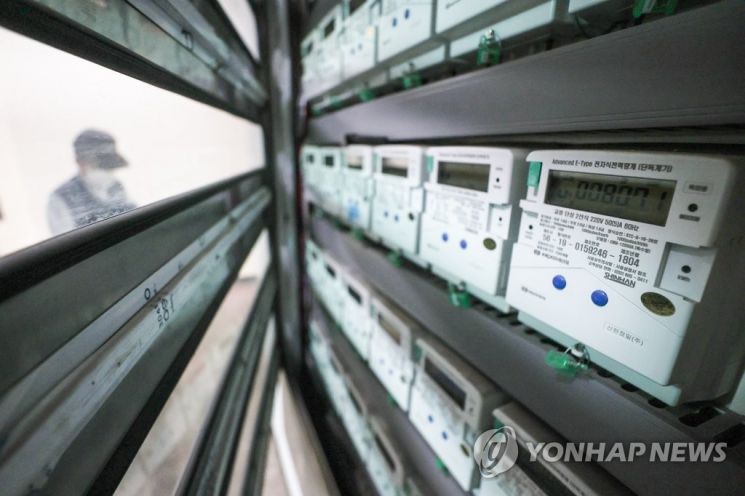 An electric meter is installed in an apartment in Seoul. On the 23rd, the government and Korea Electric Power Corporation decided to raise electricity rates for the first time in about eight years, which is expected to increase the financial burden on households.
 Photo by Yonhap News
However, citizens’ perceptions differ. Since the end of last year, the rising cost of living and housing market instability have caused significant increases in essential living expenses such as rent and monthly lease fees.
Jo (29), an office worker living alone in Seoul, said, "It’s true that everything except my salary is going up. After paying rent, phone bills, and living expenses, there’s barely any money left to save," adding, "Now even the electricity bill, which the government had promised would not increase, has gone up. My income remains the same, but expenses are rising in many areas, so even a small price increase feels burdensome."
According to Statistics Korea, the consumer price index in August rose 2.6% compared to a year ago, marking the highest level this year. Consumer prices have increased by more than 2% for five consecutive months since April. Particularly, prices of agricultural, livestock, and fishery products, which consumers feel most acutely, rose 7.8% due to heatwaves and other factors. Among these, egg prices surged 54.6%, showing double-digit increases for eight consecutive months since January (15.2%).
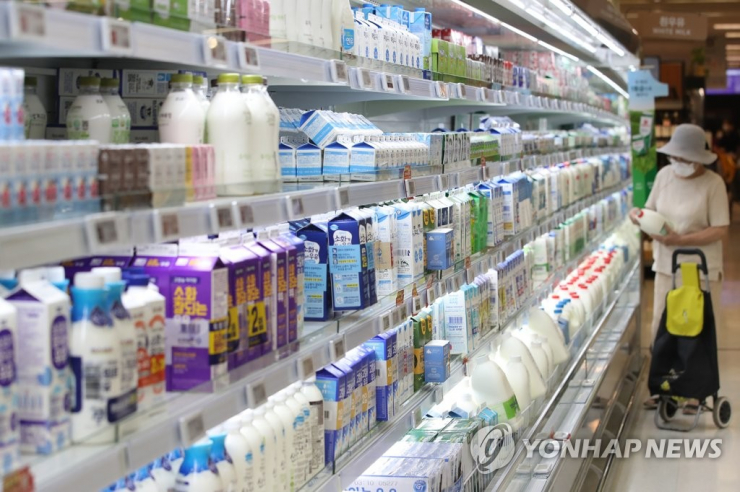
Adding to the woes, milk prices are also set to rise from October 1. The Seoul Milk Cooperative announced on the 23rd that due to increased raw milk prices, the price of white milk (1ℓ) products will be raised by 5.4%. Accordingly, the price of milk, which was in the mid-2,500 KRW range at large supermarkets, will increase by about 200 KRW to 2,700 KRW. This is Seoul Milk’s first price increase in three years since 2018.
With Seoul Milk, the industry leader, raising prices, other dairy companies such as Maeil Dairies and Namyang Dairy Products are also expected to follow suit. Prices of products containing dairy, such as bread and snacks, are also likely to rise consecutively.
Experts suggested that the government’s policy commitment to price stabilization is crucial. Professor Kim Taegi of Dankook University’s Department of Economics said, "There are global factors causing price increases, such as the disruption of raw material supply due to COVID-19. Because of this variable, it will take time for stabilization."
Professor Kim added, "Domestically, the government has been somewhat inadequate in managing prices. The phase-out of nuclear power is clearly too fast, and since KEPCO is running deficits, electricity rates inevitably have to rise. The government must show a firm commitment to price stabilization," he emphasized.
© The Asia Business Daily(www.asiae.co.kr). All rights reserved.


















