One in Four People Takes Small Loans Under 5 Million Won
"Active Support for Recovery Benefits the National Economy"
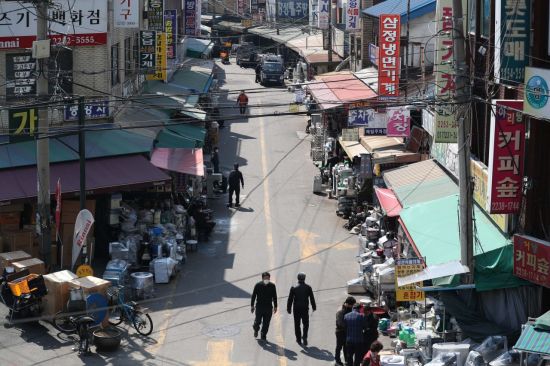
[Asia Economy Reporter Kim Hyo-jin] It has been identified that one in four individuals registered as defaulters for failing to repay principal or interest on loans from financial institutions on time are small loan borrowers with loans of 5 million won or less. This is interpreted to mean that there are many vulnerable groups facing financial difficulties due to the impact of COVID-19.
According to data analyzed by Min Hyung-bae, a member of the National Assembly’s Political Affairs Committee from the Democratic Party of Korea, received from the Korea Credit Information Services on the 24th, as of the end of June, 775,485 people were registered as financial defaulters for being overdue more than three months.
Among them, more than half, 430,133 people (55.5%), were multiple defaulters registered as overdue at two or more financial institutions, and 207,713 people (26.8%) were small loan borrowers with loans of 5 million won or less. Borrowers with loans exceeding 10 million won up to 20 million won numbered 136,734 (17.6%), those with loans exceeding 5 million won up to 10 million won were 121,179 (15.6%), and those with loans exceeding 20 million won up to 30 million won were 76,824 (9.91%).
Min explained that in cases where loans of 1 million won or less were borrowed, most had overdue periods exceeding one year. Based on the same period, among borrowers with loans of 1 million won or less, 14,696 people (39.2%) had overdue periods between one and three years, 10,915 people (29.1%) between three and five years, and 5,785 people (15.4%) between five and seven years.
The situation was similar for borrowers with loans exceeding 1 million won up to 10 million won. Among them, 101,431 people (34.8%) had overdue periods between one and three years, 64,652 people (22.2%) between three and five years, and 54,705 people (18.8%) between five and seven years.
Min diagnosed that the number of people struggling with their livelihoods due to COVID-19 has increased and suggested, "For small defaulters with loans of 5 million won or less, rather than neglecting ongoing overdue histories, actively implementing recovery support policies such as credit forgiveness will be more beneficial to the national economy in the long term."
‘Credit Forgiveness’ for Individuals Starting Next Month
In this regard, financial authorities have decided to grant ‘credit forgiveness’ to individuals and sole proprietors who have overdue debts of 20 million won or less since last year but have fully repaid them by the end of this year, considering the COVID-19 situation. Accordingly, a total of 20 organizations, including all financial industry associations, central associations, the Korea Credit Information Services, and six credit information companies, signed the ‘COVID-19 Related Personal Credit Recovery Support Agreement’ in August.
This plan will be implemented from early October. It is estimated that about 2.5 million people will benefit. Among them, about 2 million people’s credit scores are expected to rise by an average of 34 points, enabling them to switch to low-interest loans. Additionally, about 120,000 people are expected to exceed the minimum credit score required for card issuance (680 points according to NICE), and about 130,000 people are expected to have improved access to loans.
© The Asia Business Daily(www.asiae.co.kr). All rights reserved.

















