After Cabinet Meeting Approval on the 17th, Enforcement from the 24th
Compilation of Administrative Law Principles and Standards: 'Administrative Basic Act' Provisions
[Sejong=Asia Economy Reporter Moon Chaeseok] This year, a National Administrative Legislation Committee, co-chaired by the Minister of the Legislation Office and private experts, will be newly established. Next year, a 'Legislative Impact Analysis' system that systematically analyzes the effectiveness of laws will be introduced. A system will also be established where administrative agencies hold meetings before enforcing related regulations such as licensing agendas and fines to set common standards.
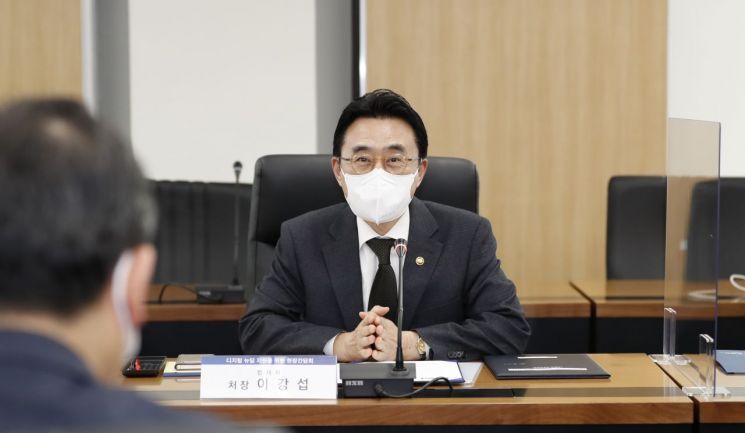
On the 24th, the Legislation Office announced that the 'Enforcement Decree of the Framework Act on Administration,' which includes these contents, will be promulgated and enforced. It stipulates necessary matters for the enforcement of the Framework Act on Administration, which consolidates the principles and standards of administrative law, in 3 chapters and 19 articles.
First, this year, a public-private Administrative Legislation Committee under the Legislation Office will be established to serve as an advisory body on administrative legislation at the national level. If legislative improvements are needed based on the committee's advice, the Legislation Office will cooperate with related agencies to promote legislative improvements. The committee will be composed of up to 50 government and appointed members, with Lee Gangseop, the Minister of the Legislation Office, and a private individual serving as co-chairs. The private co-chair and members will be appointed by the Prime Minister.
Starting next year, the country’s first Legislative Impact Analysis system will be introduced. This system systematically analyzes the enforcement status, effectiveness, normative validity, and enforceability of existing laws. The Legislation Office will oversee the selection and utilization of analysis targets, and the Korea Legislation Research Institute will conduct commissioned investigations and research. Laws identified as needing improvement based on the analysis will undergo advisory review by the Administrative Legislation Committee and consultation with relevant ministries before legislative revisions are pursued and reflected in legislative plans.

Common standards applicable to similar systems related to licensing and fines will be established. Before conducting a licensing agenda, the main licensing administrative agency and related licensing administrative agencies will hold meetings and mutually notify each other of key matters. The licensing agenda system is a framework that consolidates complex civil complaints, which require citizens to go through administrative procedures across various ministries and agencies, into a single process.
Additionally, in line with the purpose of the 'Framework Act on Administration,' 36 presidential decree provisions that prohibit installment payments and payment deferrals of fines have been deleted. Four reasons equivalent to those for retrial under the Civil Procedure Act have been added as grounds for retrial in litigation and other dispute reviews. These include ▲cases where the official in charge of the disposition committed a crime in the course of duty ▲cases where the basis for the disposition was forged or altered ▲cases where false statements by a third party were used as grounds for the disposition ▲cases where important matters affecting the disposition were omitted from judgment.
Lee Gangseop, Minister of the Legislation Office, said, "Following the enactment of the Framework Act on Administration on March 23, the enforcement decree has been prepared, completing the foundation of the basic principles of administrative law and major laws and systems. To revise individual laws related to common provisions under the law, we will conduct research and cooperate with relevant ministries to gradually revise individual laws starting next year."
© The Asia Business Daily(www.asiae.co.kr). All rights reserved.


















