Fistfight and Gunbattle Involving Taliban's Second-in-Command... Power Struggle Leads
Hardliners Lead Within Taliban... International Recognition Becomes Difficult
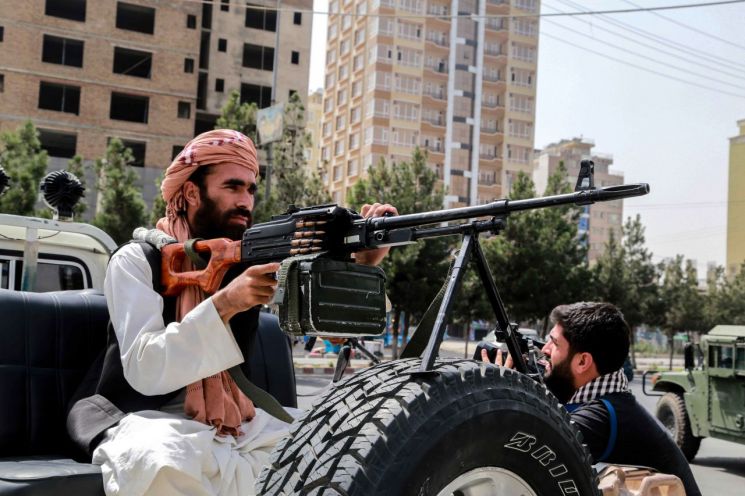
[Asia Economy Reporter Hyunwoo Lee] Concerns are rising that the stabilization of the regime will become difficult as the Taliban, the armed faction that reoccupied Afghanistan, is engulfed in internal strife. In particular, the Haqqani Network, a hardline faction within the Taliban, is considered to be at the center of the division. Recently, the power struggle has intensified to the point of fistfights and even gun battles between the Baradar faction, led by Mullah Abdul Ghani Baradar, who was known as the second-in-command within the Taliban, and the Haqqani Network, causing difficulties for the Taliban. From the Taliban’s perspective, which urgently needs international recognition, the Haqqani Network, which led clashes with government forces, is feared to be the biggest obstacle to stabilization.
According to Bloomberg on the 20th (local time), Baradar, the Taliban’s second-in-command who is currently rumored to be dead, was punched by a senior leader of the Haqqani Network at the presidential palace in Kabul earlier this month, and the two sides reportedly engaged in a gun battle. Baradar insisted that the new Taliban cabinet should include non-Taliban figures and ethnic minorities, but Halil Ur-Rahman Haqqani, a Haqqani Network official who opposed this, punched Baradar, which led to the gunfight between the two sides.
The Taliban denies the internal strife rumors and is trying to manage the situation, but Baradar has not returned to Kabul and remains in the Taliban stronghold of southern Kandahar, refraining from outside activities, which has further fueled the rumors of internal conflict.
Haqqani Network: A Major Armed Faction and Hardliner within the Taliban
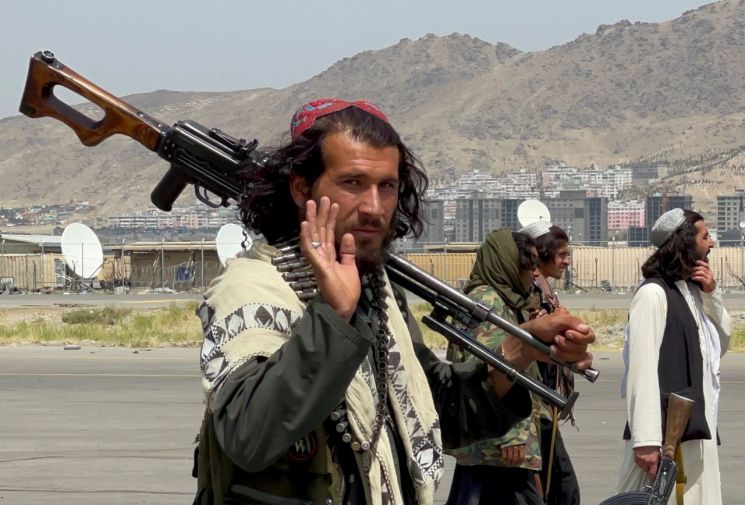
The Haqqani Network, at the center of the Taliban’s internal strife, originally started as a faction of the Mujahideen, an armed group that resisted the Soviet army during the Afghan war in the 1980s. According to the BBC, after the 9/11 attacks in 2001 and the start of the U.S. war in Afghanistan, Sirajuddin Haqqani, the leader of the Haqqani Network, reorganized the group with his father Jalaluddin Haqqani and waged guerrilla warfare and various terrorist attacks against the U.S. alongside the Taliban.
During this process, Jalaluddin passed away, and Sirajuddin succeeded him to take control of the Haqqani Network. Their estimated troop strength is about 10,000 to 16,000, making them the core force among the approximately 70,000 Taliban fighters. They are classified as hardliners who advocate for establishing a strong dictatorship similar to the Taliban’s first regime.
Consequently, they refuse to accept the moderate factions’ demands, such as the Baradar faction, mainly composed of religious leaders and bureaucrats, or the Kandahar faction, consisting of key Taliban officials. The Baradar faction argues for forming an inclusive government recognized by the international community, incorporating other armed groups outside the Taliban, former Afghan government officials, and various ethnic minorities, but the Haqqani Network rejects this.
Taliban’s Urgent Need for International Recognition Complicated by Regime Instability
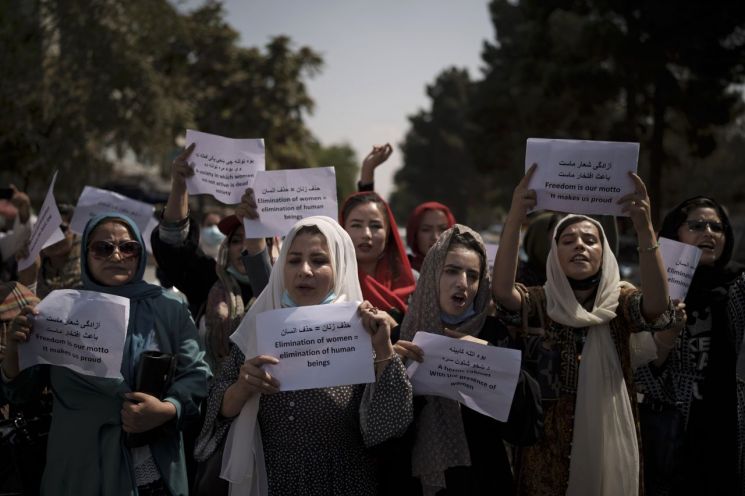
The Taliban’s plan to quickly complete the formation of an inclusive government and gain international recognition to negotiate the lifting of the U.S. freeze on Afghan funds is becoming increasingly difficult. As a result, with soaring prices and worsening public hardship, protests by women and the public are spreading nationwide.
The Afghan economy is widely expected to remain impossible to revive before the U.S. lifts the freeze on funds. According to CNN, the Afghan central bank’s total foreign currency reserves amount to about $9 billion, of which $7 billion is held in cash, gold, and bonds in the U.S. The complete freeze of these assets by the U.S. has severely deepened Afghanistan’s economic crisis.
The U.S. has declared it will not recognize Afghanistan as a member of the international community, making the lifting of the freeze highly unlikely. At minimum, the Taliban must fulfill its prior promises to the international community, such as forming an inclusive government and respecting women’s rights, before negotiations can even begin.
However, resolving this requires suppressing opposition from hardliners like the Haqqani Network, so turmoil is expected to continue for some time.
© The Asia Business Daily(www.asiae.co.kr). All rights reserved.



















