[Asia Economy Yang Nak-gyu, Military Specialist Reporter] STX Engine, the first domestic developer of coastal surveillance radar, is challenging the Coastal Surveillance Radar-II system development project.
According to the military, the Defense Acquisition Program Administration recently launched a project to replace outdated coastal surveillance radars. The budget is 9.921 billion KRW. According to data submitted by the Ministry of National Defense to the National Assembly, out of about 140 surveillance radars deployed in border coastal areas, over 100 have exceeded their service life. The aging rate reaches 71.4%, making replacement urgent.
The radar procurement project for coastal surveillance was promoted in line with defense reform and troop reduction. There were concerns that the security network could weaken further as the Army's 22nd Division will take over part of the jurisdiction of the 23rd Division, which will be disbanded by the end of this year. It was pointed out that if the already excessively wide security responsibility area compared to other divisions expands further due to the disbandment of the 23rd Division, security failures could become frequent.
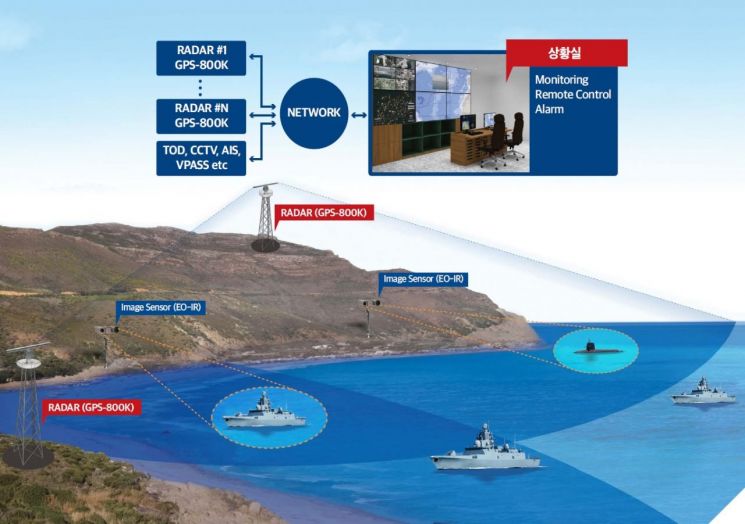
STX Engine is confident that the newly developed domestic coastal surveillance radar (GPS-800K) can solve this problem.
The GPS-800K, developed in June last year, has a detection range of over 20 km and can detect objects as small as 1.6 meters. After passing the certified operational test evaluation by the Defense Technology Quality Institute, it was pilot-operated at an Army unit located on the East Coast from November last year to May this year.
The GPS-800K is seen by the company as suitable not only for our military but also for civilian export. Installing coastal surveillance radars at coastal bases can prepare against coastal threats such as maritime infiltration and illegal immigration vessels in coastal areas. Additionally, it can incorporate automation and unmanned technologies, reducing operating personnel and enabling efficient integrated surveillance.
The GPS-800K was developed based on the technology of the coastal surveillance radar (GPS-98K) that STX Engine installed on Dokdo in 2009. At that time, the Dokdo Guard operated two foreign-made radars for maritime surveillance, but problems arose due to aging.
STX Engine, which started producing coastal surveillance radars in 1999, manufactures maritime surveillance equipment for the Army and Navy. STX Engine produces and supplies various types of radars, including the SPS-95K shipborne anti-ship radar, SPS-100K navigation radar, and SPA-99K display device, holding unrivaled technology in the domestic search radar field.
An STX Engine official said, "In Korea’s terrain, surrounded by sea on three sides with a complex coastline, coastal surveillance missions are more important than in any other country from the perspective of national security and strategy."
© The Asia Business Daily(www.asiae.co.kr). All rights reserved.
![From Bar Hostess to Organ Seller to High Society... The Grotesque Con of a "Human Counterfeit" [Slate]](https://cwcontent.asiae.co.kr/asiaresize/183/2026021902243444107_1771435474.jpg)
















