[With Corona①] Regional Disparities Widened by Non-Face-to-Face Interactions
Overnight Delivery Market Expected to Reach 4 Trillion Won
Non-Capital Region Consumers Left Behind
Large Marts Utilize Regional Logistics Centers
Blocked by Nighttime Operation Ban Regulations
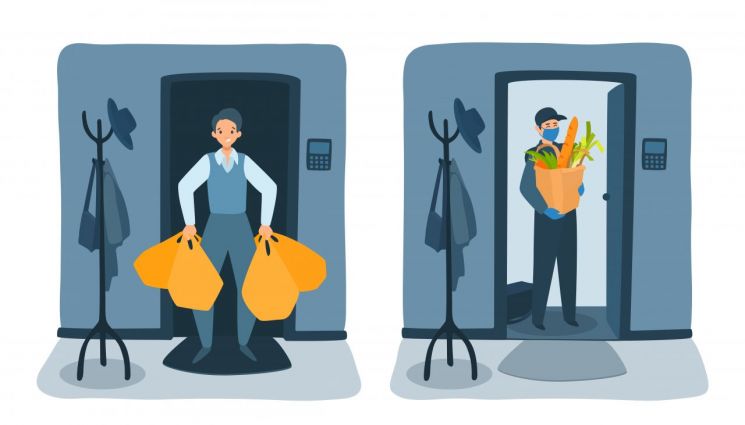
# Mr. Kim, in his 70s living in Bulgwang-dong, Seoul, has not visited a large supermarket even once since the early days of the COVID-19 outbreak last year. He shops once or twice a week using a dawn delivery application (app) and occasionally his daughter, who lives in another region, orders soup, side dish sets, and meal kits to send to him. When ordering food delivery instead of dining out, he frequently uses food delivery service apps like 'Baedal Minjok' or 'Coupang Eats,' which allow him to order single servings without feeling self-conscious.
# Mr. Kang, who moved this summer to Namyang-ri, Hwaseong-si, Gyeonggi Province, eventually canceled the 'Coupang Rocket Fresh' service he had used continuously since his marriage. On weekends, he shops directly at the nearby Emart Ansan branch and stocks his refrigerator with a week's worth of ingredients. Although he uses food delivery services in urgent situations, he is dissatisfied because the delivery fee is at least 5,000 to 6,000 won, which is twice as expensive as in nearby areas.
Ordering via smartphone apps before going to bed and receiving groceries or daily necessities delivered to the front door early in the morning has now become a daily routine. It is also possible to receive baby food, various side dishes, and prepared foods regularly every morning. Since the spread of COVID-19, the contactless culture has expanded, and such dawn delivery and instant delivery services have flourished, with the market size expected to exceed 4 trillion won this year.
Dawn Delivery: A Pipe Dream for Rural Areas
As contactless services like dawn delivery and food delivery rapidly grow, people living in rural villages or outskirts of provincial cities are being left out. For them, dawn delivery remains a 'pipe dream,' emerging as a new factor in regional disparity.
Dawn delivery companies inevitably focus their services on the Seoul metropolitan area, where consumers with relatively high purchasing power are concentrated. Most of the hub logistics centers where product sorting and delivery take place are located in Gyeonggi Province, limiting the areas where products can arrive by the promised time, according to the companies.
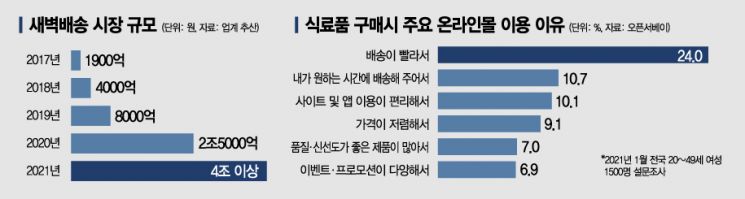
In the case of Coupang, it currently operates about 100 logistics centers in 30 cities nationwide, covering about 70% of South Korea's total area for delivery. Market Kurly has also expanded delivery to the Chungcheong region and downtown Daegu. A Market Kurly representative said, "Orders increased by nearly 40% monthly within three months of launching the service in major Chungcheong cities," adding, "We plan to expand delivery zones to Busan, Ulsan, and the Honam region as demand has been confirmed."
Digital: A New Factor in Regional Disparity
As contactless consumption spreads, the quality of life for consumers in metropolitan and large cities who can use these services improves, while regional disparity felt by customers in non-metropolitan, rural, and village areas grows larger. Consumer Mr. Kang said, "In outlying areas, there are many elderly people who have to eat alone and mothers raising young children, and offline shopping facilities are scarce. If even fast delivery services are excluded, wouldn't people want to live in big cities or urban centers even if it means making sacrifices?" He lamented, "The opportunity to reduce housework while eating good ingredients and food itself becomes limited."
Large supermarkets like Emart provide dawn delivery to the Seoul metropolitan area and parts of Chungcheong using logistics centers in Gimpo-si and Yongin-si, Gyeonggi Province. In provincial areas, dawn delivery is feasible by using nationwide stores as logistics centers, but due to current regulations under the 'Distribution Industry Development Act' prohibiting late-night operations, sorting or packaging products after 11 p.m. is not allowed.
Professor Eunhee Lee of Inha University (Department of Consumer Studies) pointed out, "If regional consumers cannot shop as they wish and inconvenience increases, they will flock even more to cities, which can again hinder balanced regional development. If companies (large supermarkets) are willing to provide services but are blocked by the law, it should be actively revised."
© The Asia Business Daily(www.asiae.co.kr). All rights reserved.
![Clutching a Stolen Dior Bag, Saying "I Hate Being Poor but Real"... The Grotesque Con of a "Human Knockoff" [Slate]](https://cwcontent.asiae.co.kr/asiaresize/183/2026021902243444107_1771435474.jpg)

















