SK E&S Invests $600 Million in US KCE Acquisition
Accelerates Entry into New Industry 'Grid Solution'
Energy Industry Paradigm Shift with Carbon Neutrality
Increasing Need for Electricity Supply and Consumption Efficiency
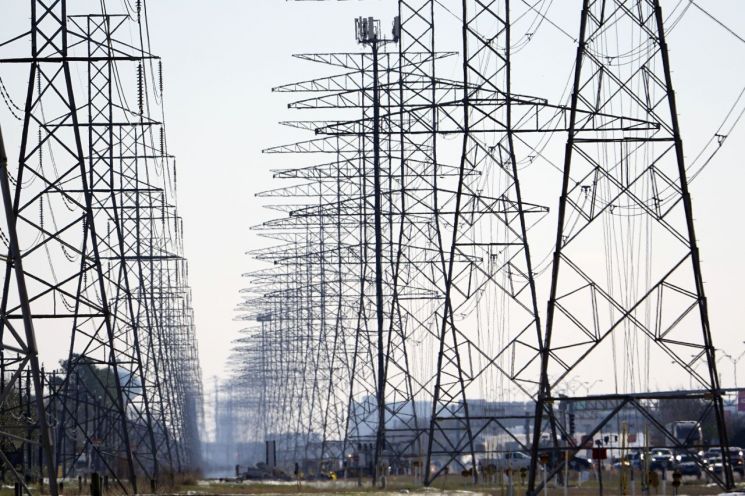
[Asia Economy Reporter Choi Dae-yeol] SK E&S recently acquired Key Capture Energy (KCE), a U.S.-based grid solutions company. The term "grid" refers to the entire system of wires and related infrastructure installed to supply electricity. This company primarily focuses on creating and providing a range of services, including software that manages the grid.
Grid solutions are considered a promising new industry in advanced countries such as the United States, but the grid itself has been around us for a long time. To use electricity generated at power plants in ordinary homes, factories, or farms, a grid must be in place. While it is easy to imagine just power plants, transmission and distribution lines, substations, or utility poles, the grid is much more intricate and exists in many unseen places. Even smartphones cannot be used without the power infrastructure that operates numerous components inside them.
The U.S. National Academy of Engineering ranked the vast electric power networks of the grid as the top engineering achievement of the 20th century because this system has transformed human life in ways that are hard to compare with the past. It is no coincidence that the grid is considered a greater achievement than automobiles (2nd), airplanes (3rd), water supply systems (4th), TV (6th), and computers (8th).
Gretchen Bak, an anthropologist and visiting professor at Humboldt University in Germany, who recently published the book "Grid" in Korea, described the grid as "a machine and infrastructure, a cultural achievement and industrial activity, and an ecosystem where all these are intertwined," adding that "it is connected to everything about us."
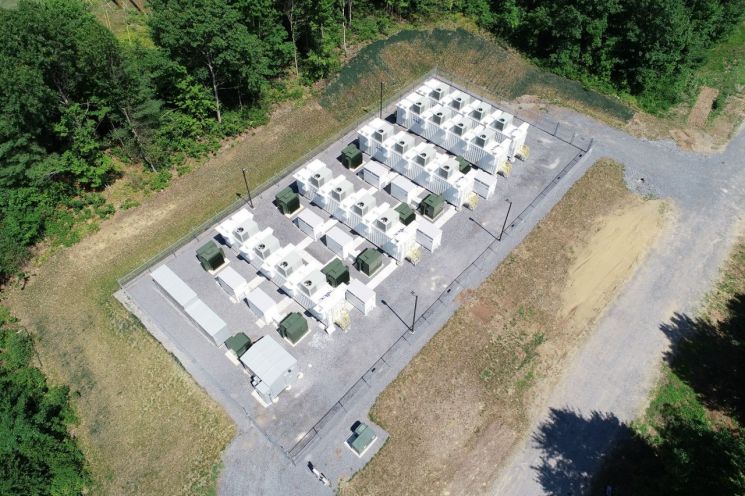 K-Capture Energy (KCE), acquired by SK E&S, operates an energy storage system (ESS) facility in New York State.
 Electricity Supply Source Shifts from Fossil Fuels to Renewable Energy
U.S. Administration Targets Over 40% Solar Power by 2035
Grid solutions are considered a new field because the process of generating, supplying, and consuming electricity is changing from the past. KCE’s work makes this easy to understand. They buy electricity during low-cost periods and store it in energy storage systems (ESS). Using artificial intelligence (AI) technology, they maintain a steady electricity supply by managing ESS connected to transmission and distribution networks. KCE also profits by selling stored electricity and offers services that control this entire process.
As the energy sources for electricity generation change, the grid must adapt accordingly. For over a century, electricity was generated using fuels like oil, coal, and nuclear power, but going forward, the share of renewable energy such as solar, wind, hydro, and geothermal will increase, requiring different methods and systems for handling electricity. Using ESS to compensate for the intermittent nature of renewable energy is a representative example.
The expansion of renewable energy naturally leads to decentralization. Unlike the past, when state-owned enterprises or a few private monopolies generated and distributed electricity, individuals are now producing electricity on their own. Professor Bak explained, "The 20th-century grid was built around an unextinguishable flame created by burning oil, coal, natural gas, and plutonium," adding, "Electricity generation and transmission during this period were carried out through a strong centralized structure operated by natural monopoly companies under a top-down command and control system."

The Biden administration recently set a goal to increase the share of solar power to over 40% of total electricity by 2035. This reflects acceptance of the changing paradigm in the energy industry as well as efforts to address climate change. Considering inefficiencies caused by the old grid, increasingly frequent extreme weather, and resulting blackouts, this is a natural course of action.
The grid solutions market has high growth potential. According to consulting firm Wood Mackenzie, the U.S. ESS-based grid solutions industry is expected to grow from 6GW this year to 76GW by 2030, with an average annual growth rate of over 60%. SK E&S plans to invest $600 million (approximately 700 billion KRW, including the 95% stake acquisition) in KCE over the next two to three years.
Yoo Jung-joon, Vice Chairman of SK E&S, said, "Through KCE’s energy solution services, by utilizing surplus electricity and enhancing the efficiency of electricity supply and consumers’ efficient electricity use, we can significantly contribute to reducing greenhouse gas emissions."
© The Asia Business Daily(www.asiae.co.kr). All rights reserved.
![Clutching a Stolen Dior Bag, Saying "I Hate Being Poor but Real"... The Grotesque Con of a "Human Knockoff" [Slate]](https://cwcontent.asiae.co.kr/asiaresize/183/2026021902243444107_1771435474.jpg)


















