Companies Launch AI Virtual Models One After Another
Adding Occupation, Age, Hobbies, and More to Create Worlds Targeting Metaverse-Savvy MZ Generation
 A photo of Rozy advertising a new car model from an automobile company. / Photo by Rozy Instagram capture
[Asia Economy Reporter Yoon Seul-gi] AI models that can operate anytime without spatiotemporal constraints and pose no privacy concerns, thereby reducing corporate risks, are gaining widespread popularity. These models can always reflect and be modified according to the interests of people in their 20s and 30s, earning them the reputation of being customized models for the MZ generation.
Companies are unveiling AI models they have developed in-house, reflecting the metaverse (virtual reality space) trend. These models are characterized by their natural reproduction of human appearances, down to the fine details like skin fuzz, using computer technology.
Virtual models have their own worldviews, including majors and occupations, and maximize communication with the public through social networking services (SNS). They emphasize their human-like traits by posting photos and videos on SNS. The MZ generation, familiar with the virtual world of the metaverse, responds enthusiastically to the attractive appearances of virtual models blended with reality.
◆ AI Virtual Models Gaining Spotlight from Companies
Lotte Home Shopping announced on the 1st that it will conduct a metaverse project to develop the virtual influencer 'Lucy' into an AI show host. Lucy is a virtual model created by Lotte Home Shopping through in-house development last September, produced by synthesizing a virtual face onto images of real humans.
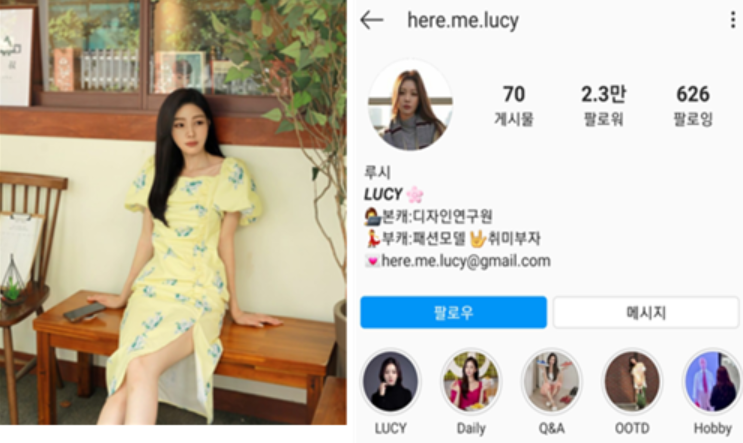
Lucy has a worldview as a 29-year-old model majoring in industrial design and working as a design researcher. Since February this year, she has been active as an influencer on SNS, currently interacting with about 23,000 followers.
Recently, she has been actively collaborating on experiential marketing with a fashion brand, among other activities. Lotte Home Shopping plans to utilize Lucy's movements and voice, developed to be similar to humans, for promotional purposes.
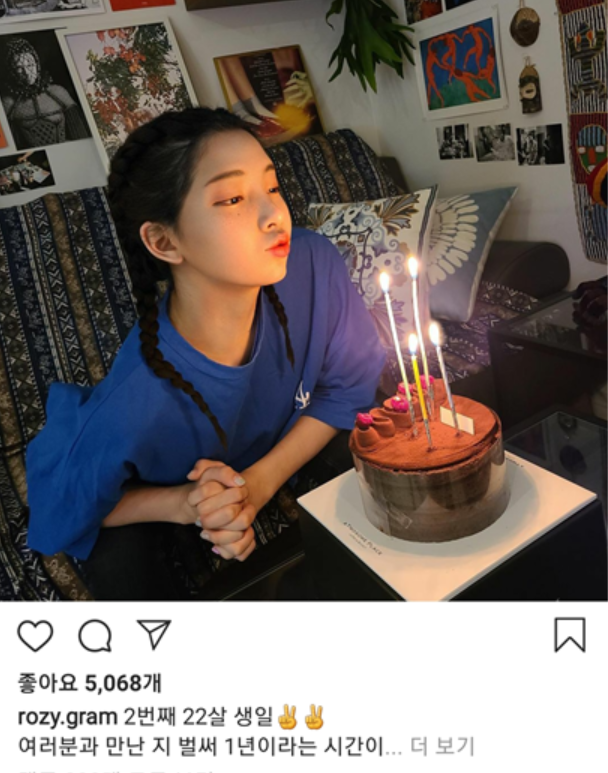
Meanwhile, 'Rozy,' who has already expanded the possibilities of AI models by appearing not only on SNS but also in TV commercials, is another example. Rozy is a virtual human created by Sidus Studio X, an influencer with about 54,000 followers, and is 22 years old. Her interests include world travel, yoga, fashion, running, and eco-life.
Rozy has already starred in beauty advertisements that only top stars usually shoot. In May, she promoted Korean culture and tourism content as a K-Friends ambassador for the Korea Tourism Organization and also worked as a promotional model for automobile companies and hotels. Photos released as part of marketing gained great popularity.
Rozy was also created targeting the MZ generation. She was designed by combining the appearance preferences of the MZ generation and reflects the environmental awareness of young people by participating in environmental protection campaigns. She practices the 'No Plastic Challenge,' which discourages plastic use, and 'Zero Waste' to reduce trash.
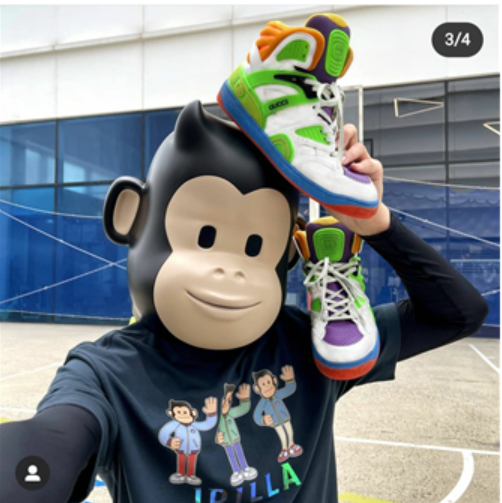
Although not an AI virtual human, there is also an alien character sponsored with Gucci sneakers. Shinsegae Group created the character 'Jayrilla' modeled after Vice Chairman Chung Yong-jin. Jayrilla has a worldview of being born on Mars and coming to Earth. She gained recognition through photos taken at baseball stadiums and with Vice Chairman Chung, currently having about 11,000 followers.
As Jayrilla became famous, luxury brand Gucci sponsored her with sneakers. Previously, she had also worked as a fashion brand model with ambassadors like Rain, Loco, and Hwimin.
◆ AI Announcers Debut in China and Other Countries
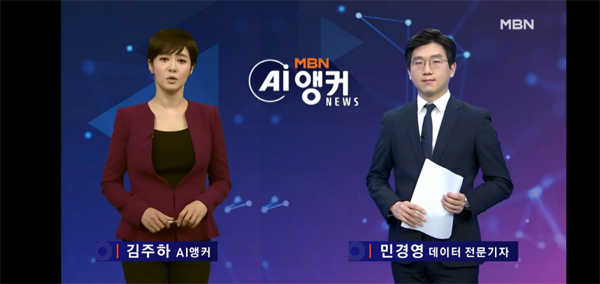 AI anchor Kim Juha is seen conducting news with MBN reporter Min Kyungyoung on the 6th./Photo by MBN
In fact, AI announcers emerged before AI virtual models. China's state-run media Xinhua News Agency created the world's first AI announcer 'Xin Xiaomeng' in 2019 by integrating data of real announcers' voices and faces. Xinhua stated that the tireless AI announcer can operate 24 hours a day, expecting production cost reductions.
South Korea also has AI announcers. MBN created an AI announcer modeled after announcer Kim Ju-ha last year. After recording Kim Ju-ha's broadcasting appearance, movements, and voice, AI deep-learned the video, resulting in a likeness so similar that it is difficult to distinguish from a real person speaking.
◆ No Concerns over Celebrities' Privacy Issues... Market Expected to Continue Expanding
Experts predict that the market size utilizing virtual models will continue to grow. Professor Eun-hee Lee of the Department of Consumer Studies at Inha University explained in an interview with KBS, "Virtual models have no spatiotemporal constraints, making it easy to conceptualize them according to the corporate brand value," adding, "An advantage is that they do not have privacy issues or get involved in negative problems like human models."
© The Asia Business Daily(www.asiae.co.kr). All rights reserved.



















