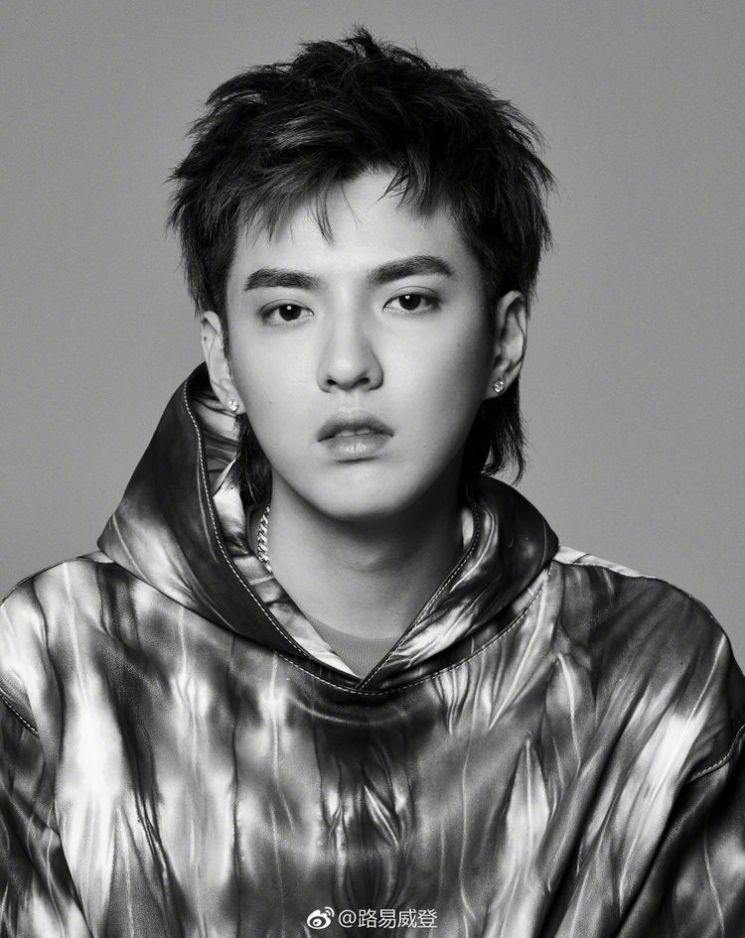
[Asia Economy Reporter Kim Soyoung] As Chinese authorities continue their high-intensity regulations on the entertainment industry, controversy has arisen over the strong sanctions imposed on aesthetic standards such as the appearance of male idols.
On the 3rd, Hong Kong's South China Morning Post (SCMP) reported that the National Radio and Television Administration, China's broadcasting regulatory agency, included in its notice on broadcasting and entertainment issued the previous day a statement declaring a firm eradication of "niangpao and other distorted aesthetic standards."
The notice consists of eight items, and item 3 emphasized, "We firmly reject excessive entertainment, vigorously promote the excellent traditional culture of China, establish accurate aesthetic standards, and resolutely reject niangpao and vulgar 'wanghong' (online influencers)." Niangpao refers to men who have feminine appearances and behaviors.
In China, as idol culture has flourished, concerns about the influence of niangpao on youth have led to ongoing debates. SCMP explained, "Chinese authorities have increased criticism of the so-called 'niangpao' trend," adding, "Niangpao includes idol singers who do not conform to the traditional Chinese masculine ideal of 'macho' or who wear makeup."
It further noted, "Such popular idols are often called 'xiaoxianrou' (handsome young men), but some argue that they pose a threat to traditional social values."
In response, A Chang, an NGO worker in Guangzhou advocating for LGBTQ+ rights, strongly criticized, saying, "Gender expression is unrelated to talent, personality, patriotism, or social contribution," and added, "This is discrimination against those who express themselves in an androgynous or more feminine way, reflecting a clash between individualization in modern society and regressive aesthetic standards."
Alongside this, the National Radio and Television Administration banned idol audition programs that cause overheated fan voting and prohibited the appearance of celebrities' children on broadcast programs. It also included bans on appearances by celebrities involved in scandals, restrictions on high appearance fees, and strengthened professional criticism of the entertainment industry.
The administration stated, "Those who commit illegal acts and lose virtue will all be firmly excluded," and specified that "broadcast stations and internet viewing platforms must select program actors and guests based on political literacy, moral conduct, artistic level, and social evaluation."
Furthermore, it emphasized, "Those with inaccurate political stances, who have turned away from the Party and the country and lost virtue, who violate laws and cross the bottom line of social fairness, who violate public order and good customs, and whose words and actions lack virtue and norms are absolutely prohibited from appearing."
Researcher Zhang Yu from the Development Research Center of the State Council told SCMP, "The government is cracking down on the entertainment industry and idol fan culture as part of its campaign against 'reckless capital expansion,'" adding, "The government views the entertainment industry as a core area for ideological control and is determined not to tolerate negative influences."
Recently, China has been disciplining the entertainment industry by expelling celebrities who have caused social controversies. Chinese actor Zheng Shuang was fined 299 million yuan (approximately 53.9 billion KRW) by local tax authorities for tax evasion, and top actress Zhao Wei, famous for dramas like "The Emperor's Daughter" and the film "Red Cliff," disappeared from online platforms after tax evasion allegations surfaced.
Former EXO member Kris (Chinese name Wu Yifan), who was arrested on sexual assault charges, has been detained, and actor Zhang Zhehan, who rose to stardom this year with the martial arts fantasy drama "Shan He Ling," was effectively expelled after photos of him making a 'V' sign in front of the Yasukuni Shrine in 2018 surfaced late last August, leading to all his advertisements being canceled.
© The Asia Business Daily(www.asiae.co.kr). All rights reserved.
![Clutching a Stolen Dior Bag, Saying "I Hate Being Poor but Real"... The Grotesque Con of a "Human Knockoff" [Slate]](https://cwcontent.asiae.co.kr/asiaresize/183/2026021902243444107_1771435474.jpg)
















