Ruling Party to Unilaterally Pass Press Arbitration Act at 4 AM on 25th in Legislation Committee
'Punishment Law for Defamation of Comfort Women' Also Proposed... Opposition Calls It "Yun Mi-hyang Protection Law"
Experts Warn "Ruling Party's Legislative Monopoly May Backfire Public Opinion"
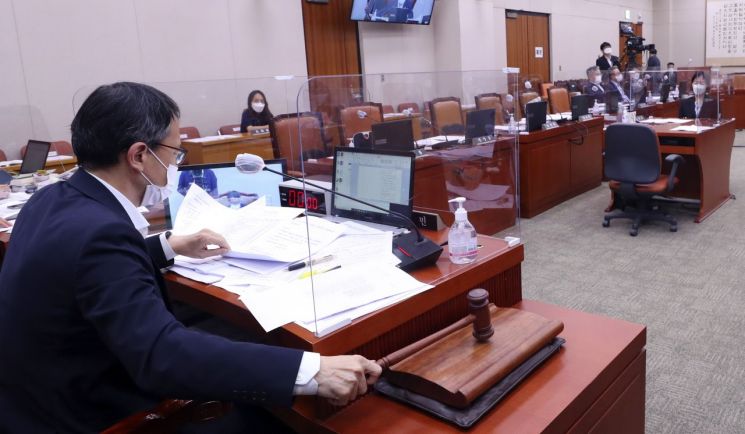 Park Ju-min, Acting Chair of the National Assembly Legislation and Judiciary Committee, is passing the amendment to the Press Arbitration Act during the full committee meeting held at the National Assembly in Yeouido, Seoul, on the 25th, with members of the People Power Party absent.
 [Image source=Yonhap News]
[Asia Economy Reporter Heo Midam] The ruling party is stirring controversy by pushing forward an amendment to the Media Arbitration Act that imposes punitive damages up to five times for false or fabricated reports, and has even proposed a bill to block criticism of comfort women organizations. In particular, the 'Comfort Women Criticism Punishment Act' is heavily criticized as a bill to protect independent lawmaker Yoon Mee-hyang, formerly of the Democratic Party. Yoon is currently indicted on charges of embezzling funds from the Justice and Memory Foundation (Jeonguiyeondae).
Despite opposition from the opposition parties, the ruling party's legislative dominance continues, leading some to criticize the Democratic Party for undermining democratic values. Experts point out that such behavior by the ruling party could provoke a backlash from public opinion.
On the 25th, the passage of the amendment to the "Act on Media Arbitration and Damage Relief" (Media Arbitration Act), which has been criticized by opposition parties and media organizations as the "Media Gag Law," was blocked in the National Assembly plenary session.
Speaker Park Byeong-seok reportedly announced in the morning that the plenary session would be postponed. The amendment had passed the Legislation and Judiciary Committee (Legislation Committee) around 4 a.m. that day, and since less than a day had passed, it appears that the Speaker accepted the opposition's claim of procedural issues.
According to the National Assembly Act, a plenary session cannot place a bill on the agenda if less than a day has passed since the standing committee completed its review. In other words, since the Media Arbitration Act amendment was approved by the Legislation Committee after midnight, it cannot be processed in the plenary session on the same day.
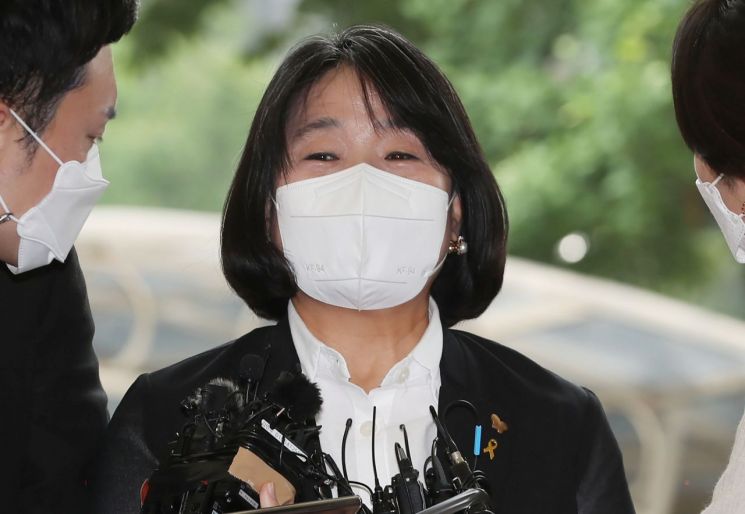
Currently, opposition parties and media organizations are fiercely opposing the amendment, calling it the "Media Gag Law." They express concerns that it could block reports on corruption by those in power rather than fake news.
In particular, Kim Gi-hyeon, floor leader of the People Power Party, held a condemnation rally with affiliated lawmakers in front of the Legislation Committee meeting room the day before, criticizing, "The Media Gag Law is a malicious law aimed at annihilating the media." He continued, "If the Democratic Party ignores the Constitution and passes the Media Gag Law, today will mark the starting point of the collapse of South Korea's liberal democracy," calling it "a malicious plan to turn the country into a dictatorship."
Meanwhile, recently, ten lawmakers including In Jae-geun of the Democratic Party and independent lawmaker Yoon Mee-hyang proposed an amendment to the "Act on Protection, Support, and Commemoration Projects for Victims of Japanese Military Sexual Slavery under Japanese Colonial Rule," sparking controversy.
The amendment includes a provision prohibiting "defamation by stating facts" against not only comfort women victims and their families but also organizations related to comfort women. This would effectively prevent criticism of Jeonguiyeondae, which is under suspicion of embezzling donations.
As a result, the opposition parties are raising their voices, calling the bill a "self-protection law" to shield lawmaker Yoon. Yoon is currently on trial, indicted for embezzlement of donations related to Jeonguiyeondae, a comfort women organization.
However, as the controversy grew, the Democratic Party stated that it is not a party-driven bill. Lee So-young, spokesperson for the Democratic Party, said in a statement, "This is a bill proposed by individual lawmakers and is not a party stance," adding, "The content of the bill is not a party stance, nor has it been officially discussed at the party level."
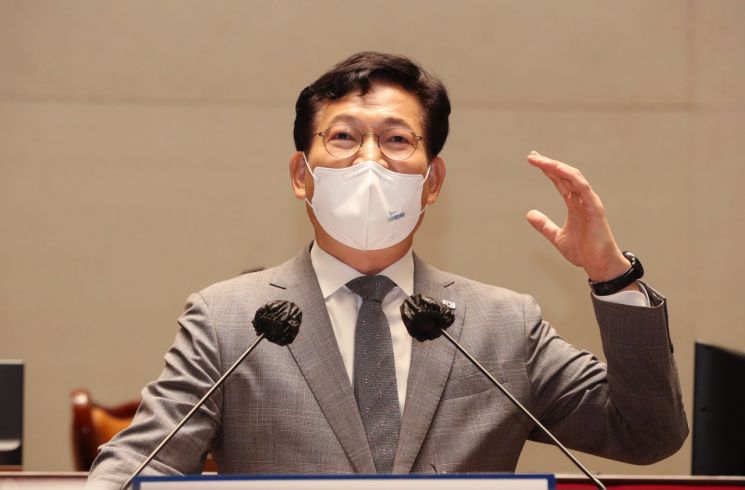 Song Young-gil, leader of the Democratic Party of Korea, is speaking at a party meeting held at the National Assembly in Yeouido, Seoul on the 25th.
 [Photo by Yonhap News]
Given the situation, criticism against the ruling party is intensifying. It is pointed out that the Moon Jae-in administration, born from the Candlelight Revolution, is ironically engaging in legislative overreach.
Previously, after becoming a supermajority ruling party with nearly 180 seats in the 21st National Assembly, the Democratic Party pushed through numerous contentious bills such as the "Three Lease Laws" and the "Corruption Investigation Office for High-ranking Officials Act."
Relatedly, the Democratic Party's forceful passage of bills was cited as a major reason for its defeat in the April 7 by-elections. Democratic Party floor leader Yoon Ho-jung reportedly said at a floor leader workshop in May, "The party believes it is doing the right thing, but we must reflect on the limitations in communicating with the public during the bill discussion process."
Despite this, there is currently no effective way to stop the ruling party's legislative overreach. The Democratic Party holds 171 seats, and combined with the Open Democratic Party's 3 seats and 7 pro-government independent lawmakers, they secure over 180 seats, enough to block filibusters (unlimited debate).
Experts warn that the ruling party's legislative dominance could provoke public backlash. Political commentator Lee Jong-hoon said, "There is a high possibility of a backlash in public opinion ahead of the presidential election. However, the Democratic Party seems to have judged that quickly passing these bills is advantageous for election strategy," adding, "For example, they think that strengthening the media's self-censorship function is more important than the backlash that would arise from passing the Media Arbitration Act amendment."
He continued, "They cannot ignore the demands of their support base. Also, since it is the final term of the Moon Jae-in administration, they are trying to push through reforms under the pretext of completing reform tasks."
© The Asia Business Daily(www.asiae.co.kr). All rights reserved.
![Clutching a Stolen Dior Bag, Saying "I Hate Being Poor but Real"... The Grotesque Con of a "Human Knockoff" [Slate]](https://cwcontent.asiae.co.kr/asiaresize/183/2026021902243444107_1771435474.jpg)


















