Public Opinion Divided on Green Food Zone Suitability Banning Sales Near Schools
Some Treat It as High-Calorie, Nutrient-Poor Instant Food
Experts: "Different from Hamburgers and Pizza... Nutritional Supplementation Possible with Vegetables"
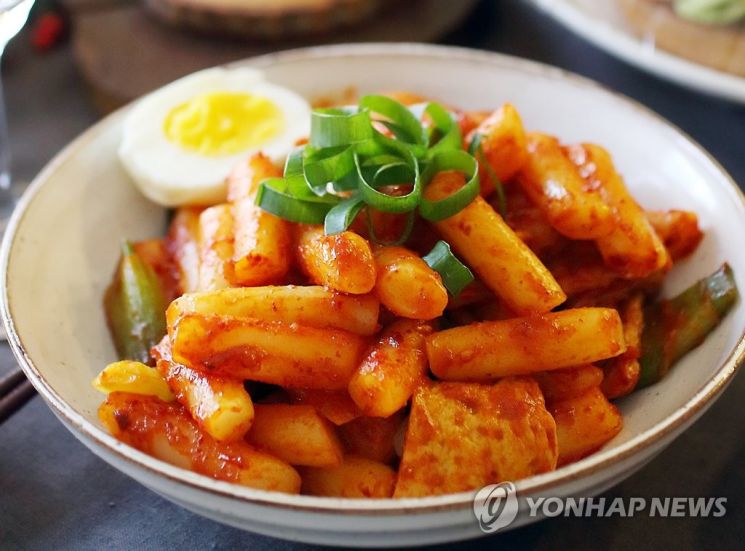 Recently, there has been controversy over whether tteokbokki, which is high in calories but lacks nutritional value, is suitable for the Green Food Zone that prohibits sales in front of schools.
 [Image source=Yonhap News]
[Asia Economy Reporter Kim Seohyun] The so-called tteokbokki food safety controversy, sparked by remarks from food columnist Hwang Kyo-ik, is in full swing. Hwang previously advocated designating tteokbokki as a "prohibited food in front of schools" when he was appointed to the Gyeonggi Tourism Organization.
On the 18th, he posted on his Facebook, stating, "Tteokbokki is a nutritionally unbalanced and stimulating junk food," and argued that the Ministry of Food and Drug Safety should correct this by designating it as a "prohibited food in front of schools" (Green Food Zone). 'Junk food' refers to instant or fast foods that are high in calories and contain some basic nutrients but are nutritionally poor.
The 'Green Food Zone' refers to the 'Children's Food Safety Protection Zone' defined under the current law (Special Act on Children's Dietary Life Safety Management). According to the related law, an area within a straight-line distance of 200 meters from the school boundary is designated and managed as a Children's Food Safety Protection Zone.
In the Green Food Zone, foods that are high in calories and low in nutritional value cannot be sold. Foods like hamburgers and pizza fall under this category. According to the special law, foods that do not meet the standards are only banned from sale at schools and excellent sales outlets.
However, tteokbokki is not included. According to the Ministry of Food and Drug Safety's home meal replacement nutrition survey results from December last year, the average calorie content per serving of 85 tteokbokki products was 255.9 kcal, sodium 643.6 mg, sugars 6.9 g, protein 6 g, and fat 3.1 g. All items including calories, protein, and fat were within the Ministry's standards, indicating that tteokbokki is not classified as a high-calorie, low-nutrition food.
Therefore, applying the current standards, tteokbokki cannot be considered junk food. However, some people worry that its spicy and salty taste can be too stimulating, especially among elementary school students in their growth phase. This has led to controversy over whether tteokbokki should be included in the Green Food Zone.
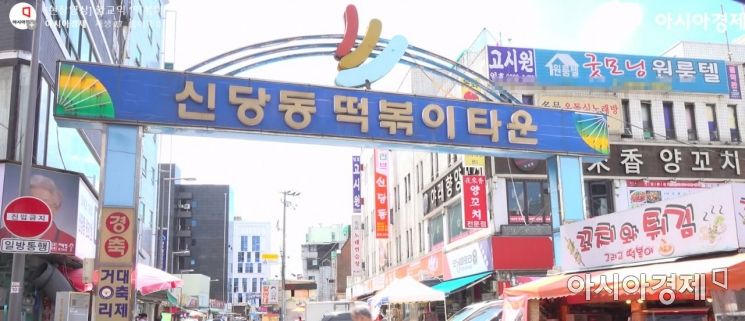
Public opinions are divided. Kim (23), met at the 'Tteokbokki Town' in Sindang-dong, Jung-gu, Seoul, known as the 'Tteokbokki Street,' said, "I think it's okay to eat it," adding, "If you remove all unhealthy foods, nothing would be left, and if teenagers want to eat it, they should be given freedom."
Park, a company employee in his 30s, said, "If tteokbokki were really harmful to the body, the government would have taken action already," adding, "I think there is no problem."
On the other hand, some agree with Hwang's view. Park, a worker in his 40s, emphasized, "Regulations and laws can change with the times, so I think it is reasonable to at least review whether tteokbokki is harmful to health."
Experts expressed a negative opinion regarding tteokbokki's suitability for the Green Food Zone. Professor Han Jeonga of the Department of Food and Nutrition at Sangmyung University said, "Excessive carbohydrate intake may result from consuming tteokbokki, but it is not suitable as a banned food in the Green Food Zone."
Professor Han emphasized, "Hamburgers and pizzas listed as banned foods are high in fat and saturated fatty acids, which are relatively high and fatal to health, and they are distinctly different from tteokbokki." She added, "Tteokbokki can be nutritionally supplemented with vegetables, so it is fine as long as it is not eaten too often."
Meanwhile, the Ministry of Food and Drug Safety stated regarding the tteokbokki Green Food Zone controversy, "Tteokbokki has never been designated as a 'prohibited food in front of schools,' nor are there plans to add it in the future." A ministry official explained, "Tteokbokki is a special cooked food, not a processed food, so serving sizes and cooking methods vary. Therefore, it cannot be definitively classified as a banned food." The official also emphasized, "The Ministry always conducts ongoing inspections regarding children's favorite foods."
© The Asia Business Daily(www.asiae.co.kr). All rights reserved.


















