Factors such as self-reliant economic development, strengthened government control, and response to polarization
"If negative public opinion spreads, the government may change its regulatory stance"
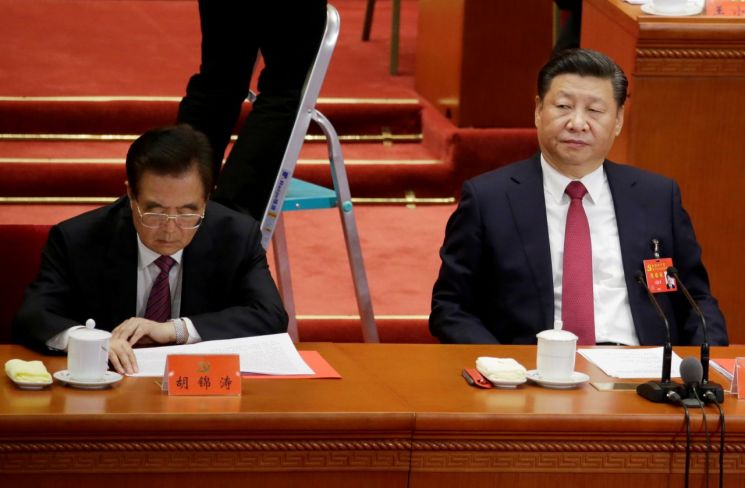
[Asia Economy Reporter Kim Suhwan] The Chinese government's crackdown on companies shows no signs of stopping. On the 11th, the State Council announced the "Implementation Plan for Building a Law-Based Government (2021?2025)," which outlines the blueprint for economic regulations to be implemented over the next five years. According to this plan, the government intends to introduce more economic regulations with the goal of "building a law-based country."
Through this directive, the authorities plan to "actively promote" legislation in key areas such as national security, scientific and technological innovation, culture and education, risk prevention, antitrust, and foreign-related rule of law.
Meanwhile, as investors withdraw their funds, the stock prices of Chinese companies have not been able to avoid a downward trend.
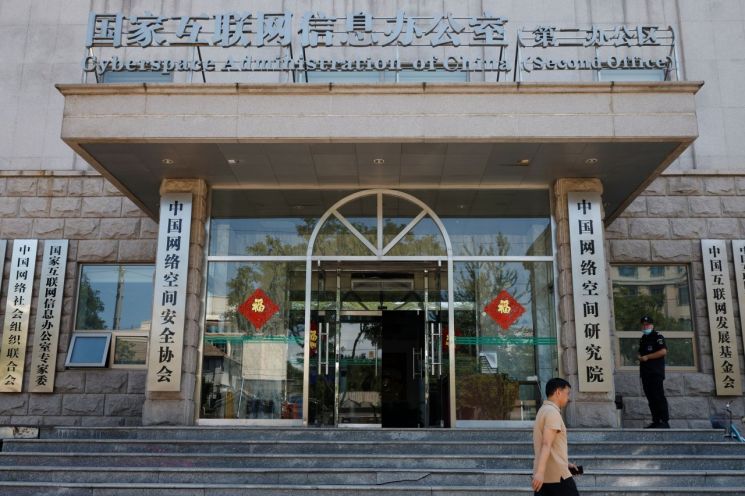
Experts have analyzed three main factors behind the sudden regulatory drive by the authorities.
Bloomberg cited experts who explained that the Chinese authorities' strengthening of regulations reflects the government's determination to develop the economy independently.
In particular, amid escalating US-China trade conflicts and observations of a new Cold War era, China feels the need to achieve autonomous economic development without relying on foreign powers.
Over the past five years, foreign media have analyzed that the Chinese government was led by the US's intentions while enduring trade disputes with the United States.
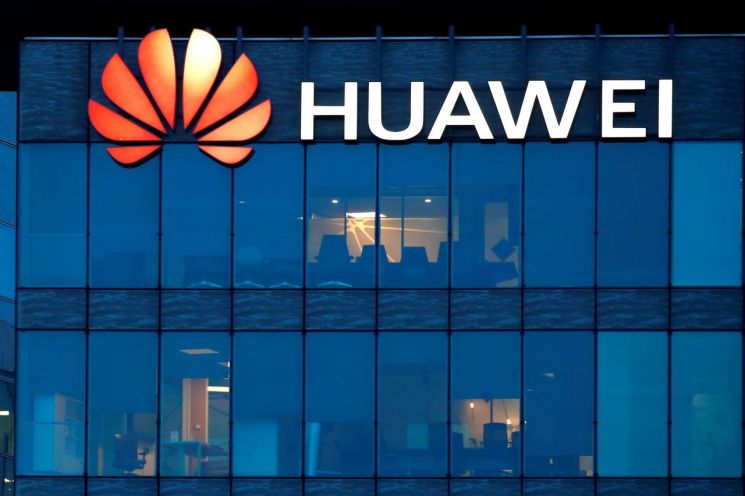
The former Trump administration imposed various economic sanctions to isolate China internationally, with the US government placing Huawei, China's largest telecommunications equipment company, on a trade blacklist citing national security concerns as a representative example.
Additionally, US authorities pressured ByteDance, the parent company of the video-sharing application TikTok, which has over one billion users worldwide, to sell TikTok's US operations.
Experts also point to President Xi Jinping's intention to tighten his authoritarian rule as another factor behind the strengthening of corporate regulations.
A political science professor at Shanghai University said, "President Xi believes that while the West is experiencing a period of stagnation, the Eastern world is rising. Furthermore, aiming for a third term, Xi likely judged that now is the right time to intensify regulatory pressure, given the minimal opposition within the Chinese Communist Party against him."
Rana Mitter, a China studies professor at Oxford University, stated, "The corporate regulations carried out under the pretext of eradicating corruption and antitrust have legitimized Xi Jinping's power."
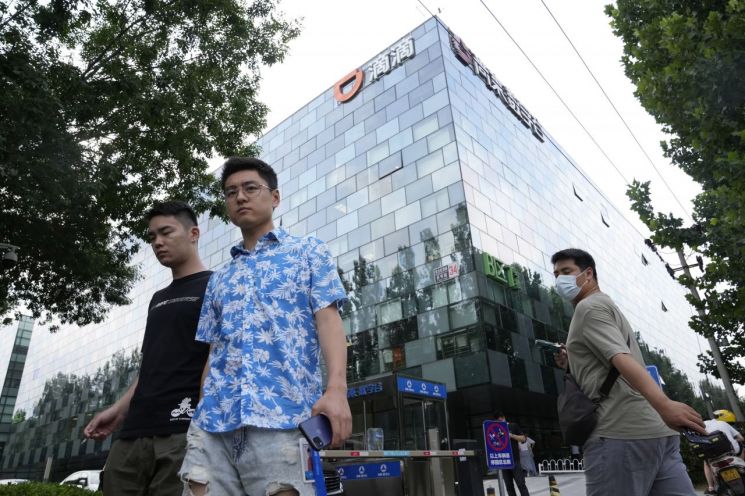
In fact, all companies targeted by Chinese authorities are monopolistic firms with the largest market dominance in their respective fields. Representative Chinese big tech companies such as Tencent and Alibaba Group, the largest food delivery company Meituan, and the leading ride-sharing company Didi Chuxing have become 'examples' of regulatory targets.
Moreover, the rapid polarization within China has also been identified as one of the reasons for the crackdown on large corporations.
At the Chinese Communist Party's 100th anniversary event last month, President Xi stated, "We will protect the interests of the people against various vested interest groups." This is interpreted as a response to criticism that the Chinese Communist Party is controlled by the wealthy elite.
According to the Hurun Report, a wealthy research institute often called the "Forbes of China," China has surpassed 1,000 billionaires with assets exceeding one billion US dollars for the first time worldwide.
On the other hand, Premier Li Keqiang revealed that the monthly income of approximately 600 million Chinese people remains at about 154 US dollars.
Ultimately, as the Chinese Communist Party, which aims for equality among the people, faces a surge in billionaires shaking the legitimacy of communism, it has moved to tighten control over large corporations.
However, there is also speculation that China's oppressive corporate policies may be somewhat adjusted depending on public opinion.
Travis McArver, co-founder of research firm Trivium China, said, "The Chinese Communist Party also puts considerable effort into monitoring public opinion. If negative sentiment about China's regulatory pressure spreads, the government will quickly change its policy stance."
© The Asia Business Daily(www.asiae.co.kr). All rights reserved.
![Clutching a Stolen Dior Bag, Saying "I Hate Being Poor but Real"... The Grotesque Con of a "Human Knockoff" [Slate]](https://cwcontent.asiae.co.kr/asiaresize/183/2026021902243444107_1771435474.jpg)


















